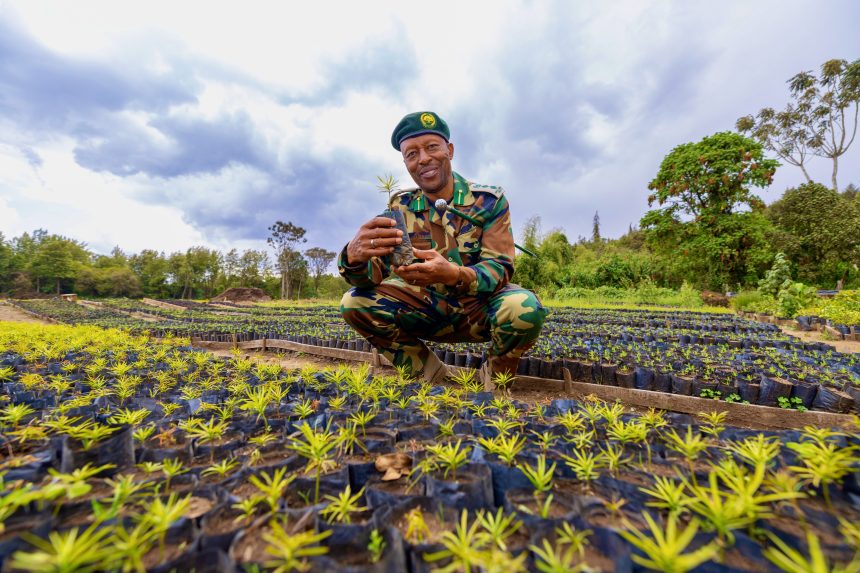
The Kenya Forest Service is ramping up efforts to meet the country’s ambitious tree-growing targets, with the Kinale Tree Nursery in Kiambu County undergoing a major expansion to significantly increase seedling production, marking a critical nexus where forest restoration meets economic transformation.
Signalling a deliberate shift towards large-scale, production-driven nurseries that not only restore ecosystems but also unlock jobs, livelihoods, and a thriving nature economy.

What Chief Conservator of Forests Alex Lemarkoko terms a deviation from the norm, “Without expanding these nurseries to large-scale status, we are not going to achieve or meet the targets. We are required to produce at least one billion seedlings from our KFS nurseries every year. Another half a billion from other nurseries to make it 1.5 billion,” he said
He termed the Kinale Forest model tree nursery in Kiambu County, strategically located off the Nairobi – Naivasha road as a game changer that started with the production of 200,000 seedlings yearly, “The community forest association, together with personnel from KFS, increased the capacity to the current two million. The eight million target will be achieved through the support of the National Youth Service to supplement community efforts.”
The expansion is part of a broader strategy to scale up production capacity across the country, positioning the 15 billion trees initiative as a driver of the nature economy. Forest-adjacent communities are already benefitting through job creation, nursery operations, potting, watering, transportation, and site preparation, while ensuring a steady supply of tree seedlings for planting and restoration efforts during the long rains.
Lemarkoko emphasised that without large-scale nurseries, the country risks falling short of its environmental targets.
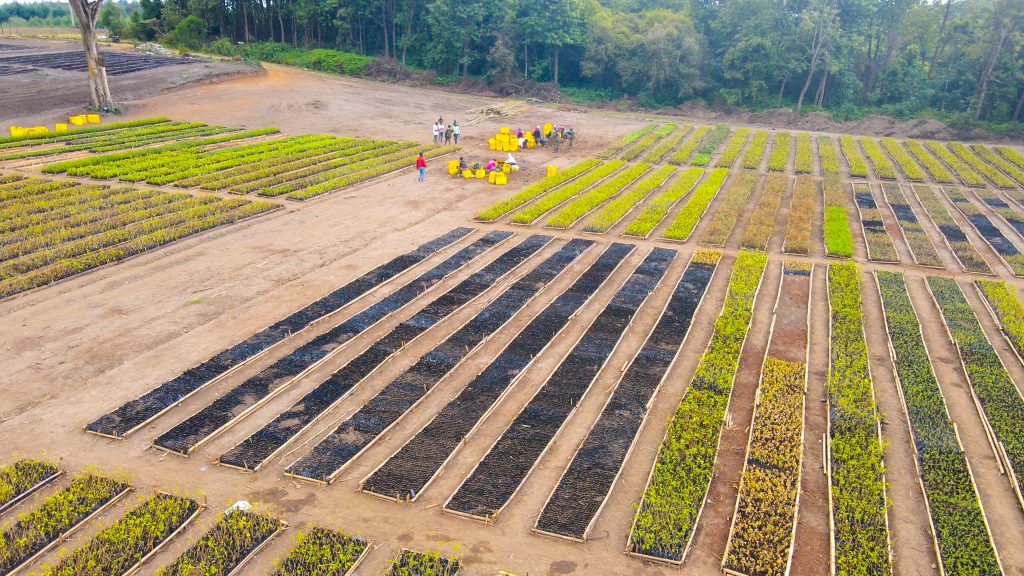
The Kinale Tree Nursery, strategically located along the busy Nairobi-Nakuru Highway, has been identified as a key site due to its accessibility and visibility, making it easier for partners and communities to access seedlings while also raising awareness about the national tree-growing campaign.
The Forest Manager in Kinale, Ngotho Robert, noted that the station, which sits within the Aberdare ecosystem and spans over 10,500 hectares, previously operated a small nursery producing between 200,000 and 400,000 seedlings annually.
The expansion includes additional hectares, with one section capable of supporting up to 3.5 million seedlings and another covering approximately 25 hectares set aside for further development.
“The seedlings that we produce in the nursery include indigenous and exotics as well. Exotics will be planted in our plantations to supply the required seedlings for our plantation forestry. But 90 per cent of the seedlings we produce are indigenous, meant to be planted in the catchment areas and the areas that we need to enhance the capacity of our watersheds,” he said.
He underscored the importance of investing in government-run nurseries, citing the availability of land, skilled personnel, and labour as key advantages that ensure sustainability.
Projections indicate the Kinale project is expected to play a critical role in enhancing Kenya’s forest cover, supporting climate resilience, and safeguarding vital ecosystems, particularly within the Aberdare region.