Agriculture and Livestock Development Cabinet Secretary Mutahi Kagwe has called for the implementation of levy on tea exports at the rate of 0.8pc.
While appearing before the National Assembly Departmental Committee on Agriculture and Livestock to defend the Ministry’s 2026/27 budget estimates, Kagwe said the Tea Levy contained in the Tea Levy Regulations 2026 is critical in protecting the country’s tea and brand globally.

“Parliament passed this levy for a reason. Kenyan tea is globally known, but in many markets, there are no geographical indicators to show it is Kenyan tea. Some countries are selling Kenyan tea as their own. That is exactly why they are opposing this levy, ” Kagwe told the committee chaired by Dr John Mutunga.
According to Kagwe, the levy was never designed to punish farmers, but rather to create sustainable funding for marketing, branding and modernizing Kenya’s tea industry, which he said has for years benefited foreign markets more than Kenyan producers.
Vice Chairperson Brighton Leonard Yegon raised concerns over complaints from Pakistan-based buyers regarding the levy. However, Kagwe maintained that backing down would amount to surrendering Kenya’s strategic interests.
“Going back would be a huge mistake.All countries that trade seriously in tea charge levies to develop their markets. Tea is a business, not a biblical Samaritan activity. It must be supported by funds,” he affirmed.
Official data shows that despite tea exports rising from 626.6 million kilograms in 2024 to 653.7 million kilograms last year, earnings declined to Ksh 187 billion from Ksh 189 billion over the same period.
Under the law, tea imported into the country also attract 100pc tea levy.
He also maintained that Kenya’s levy remains lower than those charged by competing tea-exporting countries and emphasized that the government would continue engaging stakeholders to improve implementation systems after complaints that payment mechanisms were inefficient.
The CS further insisted that Kenya must aggressively push for direct tea sales and geographical indicators in export markets so that Kenyan tea is recognized and sold as a premium Kenyan product rather than blended and rebranded elsewhere.
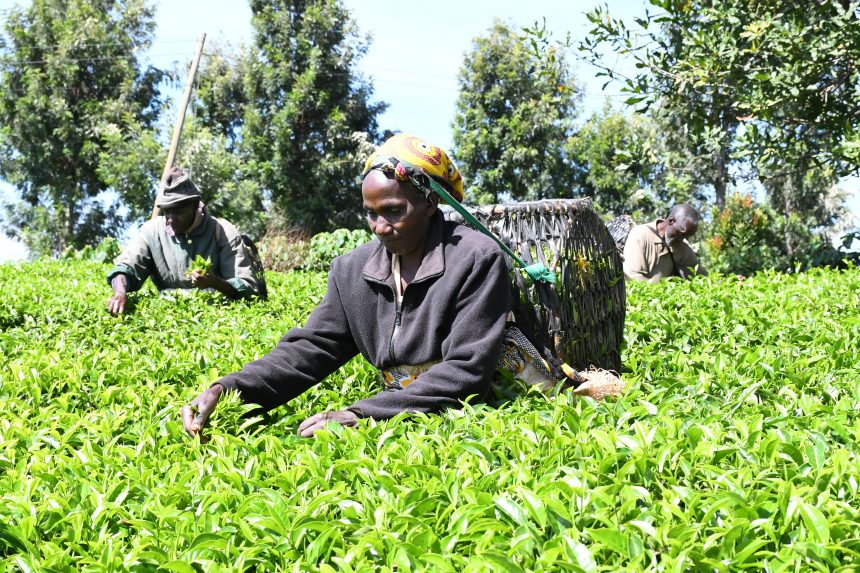
According to the Kenya National Bureau of Standards (KNBS) green leaf production declined by 7.8pc last year to 2.5 million tonnes due to below average rainfall across tea-growing zones, both east and west of the Rift Valley.