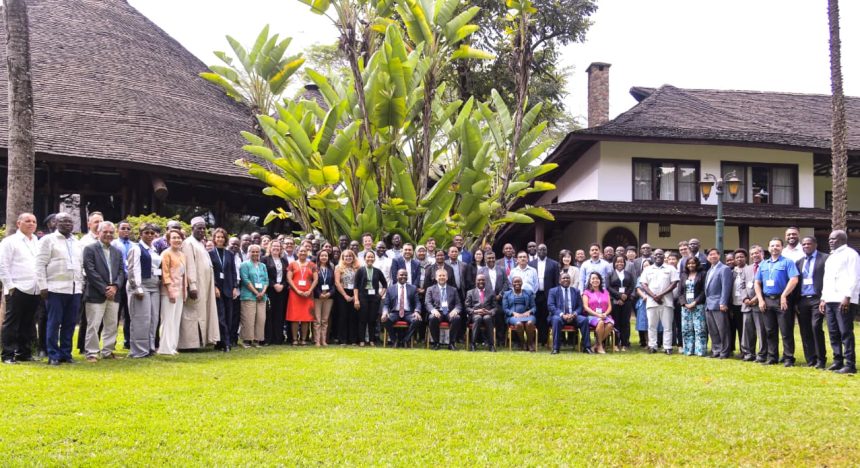
Kenya has made history as it hosts the first-ever Global REDD+ Summit in Nairobi, bringing together 59 REDD+ countries, four donor nations and 14 international organisations in a major push to accelerate global action against deforestation and climate change.
The high-level summit has attracted key global climate institutions including the Green Climate Fund (GCF), Food and Agriculture Organisation (FAO), United Nations Environment Programme (UNEP), UN-REDD Programme, UNFCCC Secretariat, Verra, and the ART Secretariat, signalling growing global alignment around forest-based climate solutions.

Opening the landmark meeting, Cabinet Secretary for Environment, Climate Change and Forestry Dr. Deborah Barasa said Kenya was honoured to host the inaugural summit, describing it as a defining moment for global forest governance and climate cooperation.
She said Kenya’s selection reflects its rising profile in climate leadership and environmental diplomacy, anchored on its national ambition to grow 15 billion trees by 2032 and restore degraded landscapes across the country.
“Kenya is deeply committed to sustainable environmental stewardship and global climate action,” Barasa said, noting the country’s diverse ecosystems, from savannahs and forests to mountains and coastal regions, remain central to both livelihoods and biodiversity.

The summit comes at a critical moment for global climate action, as countries intensify efforts under the REDD+ framework, which supports reductions in emissions from deforestation and forest degradation under Article 5 of the Paris Agreement.
Barasa noted that since the adoption of the Warsaw Framework in 2013, REDD+ has evolved into a key global mechanism for forest conservation.
However, she warned that accelerating deforestation trends and increasing climate risks demand stronger cooperation, financing, and accountability.
The First Global Stocktake has further called for urgent global action to halt and reverse deforestation by 2030, placing renewed pressure on countries to scale up implementation and unlock climate finance.
Over the next three days, delegates will deliberate on national REDD+ strategies, safeguards systems, forest monitoring frameworks, reference emission levels, transparency standards, and access to results-based finance.
The discussions will also explore linkages between Article 5 and Article 6 of the Paris Agreement, particularly in relation to carbon markets and voluntary crediting mechanisms.
Barasa emphasised the need for stronger global partnerships and the establishment of the UNFCCC REDD+ Community of Practice to enhance knowledge sharing, technical cooperation, and peer learning among countries.
Kenya also used the summit to showcase its progress in forest governance, including the establishment of Africa’s first National REDD+ Registry, a National Safeguards Information System, REDD+ nesting guidelines, a National REDD+ Strategy and a robust National Forest Monitoring System.
“These achievements demonstrate our commitment to transparency, integrity, and accountability in climate action,” she said.
Barasa further stressed that forests must be viewed beyond carbon storage, noting their role in water security, livelihoods, biodiversity conservation and cultural heritage.
The summit brings together governments, UN agencies, donors, civil society, Indigenous Peoples, and carbon market stakeholders in what is expected to shape the future of global forest finance and climate policy.
Kenya’s hosting of the first Global REDD+ Summit firmly positions Nairobi as a growing hub for international climate negotiations, as countries race toward 2030 climate targets and seek sustainable pathways to end deforestation globally.