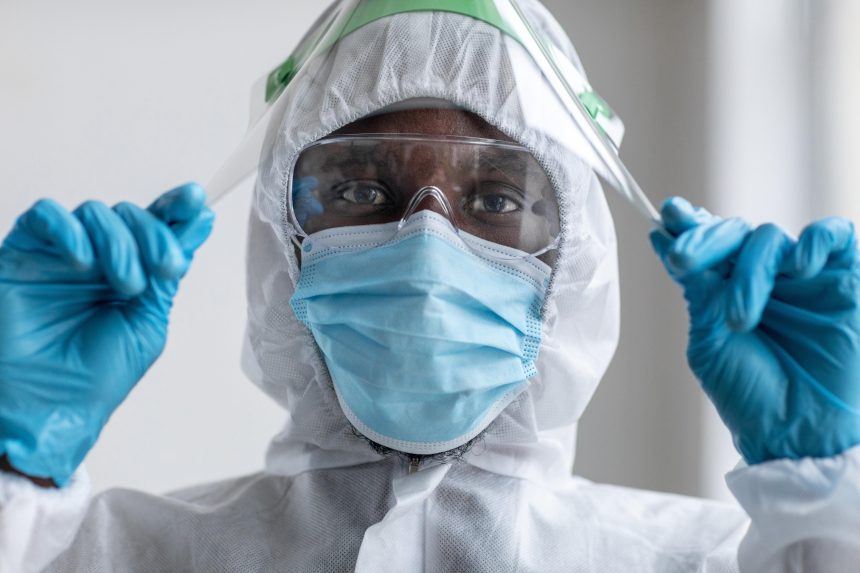
Three new vaccines are being developed to tackle the rare species of Ebola that has already killed nearly 250 people.
The International Aids Vaccine Initiative (IAVI), which is working on one vaccine, said the outbreak was threatening to be the worst ever.

The University of Oxford and the pharma company Moderna are also researching vaccines against the Bundibugyo species.
The Coalition for Epidemic Preparedness Innovations (Cepi), which is providing funding to each group, said “every day counts”.
There are now more than 1,000 suspected cases in the DR Congo with nine confirmed cases in neighbouring Uganda.
There is growing concern this outbreak – which was detected only after it had spread in a conflict zone with limited healthcare resources – could reach the size of the largest ever Ebola outbreak in West Africa in 2014-16. Then, nearly 29,000 people were infected and more than 11,000 died.
Dr Mark Feinberg, head of IAVI, said: “I think this is clearly threatening to be as severe an outbreak as that, if not even worse, and development of a vaccine, and other countermeasures, is clearly a priority.”
Meanwhile, the pharmaceutical company Moderna has announced it is using its mRNA technology – which was deployed to rapidly develop vaccines in the Covid pandemic – to work on Bundibugyo.
“We will move with urgency and scientific rigor to support the response and help bring a potential vaccine closer to the communities that need it most,” said Stéphane Bancel, chief executive officer of Moderna.
And the University of Oxford has already said it is working on its own vaccine technology, which also saved lives in Covid, to develop a fresh Ebola vaccine.
This should be ready for clinical trials in two to three months.