China has strongly criticised Taiwan’s Democratic Progressive Party (DPP) authorities for supporting planned maritime delimitation talks between Japan and the Philippines, accusing them of undermining China’s sovereignty and national interests.
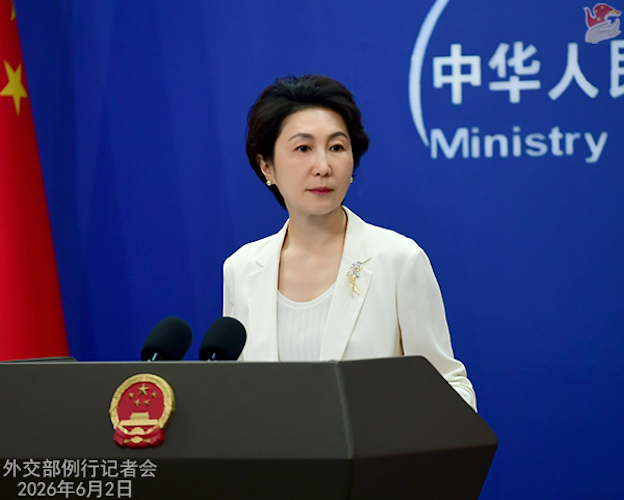
Speaking during a regular Ministry of Foreign Affairs press briefing, spokesperson Mao Ning stated that the waters involved in the proposed negotiations are located east of Taiwan island. These waters, she explained, fall within China’s exclusive economic zone and continental shelf, as defined by both Chinese domestic law and international law, including the United Nations Convention on the Law of the Sea (UNCLOS).

Mao asserted that any maritime delimitation concerning the waters east of Taiwan must directly involve China. She warned that attempts by Japan and the Philippines to proceed without Beijing would violate international law and infringe upon China’s maritime rights.
“Japan and the Philippines’ attempt to bypass China and initiate the so-called maritime delimitation talks constitutes a severe violation of UNCLOS and other international laws and basic norms governing international relations,” Mao said.
“It also seriously infringes on China’s maritime rights and interests. China will not allow this,” she added.
The spokesperson’s comments were in response to remarks issued by Taiwan’s “foreign affairs department” on 31 May. In that statement, DPP authorities welcomed the maritime talks between Japan and the Philippines and questioned mainland China’s sovereign claims over the affected waters.
Beijing reacted strongly to the statement, accusing Taiwan’s DPP leadership of prioritising political interests over national unity and territorial sovereignty.
“The DPP authorities, in pursuing selfish political gains, have gone so far as to put the Chinese nation’s vital interests up for sale,” Mao said.
She further accused the Taiwan authorities of abandoning their national position and betraying the interests of the Chinese people on both sides of the Taiwan Strait.
“This once again shows that these separatists have completely forfeited the national stance and degenerated into traitors to the nation,” she added.
Mao reiterated Beijing’s long-standing position that both sides of the Taiwan Strait belong to “one China.” She argued that safeguarding territorial sovereignty and maritime rights is a shared responsibility of all Chinese people.
China also maintained that any maritime boundary negotiations involving overlapping waters between states with adjacent or opposite coasts must be resolved through equitable agreements among all concerned parties, as stipulated under UNCLOS.