The future of county-funded bursaries and scholarships has come under fresh scrutiny after Members of Parliament questioned the legal and constitutional basis of education financing by county governments.
This comes even as the Intergovernmental Relations Technical Committee revealed that 34 counties have already signed agreements with the Ministry of Education to continue supporting needy students through bursary and scholarship programmes.

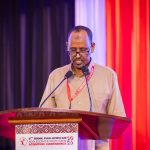
Appearing before the National Assembly Committee on Regional Development, chaired by Sigor MP Peter Lokachapong, IGRTC officials led by Chairperson CPA Kithinji Kiragu and Director of Legal Services Sophy Amutavy briefed lawmakers on the status of implementation of the agreements.
The agreements were introduced following a January 2025 directive by the Office of the Controller of Budget requiring county governments to formalize education support programmes through structured intergovernmental frameworks before funds could be released.
According to IGRTC, agreements have been prepared for 36 counties, with 34 already signed and operational. The Committee was informed that the Controller of Budget has received funding requisitions from 31 counties and approved disbursements for 30 counties.
IGRTC further noted that the 12th Intergovernmental Summit directed the agency to conclude all outstanding agreements within two weeks.
The Committee heard that counties including Nairobi, Mombasa, Nakuru, Kisumu, Mandera, Kwale and Kilifi are among those that have already signed the agreements, allowing them to proceed with bursary and scholarship programmes for needy learners.
IGRTC also clarified that concerns arising from earlier references to the “limited transfer” of functions in some agreements had since been addressed.
The agency emphasized that the current arrangements are anchored on Article 189 of the Constitution, which promotes cooperation between the national and county governments, rather than Article 187, which deals with the transfer of functions.
Members of Parliament raised concerns over the legal and constitutional foundation of the agreements, questioning whether counties were being permitted to spend public resources on functions not expressly assigned to them under the Constitution.
Committee Chairperson Peter Lokachapong challenged IGRTC to clearly define the nature of education support, arguing that bursaries and scholarships have traditionally been treated as social protection interventions rather than devolved functions.
“If education support is indeed a function, then resources must follow that function. Counties were allocated funds for devolved functions, yet support for secondary school and university education is not among them. Are we therefore legitimising expenditure on functions that are not constitutionally assigned to county governments?” he posed.
The Chairperson further questioned whether the absence of a specific legal framework governing the agreements could expose them to constitutional challenges, noting that even IGRTC’s legal advisers had acknowledged the lack of an explicit enabling law.
Kabuchai MP Majimbo Kalasinga called on IGRTC to provide a comprehensive list of all participating counties and questioned the continued reliance on Article 189 as the principal legal basis for the arrangements.
He also raised concerns about national government development projects undertaken within county jurisdictions, including market construction initiatives, and questioned whether similar intergovernmental agreements should be mandatory in such cases.
In response, IGRTC Chairperson CPA Kithinji Kiragu acknowledged the existence of policy and legal gaps, particularly the absence of a comprehensive framework for operationalising Article 189 of the Constitution.
He informed the Committee that a Legal Sector Working Group comprising representatives from Parliament, the Office of the Attorney General, the National Treasury, the Office of the Controller of Budget and the Kenya Law Reform Commission had been established to develop a more structured framework for intergovernmental cooperation.
CPA Kithinji maintained that while there is no specific legislation dedicated to Article 189 agreements, both the Constitution and the Intergovernmental Relations Act provide sufficient legal grounding for collaboration between the two levels of government.
The discussions highlighted the growing national debate over the role of county governments in education financing, even as thousands of learners across the country continue to depend on bursaries and scholarships to access and remain in school.