Chinese Ambassador to Kenya Guo Haiyan has affirmed China’s development cooperation model in Africa, stating that funding priorities are increasingly guided by locally identified needs, long-term capacity building, and partnerships aimed at delivering practical benefits to communities across the continent.
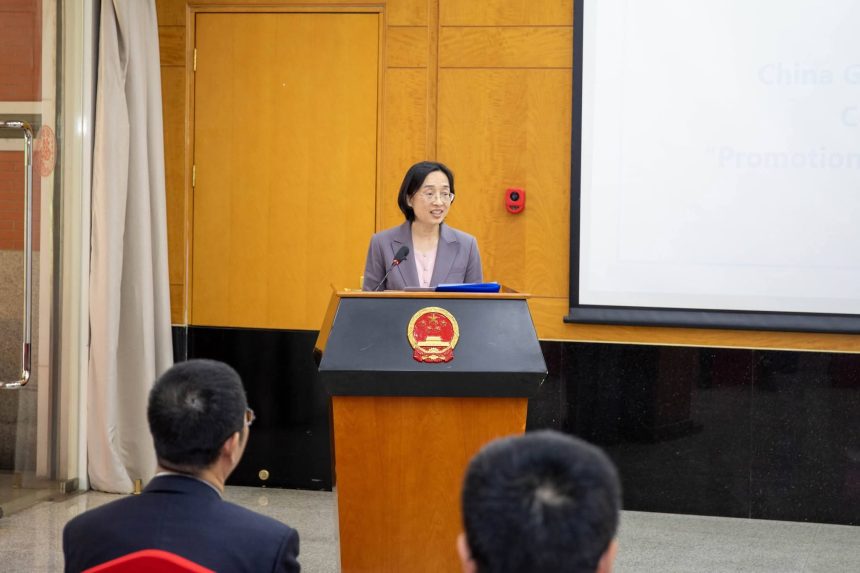
Speaking in Nairobi during the launch of a Kenya-China-UNICEF maternal and newborn health initiative, Ambassador Guo explained that Beijing’s cooperation strategy in Africa differs from traditional donor models by emphasizing consultation, shared benefits, and demand-driven development.

“China has joined hands with African countries to implement pragmatic cooperation under the mechanisms of extensive consultation, joint contribution, and shared benefits,” Ambassador Guo said.
She noted that this approach has evolved over the past 26 years under the Forum on China-Africa Cooperation (FOCAC), which serves as the main platform guiding relations between China and African states.
According to the ambassador, the current FOCAC Beijing Action Plan, covering 2025 to 2027, outlines ten core partnership initiatives focused on modernization and development cooperation between China and Africa.
Guo added that China’s broader development engagement on the continent is increasingly linked to the Global Development Initiative (GDI), proposed by Chinese President Xi Jinping in 2021 during the United Nations General Assembly.
The initiative, she explained, aligns with the United Nations 2030 Sustainable Development Goals and focuses on eight priority areas, including poverty reduction, food security, climate change, industrialization, and digital economy development.
“This initiative comprehensively addresses such issues as why development is needed, for whom development is needed, whom development relies on, and how to develop,” she said.
The ambassador revealed that China has mobilized over 23 billion US dollars under the GDI framework in the past five years and established a Global Development Project Pool supporting more than 1,800 projects across multiple sectors.
She added that China has also expanded the Global Development and South-South Cooperation Fund to four billion US dollars, supporting over 200 livelihood projects in more than 60 countries through partnerships with international organizations.
“These solid steps prove that GDI is no castle in the air. It is able to deliver real benefits and is an important driver to strengthen South-South cooperation,” Guo said.
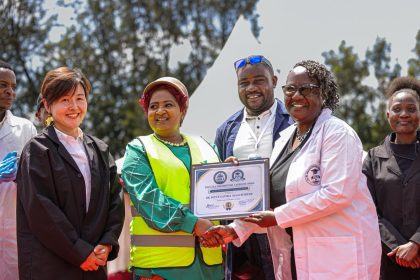
Her remarks were made during the launch of a new USD 3 million maternal and newborn health programme in Kenya, supported through the Global Development and South-South Cooperation Fund in partnership with UNICEF and Kenya’s Ministry of Health.
The initiative will target Garissa, Wajir, and Mandera counties, where maternal and newborn mortality rates remain significantly higher than the national average due to limited access to quality healthcare services.
Guo described the project as a clear example of China’s approach to development financing in Africa, which she said prioritizes “small and beautiful” livelihood projects designed to address urgent local needs while leveraging technical expertise from multilateral organizations.
“By tapping into UN organizations’ professional expertise, we will make full use of Chinese resources and implement small and beautiful livelihood projects to deliver high-level technical assistance and support to areas that are most in need,” she said.
She also disclosed that another China-backed project, aimed at supporting agro-industrial parks in Kenya through the United Nations Industrial Development Organization, is expected to be launched soon.
The ambassador outlined three principles guiding China’s cooperation strategy in Kenya and across Africa.
The first, she said, is “demand-oriented precision cooperation,” where projects are designed around the specific needs identified by local communities and governments.
“We will dock with actual needs and deliver people-centered outcomes by formulating targeted and localized implementation plans,” Guo said.
The second principle focuses on sustainability and long-term capacity building rather than short-term assistance alone.
“Short-term assistance serves long-term development, and cultivating independent development capacity is the core goal of South-South cooperation,” she noted.
Under the maternal health programme, China and its partners plan to support the training of 600 healthcare workers, including nurses, midwives, nutritionists, and clinical officers, while also improving water, sanitation, and hygiene standards in health facilities.
The third principle, according to the ambassador, centers on professional implementation, accountability, and strict oversight of development financing.
“Standardized implementation and strict quality control are key to successful delivery,” she said.
“The Chinese side will strictly supervise the whole-process use of aid funds, while UN agencies take charge of the professionalism and standardization of project implementation.”
Guo also linked the growing development partnership between Kenya and China to agreements reached during President William Ruto’s state visit to Beijing in April 2025, where both countries committed to building what they termed a China-Kenya Community with a Shared Future for the New Era.
As China continues expanding its role as one of Africa’s major bilateral development partners, the ambassador said future cooperation would increasingly focus on practical, locally driven programs capable of delivering measurable social and economic impact.