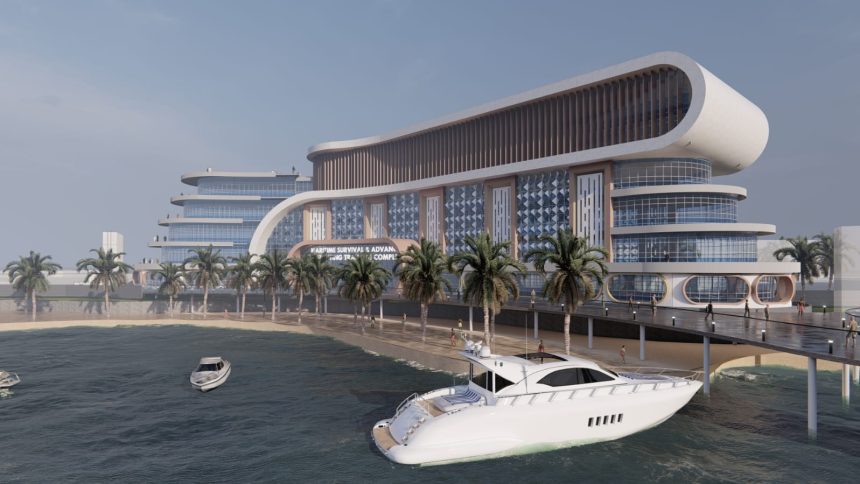
Bandari Maritime Academy (BMA) is on track to complete a Ksh 2.4 billion Maritime Survival Training and Certification Center by December 2026, a facility officials say will cement Kenya’s position as East Africa’s premier hub for maritime education.
The center will offer internationally accredited training in maritime safety, survival techniques, firefighting, emergency response and rescue operations competencies required under the International Maritime Organization’s Standards of Training, Certification and Watchkeeping Convention.

“The Maritime Survival Training and Certification Center is not just an infrastructure project; it is an investment in Kenya’s future,” said BMA Chief Executive Officer Dr. Erick Katana. “It will empower thousands of young Kenyans with globally competitive maritime skills and create pathways to employment across the international shipping industry.”
The facility will feature survival-at-sea training pools, firefighting simulation units, emergency evacuation facilities and rescue boat operation areas. Equipment will be designed to replicate real-life maritime emergencies, officials said.
Katana said the center would reduce the need for Kenyan trainees to travel abroad for specialised safety training, lowering costs and increasing access for aspiring seafarers seeking certification for international deployment.
Beyond Kenya, the academy expects the facility to attract students from across East and Central Africa, positioning the country as a regional center of excellence for maritime professional certification.
“Kenya possesses immense human capital potential,” Katana said. “By providing internationally accredited maritime training locally, we are opening doors for our youth to access rewarding careers in the global maritime labour market.”
The project will also strengthen maritime safety standards, improve emergency preparedness and support growth across Blue Economy sectors including shipping, fisheries, tourism, logistics and offshore energy.
“The Blue Economy cannot thrive without competent and safety-conscious professionals,” Katana said. “This center will play a pivotal role in developing the workforce needed to drive sustainable growth across maritime industries.”
The construction of the center began on 1st July, 2024.