China is systematically bolstering its position against major global powers across critical sectors such as manufacturing, technology, infrastructure, green energy, and military production. This is the contention of Wang Wen, Dean of the Chongyang Institute for Financial Studies at Renmin University.
In a commentary assessing China’s escalating “comprehensive national strength,” Wang argues that Beijing is quietly building structural advantages that are reconfiguring global competition, particularly with the United States.

While the Trump administration prioritises “America First” and Western analysts propagate the “Peak China” narrative, Wang asserts that Beijing has methodically surpassed the United States in five crucial dimensions of national power.
He states, “China has now surpassed the United States in the decisive material domains of economics, trade, industry, energy, infrastructure, and military production,” though he quickly points out that Washington still maintains influence in global finance, fundamental scientific research, military alliances, and cultural soft power.
Wang attributes this shift to sustained investments in industrial systems, technological innovation, and infrastructure development.
Central to his argument is China’s economic transformation. He notes that while the United States remains the world’s largest economy by market exchange rates, China has overtaken it in purchasing power parity terms, a widely used metric for comparing real economic output and living standards.
He says China’s manufacturing value-added accounts for approximately 30 per cent of the global total, surpassing the combined output of the United States, Japan, and Germany. Wang notes that China is the only nation possessing all industrial sectors classified by the United Nations, granting it a self-contained supply chain capable of producing everything from consumer electronics to advanced aerospace systems with minimal reliance on foreign suppliers.
“The reach of China’s economy is defined by its ubiquity in global trade. Since 2009, China has been the world’s largest trader of goods, supported by a highly resilient structure. It serves simultaneously as the ‘world’s factory’ and a premier consumer market.” he explains
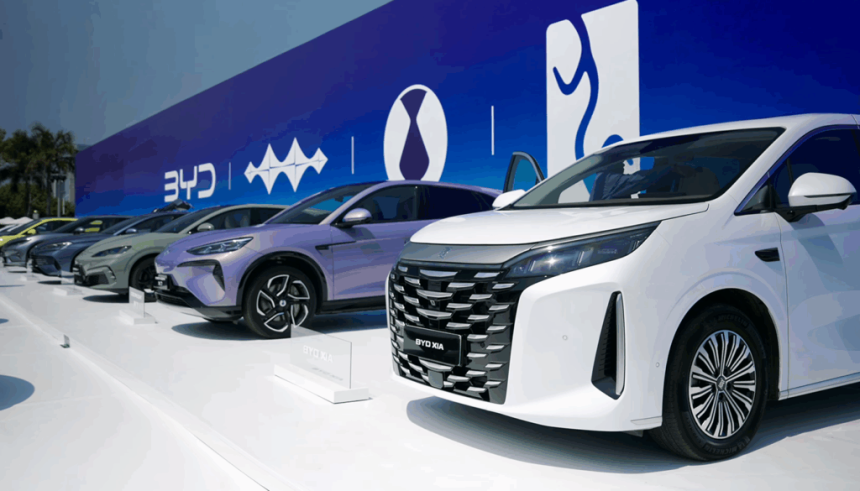
Wang points to China’s dominance in strategic sectors such as rare earth processing, electric vehicles, lithium batteries, drones, and photovoltaic equipment. He also underscores the country’s expanding role in global trade, noting that China is now a major trading partner for over 150 countries and regions.
Regarding infrastructure, Wang highlights China’s achievements, including the world’s longest cross-sea bridge, the largest high-speed rail network spanning over 45,000 kilometres (more than 70 per cent of the global total), and seven of the world’s top ten ports by container throughput.
“While the United States remains mired in debates over the rehabilitation of aging legacy systems, China has successfully constructed a hyper-efficient network that drastically reduces logistical friction and provides the physical bedrock for its real economy,” Wang observes, adding that China has also deployed 4.6 million 5G base stations, representing over 60 per cent of the global total.
In technology, Wang argues that China has evolved from a follower to becoming a peer competitor and, in some sectors, a global leader.
He notes that the country now produces over 4.7 million STEM graduates annually, more than eight times the United States’ output, and its R&D expenditure has surpassed that of America to become the world’s largest. China has achieved parity or leadership in 37 critical technologies. According to Stanford University’s 2025 Artificial Intelligence Index, the performance gap between China’s top AI models and those of the United States narrowed from 17.5 per cent in 2023 to just 0.3 per cent in 2025.
China’s advancements in artificial intelligence, quantum computing, and semiconductors feature prominently in his analysis. He notes that Chinese AI models are rapidly narrowing the performance gap with American systems while benefiting from stronger integration into large-scale industrial and commercial applications. He cites Chinese firms such as Huawei, Tencent, and ByteDance as examples of companies driving innovation despite ongoing U.S. sanctions and export restrictions.
On climate and energy transition, Wang states that China has emerged as the dominant global player in renewable energy and electric mobility, transforming the climate crisis into an engine of national ascendancy. By 2024, Wang says China accounted for two-thirds of all global investment in energy transition, controlling over 80 per cent of the global photovoltaic supply chain, and producing 75 per cent of the world’s lithium-ion batteries. In the first quarter of 2025, wind and solar capacity surpassed thermal power for the first time.
China’s total power generation capacity, at 3,349 gigawatts, now more than doubles that of the United States at 1,225 gigawatts, a disparity Wang says positions Beijing as the undisputed protagonist of the global energy transition.
“China has constructed more than 90 per cent of the world’s ultra-high voltage (UHV) transmission network, a grid stretching over 40,000 kilometres—enough to encircle the Earth,” he adds.
Regarding military capability, Wang argues that China’s military modernisation has accelerated significantly, particularly in naval shipbuilding, hypersonic weapons, and unmanned systems. He states that the Chinese navy now has more active vessels than the United States Navy and benefits from a younger fleet and a stronger industrial support base.
He also highlights China’s advances in stealth fighter production and missile systems designed to strengthen its strategic deterrence capabilities in the Western Pacific. Wang points to China’s 2025 Tiananmen Square parade as a definitive inflection point, signalling a shift from quantitative catch-up to qualitative advantage in several critical domains.
Despite his assessment of China’s progress, Wang describes China’s rise not as a bid for dominance but as the natural outcome of sustained institutional discipline and market vitality.
He acknowledges that the United States retains enduring advantages, including the global reserve currency, unparalleled basic research, global force projection, and cultural soft power, but insists these advantages do not negate the structural shifts already underway.
“China views its quiet overtaking not as a destination, but as a new baseline. Beijing is acutely aware that significant domestic challenges remain, including gaps in basic research and high-end lithography, rapidly shifting demographics, local government debt, and persistent external technological containment,” he explains.
He describes the evolving U.S.-China rivalry as less of a direct confrontation and more of a long-term competition shaped by industrial strength, innovation, and national development strategies.
“The nature of U.S.-China competition is evolving. The United States cannot halt China’s rise through external pressure or containment alone. The most rational course for both powers is to prioritise domestic renewal and the aspirations of their own citizens,” Wang wrote