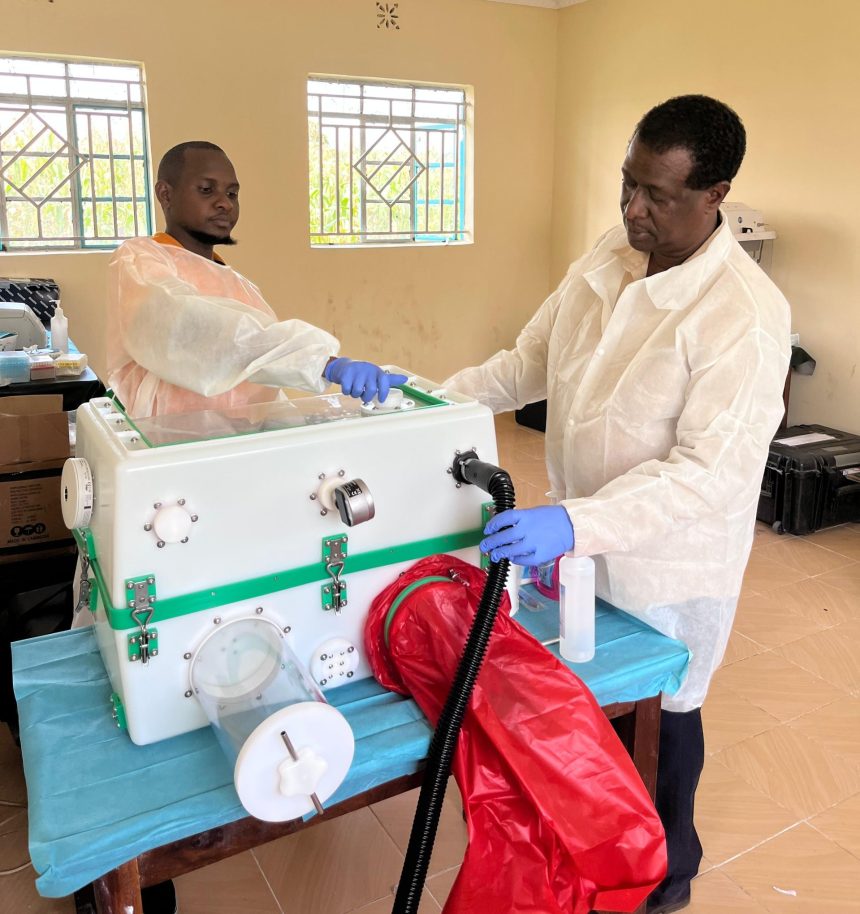
The Kenya National Public Health Institute (KNPHI) in collaboration with the U.S government-funded Strengthening Infectious Disease Detection Systems (STRIDES) has established a mobile laboratory at the Lwakhakha Point of Entry (PoE).
The move marks a significant milestone in strengthening the country’s preparedness and response to the ongoing Ebola Virus Disease (EVD) outbreak in neighbouring countries.

The newly operational facility is designed to deliver Ebola test results within approximately four hours, significantly reducing diagnostic turnaround times and enabling rapid public health action.
It becomes Kenya’s second mobile laboratory after the Alupe Mobile Laboratory in Busia County and the fifth laboratory supporting EVD diagnostics nationwide, joining the National Public Health Laboratory and the Kenya Medical Research Institute (KEMRI) laboratories in Nairobi and Kisumu.
Speaking on the development, KNPHI Acting Director General Dr. Kamene Kimenye said mobile laboratories are a critical component of outbreak response as they bring high-containment diagnostic capacity closer to areas at greatest risk.
“Mobile laboratories are essential during Ebola outbreaks because they bring high-security diagnostic testing directly to outbreak epicentres. By reducing sample turnaround times from days to just three to four hours, they enable immediate patient isolation, interrupt chains of transmission, and support the timely evaluation of novel treatments and vaccines,” she said.
The establishment of the Lwakhakha Mobile Laboratory reinforces Kenya’s surveillance and response capacity at high-risk border entry points, ensuring that suspected Ebola cases are detected, tested, and managed promptly to minimise the risk of cross-border transmission.
The KNPHI Directorate of Laboratory Science and Safety continues to play a central role in advancing Kenya’s public health emergency preparedness through strategic leadership in laboratory systems and health data management.
Besides, it coordinates disease surveillance, laboratory testing, quality assurance, and the development and validation of diagnostic testing algorithms, ensuring accurate, timely, and reliable detection of emerging public health threats.
The deployment of the mobile laboratory underscores KNPHI’s commitment to strengthening national health security by expanding access to rapid diagnostic services and enhancing the country’s capacity to respond effectively to infectious disease outbreaks.