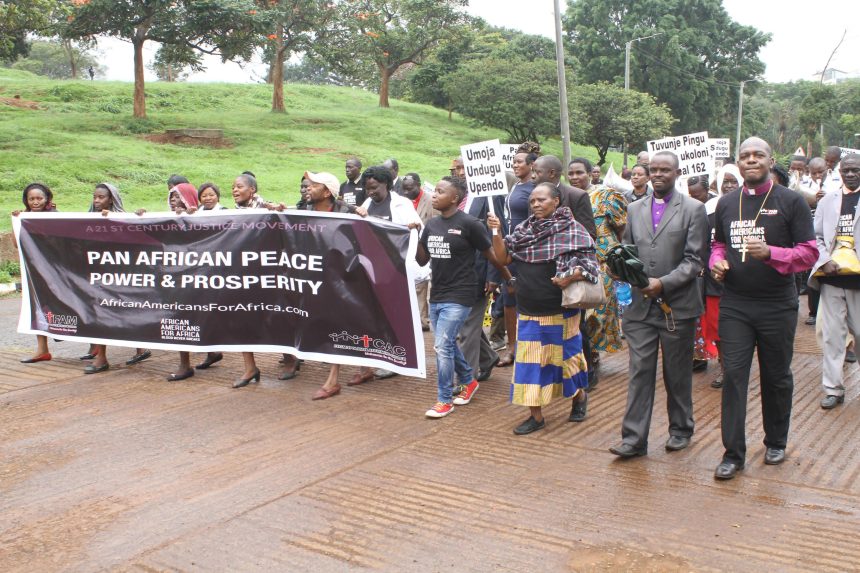
Twenty-five African and African-diaspora faith leaders have launched the African Democratic Covenant, calling for a pause on laws they say are narrowing democratic space and threatening human dignity across the continent.
The African Democratic Covenant launched by Interconnected Justice, seeks to bring together Africans on the continent and in the diaspora to examine the political, economic and social challenges facing the continent.

The covenant calls on African presidents to consider a moratorium on laws that its proponents say restrict democratic space and disproportionately target minority groups.
The proposed pause, speakers said, would allow governments, legislators, religious institutions and citizens to examine the historical and constitutional implications of such laws before further legislation is enacted.
The debate comes amid controversy surrounding Ghana’s Human Sexual Rights and Ghanaian Family Values Bill, which has been a major focus of discussions at the forum.
Speakers argued that Ghana’s proposed legislation should be considered within the country’s constitutional history and the legacy of colonial laws inherited from Britain.
They warned that provisions requiring people to report suspected violations could encourage citizens to monitor relatives, neighbours and other members of their communities, potentially creating mistrust and conflict.
Former Chief Justice of Kenya Dr Willy Mutunga placed the debate within the broader question of African sovereignty.
Mutunga argued that sovereignty should not be limited to control of minerals, land and economies, but should also include political, cultural and spiritual self-determination.
He said Africa could not fully reclaim control over its resources while allowing external forces to determine its political and spiritual outlook.
The Kenyan jurist also pointed to the role of constitutional institutions and the judiciary in protecting individual freedoms, arguing that African countries should rely on their constitutional frameworks when dealing with contentious social questions.
The forum also called for greater examination of African history before declaring that certain forms of gender expression are entirely foreign to the continent.
Addressing the Press, Professor Akosua Adomako from Ghana urged scholars to examine African languages and traditional knowledge for terms and concepts relating to sexuality and gender diversity.
She invoked the principle of Sankofa, which encourages looking into the past to recover knowledge that can inform the present.
The forum’s organisers also faced questions over whether their campaign could influence African governments where restrictive legislation has strong support among political and religious constituencies.
In response, Bishop Joseph Tolton, President and founder of Inter – connected Justice ,said the covenant was not seeking to impose an external position on African governments, but to create space for dialogue and public reflection.
They argued that political leaders in democratic societies are ultimately accountable to citizens and that public participation would therefore be critical in influencing legislation.
The forum further called for greater cooperation between Africans on the continent and the diaspora. Noting, that diaspora involvement should not amount to outsiders directing Africa’s political future, but should involve Africans at home and abroad jointly developing strategies to strengthen democratic institutions.
Reverend Canon Mpho Tutu van Furth said struggles involving different marginalised groups should be viewed as interconnected and addressed collectively.
Speakers urged journalists to examine the relationship between foreign organisations, conservative religious movements and political campaigns, as well as the possible economic interests surrounding such debates.
The covenant’s organisers said the continent’s democratic future should be shaped through dialogue between African governments, civil society, religious institutions and citizens, rather than through fear or political scapegoating.
They also proposed a Black Global Freedom gathering bringing together Africans from the continent and the diaspora to discuss governance, natural-resource extraction, spirituality, gender, human rights and economic sovereignty.