Kenya is once again entering the familiar territory of political campaigns — rallies, alliances, colourful party merchandise, roadside speeches, political slogans and the familiar faces that have dominated the country’s political landscape for decades.
But as the country heads towards the August 10, 2027 General Election, one question is increasingly difficult to ignore: will Kenyans campaign and vote the way they have always done?

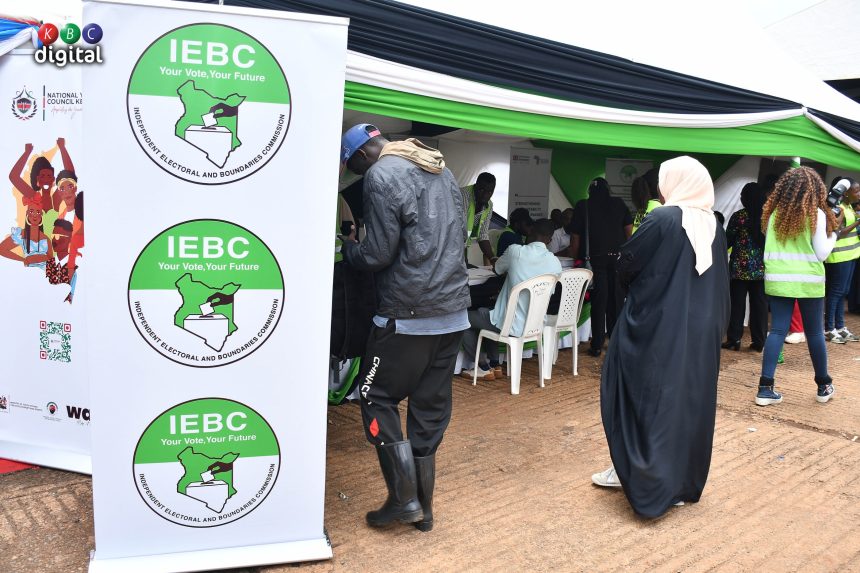
The Independent Electoral and Boundaries Commission (IEBC) has already placed the country firmly on the road to the 2027 election, with the poll scheduled for August 10, 2027.
Kenya’s political campaigns have never been static. From the era of President Daniel arap Moi and the old constitutional order, including the infamous mlolongo voting system, politics gradually evolved through the Kibaki years, the “Tosha” moment, the emergence of the so-called political dynasties and the high-octane Uhuru Kenyatta-William Ruto era.
The names of political formations have also changed with the times — KANU, KADU, ODM, Jubilee and UDM, among others, alongside alliances and formations such as the Pentagon, NASA, Linda Mwananchi and other emerging coalitions.
Yet beneath the changing names has been a remarkably familiar campaign formula: promise roads, water, markets, jobs, development and better services; mobilise crowds; invoke community networks; deploy influential political figures; and, in many cases, rely heavily on financial resources to keep the political machinery running.
The 2027 contest, however, is unfolding against a different social and technological backdrop.
The Gen Z factor has entered Kenya’s political vocabulary with force. The 2024 protests demonstrated the ability of young Kenyans to organise, communicate and mobilise through digital platforms outside traditional political structures. Their political conversations have increasingly moved from the rally ground to TikTok, X, Facebook, Instagram, WhatsApp and other online spaces.
The significance of this shift is not simply that young people are using social media. It is that political information can now travel faster than the traditional campaign caravan.
A speech delivered in one town can be clipped, questioned, criticised, celebrated or turned into a meme within minutes. A politician’s promise can be compared with an old video. A slogan can become a hashtag. A relatively unknown aspirant can suddenly gain national visibility without first commanding a huge political machine.
The IEBC itself has acknowledged the importance of young people and digital communication, noting that many young voters are conversant with new media and that online platforms can provide an engaging avenue for reaching them.
This does not mean the traditional campaign is dead.
Kenya remains a country where the political rally, the local opinion leader, the church gathering, the community meeting and the grassroots network still matter. Political mobilisation will continue to happen physically because politics ultimately requires votes at polling stations, not merely followers on social media.
The difference may be that the physical campaign and the digital campaign will increasingly have to coexist.
This is where the old guard and the emerging generation could find themselves operating on different political wavelengths.
Established politicians possess experience, networks, name recognition and resources. Younger entrants are bringing a different political language — one shaped by unemployment, the cost of living, taxation, accountability, digital activism and demands for greater participation in governance.
Some older politicians argue that young aspirants lack the experience required to govern a complex country. The younger generation, in turn, questions whether age and political experience should automatically translate into entitlement to leadership.
That tension could become one of the defining conversations of the 2027 campaign.
But there is another complication. Digital politics is not necessarily synonymous with issue-based politics. The same platforms capable of exposing misinformation can also spread it. The same networks that mobilise citizens can amplify propaganda, manipulated content and political hostility.
Therefore, the 2027 campaign may not simply be a contest between the old and the young. It could be a contest between old political methods and new political tools.
The political class may still talk about roads, water and markets. But increasingly, voters may also demand answers on jobs, the cost of living, digital freedoms, taxation, corruption, public debt, healthcare, education and accountability.
The big question, therefore, is not whether Kenya’s political campaigns will change. They already have.
The bigger question is how far that change will go.
Will money and political machinery continue to dominate? Will traditional ethnic and political loyalties retain their influence? Will young candidates transform political competition? Will social media translate into actual votes? And will the established political class adapt to an electorate that can question, fact-check and challenge political messaging in real time?
Those questions will accompany Kenya into 2027.
For now, the campaign season is gathering momentum. The familiar political names remain visible, but alongside them are newer faces, new movements and a generation determined to make its voice heard.
The rallies may still be loud.
The posters may still cover the streets.
The promises may still sound familiar.
But the audience has changed — and Kenya’s politicians may soon discover that a new audience demands a new campaign.