
It is a chilly morning in Beijing. Participants attending the Seminar on New Quality Production Forces for National Media in the Indian Ocean Region arrive at the Beijing Dahongmen International Convention and Exhibition Centre, one after another.
Their expressions tell a story of their own. The biting cold that has characterised the Chinese capital since their arrival is clearly taking its toll as the winter season sets in.

Hailing from Kenya, South Africa, Indonesia and Mauritius, the participants engage in animated conversations, exchanging experiences and observations in spirited attempts to keep warm.
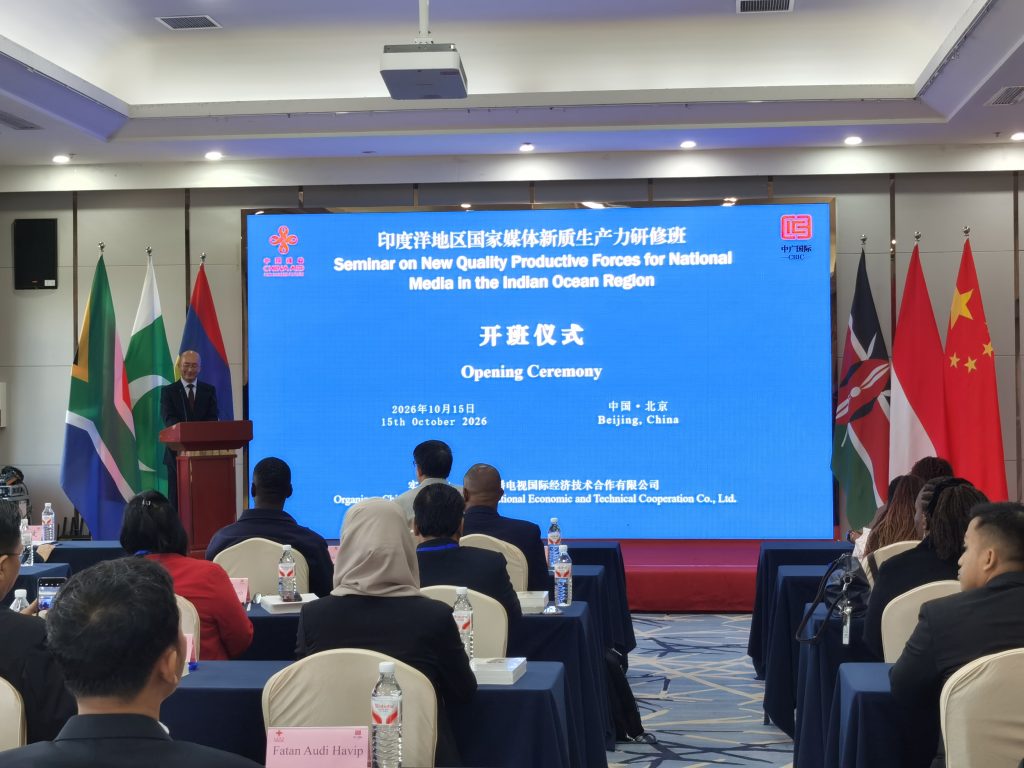
The conversations became even livelier when Prof. Li Fangni, a lecturer at the Communication University of China (CUC), took to the podium.
“Which profession do you think cannot be taken over by Artificial Intelligence (AI)?” asked Prof. Li, a former television presenter with a particular interest in sports, as she opened her daylong lecture.
The question sparked several responses. Doctors, teachers, chefs and caregivers working in nursing homes are among the professions participants identified as being relatively immune to the disruptions posed by AI. They offered various justifications for their choices, largely centred on the importance of human interaction, empathy and judgement.
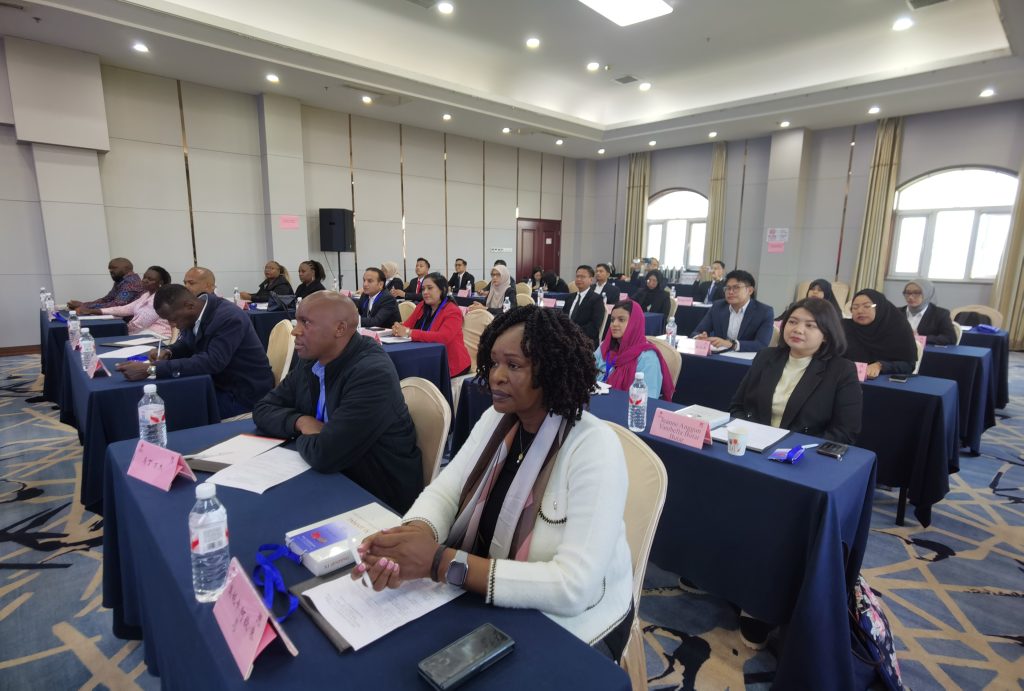
Prof. Li, however, cautioned that although the human element in some professions may be difficult to replace, the impact of AI on these sectors cannot be ignored.
She illustrated this by pointing to the growing use of AI-powered technologies in cooking, where machines can undertake much of the preparation, leaving human beings with tasks such as tasting and assessing the final product.
The message was thus clear: no profession is entirely insulated from the technological revolution.
For the media industry, this transformation is already well underway.
The Central Kitchen Model
As AI continues to reshape industries across the world, one of the sectors experiencing significant change in China is the newsroom.
Traditionally, news gathering required a team of professionals dispatched to the field, typically comprising radio and television reporters and a camera operator. Each played a distinct role in collecting, recording and packaging information for different media platforms.
In China’s increasingly digitised media landscape, however, this conventional approach is giving way to a more integrated system of news gathering and production.
The People’s Daily, for instance, operates an integrated media production and convergence framework commonly referred to as the “Central Kitchen Model”.
Under this approach, a single journalist can be deployed to cover an event, such as a political gathering of the Communist Party of China, armed with a digital device.
Rather than relying on a large crew to produce separate content for different platforms, the journalist uses AI-powered tools and digital applications, including Kimi, CapCut, Kling, Jimeng and DeepSeek, to generate and package text, images, audio and video content.
The process is guided by the principle of “one collection, multiple generation, and multi-channel distribution”.
Once collected, the raw content is uploaded to a central repository, where different departments can access and adapt it according to their editorial and distribution requirements.
The model allows one reporting assignment to generate multiple content formats for different audiences and platforms. It also promotes collaboration across departments, reduces duplication of effort and improves the speed and efficiency of news production.
At its core is a mobile-first approach that recognises the growing importance of digital platforms in news consumption.
The concept is also being implemented at China Central Television (CCTV), where it operates under what is known as the “Super Newsroom” model.
The virtual team: Redefining newsroom operations
A key driver of the Central Kitchen Model is the concept of the virtual team.
This is a specialised group comprising editors, reporters, graphic designers and other media professionals who work collaboratively to ensure that content uploaded to the central repository is processed and distributed across various platforms in a timely manner.
Explaining China’s media convergence policy and strategy, Prof. Chen Qiang, also a lecturer at CUC said the model embraces multi-format content production to expand the possibilities of news dissemination.
“The model works under a multi-format exploration to push the boundaries of diverse news dissemination,” he remarked.
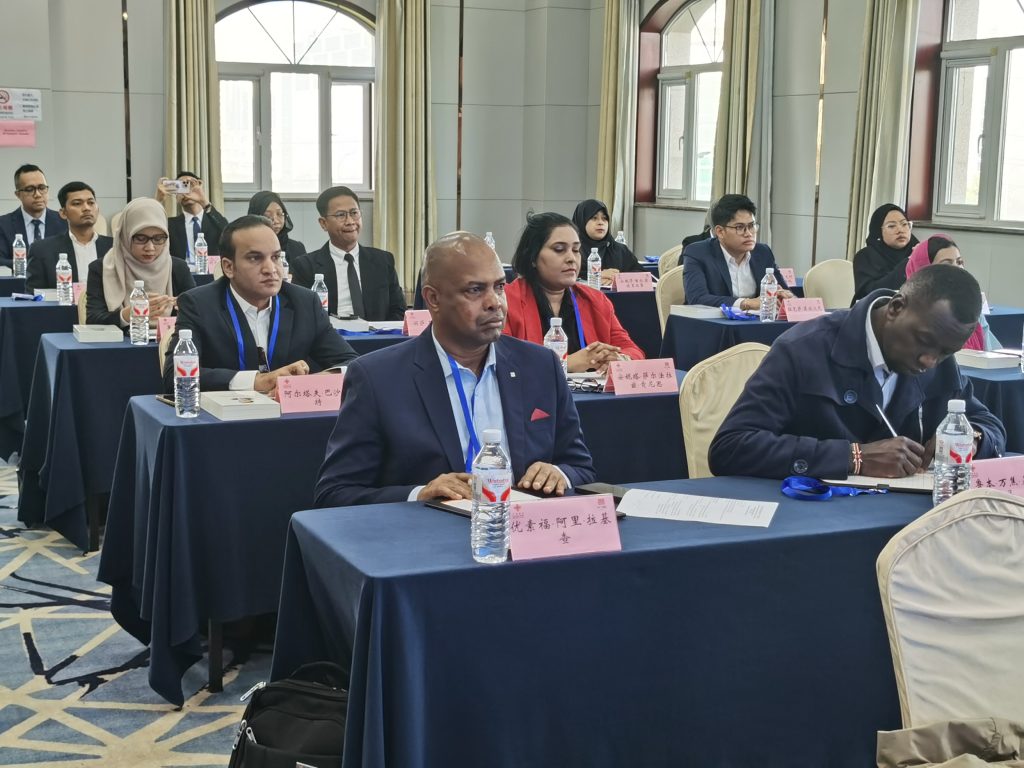
But does such a system risk rendering some media professionals redundant?
Responding to concerns about possible job losses, Prof. Chen argued that the transition should be viewed primarily as a restructuring of newsroom operations rather than the wholesale elimination of jobs.
“What has to be done is restructuring. That is, original teams need to be broken and people willing to work under the virtual team assigned the task, while the remaining can be assigned new roles elsewhere,” he submitted.
His argument points to a broader shift in the skills and organisational structures required in modern newsrooms.
As media consumption habits evolve, traditional media organisations are increasingly being challenged to repackage their content in formats that appeal to younger audiences, particularly those who consume news predominantly through mobile devices and social media platforms.
Prof. Chen noted that CCTV is embracing this shift through what he described as “cross-screen innovation to create original converged media content, and focuses on short video and exclusive IPs for fragmented dissemination”.
The strategy seeks to reach audiences across different screens and platforms by adapting content originally produced for television to suit the shorter attention spans and changing consumption habits associated with digital media.
This means prioritising short-form videos, mobile-friendly storytelling, original multimedia content and the adaptation of traditional big-screen productions for smaller devices.
The objective is not simply to move existing content online, but to rethink how news is packaged, presented and distributed to remain relevant in an increasingly competitive digital environment.
AI and the future of traditional media
The changes unfolding in China’s media industry reflect a wider transformation taking place across the global broadcasting and audiovisual landscape.
As earlier pointed out by Cao Shumin, the Director of China’s National Radio and Television Administration (NRTA), AI-driven information technologies are exerting an unprecedented, extensive and profound impact on the radio, television and audiovisual industries.
This transformation presents both opportunities and challenges for traditional media organisations.
On the one hand, AI offers opportunities to streamline news gathering, accelerate content production, improve newsroom efficiency and expand audience reach. On the other, it requires media professionals to acquire new skills, adapt to emerging technologies and rethink established approaches to journalism and broadcasting.
As technological innovation continues to advance, media organisations must keep pace with these developments while strengthening their capacity to harness science and technology as tools for innovation, support and transformation.
The broader objective, as emphasised in China’s media development strategy, is to move radio and television organisations into the mainstream digital environment, where audiences increasingly access information, entertainment and public affairs content.
Ultimately, the emerging “one person, one device” approach illustrates how dramatically the newsroom is evolving. A journalist who once needed an entire production crew can now collect, process and package content for multiple platforms using a single device supported by AI-powered applications.
Yet, while technology may simplify production processes and expand the possibilities of storytelling, journalism remains fundamentally a human-centred profession.
The ability to verify information, exercise editorial judgement, provide context, hold power to account and tell stories with empathy cannot simply be delegated to machines.
For media organisations across the world including the Kenya Broadcasting Corporation (KBC) where I work, therefore, the challenge is not whether to embrace AI, but how to integrate it responsibly without compromising the credibility, independence and human values that underpin journalism.
The writer is a Senior News Editor at the Digital Department, KBC