Food security is no longer simply a question of whether a country can grow enough food. It is also about whether farmers have reliable access to water, technology and markets, whether food can move efficiently from farms to consumers, and whether nations can withstand droughts, supply chain disruptions and rising demand.
These challenges are particularly important for Kenya, where agriculture supports millions of livelihoods and remains central to economic growth. They also explain why agriculture has become an important pillar of cooperation between Kenya and the United Arab Emirates (UAE).

The two countries bring complementary strengths to this partnership. Kenya has considerable agricultural potential, an enterprising farming community and a strategic position connecting East Africa to regional and international markets. The UAE brings investment capacity, expertise in logistics and food supply chains, and commercial connections that can help Kenyan producers reach new markets.
An immediate task would be to bring these strengths together in ways that deliver tangible benefits for farmers, businesses and consumers.
The signing of the Kenya–UAE Comprehensive Economic Partnership Agreement (CEPA) in January 2025 provided an important framework for advancing this ambition. By supporting trade, investment and private-sector cooperation, the agreement creates opportunities to strengthen agricultural production and develop the businesses that support it.
However, the real value of such an agreement will be measured by what happens on the ground. Can Kenyan farmers reach more buyers? Can agribusinesses secure investment to expand production? Can food processors add value locally rather than exporting raw commodities? These are the practical outcomes that should define the progress.
Why Investment Must Go Beyond the Farm
The proposed development of the Galana Kulalu Food Security Project illustrates the scale of opportunity. In February 2025, Kenya’s State Department for Irrigation announced that UAE-based Al Dahra Group was interested in investing more than US$800 (approx. KSh 103 billion) deployed in multiple phases over a 10-year period to support irrigated agricultural production across approximately 200,000 acres. The company’s proposed farming area is 180,000 acres. The remaining 20,000 acres are allocated to another private entity, Selu Ltd. Implementation heavily relies on the construction of the Galana Dam (a 306 million cubic meter facility planned by China Road and Bridge Corporation) to secure stable, perennial water access.
But the UAE’s role here isn’t just about finances. Al Dahra operates over 400,000 acres of farmland globally, and what it brings is a whole set of know-how for farming in arid conditions—how to use water, which crop varieties to pick, how to keep yields stable.
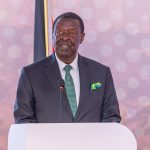
Agriculture Cabinet Secretary Mutahi Kagwe put it bluntly: Kenya cannot afford to have idle land while importing food. Behind that statement is real financial pressure. Kenya spends significant foreign exchange on imported cooking oil, sugar, and grains every year. Once Galana Kulalu is fully operational, the government’s own estimates suggest savings could reach KSh 400-500 billion annually in import costs.
But the significance of Galana Kulalu extends beyond the crops harvested. Large-scale agricultural projects can create demand for machinery, transport, storage, packaging, food processing and animal feed production. They can generate employment and open commercial opportunities for local suppliers.
It’s for this reason that the Government gazetted Galana Kulalu as an agricultural special economic zone offer another opportunity to build on this foundation. Connecting farming with processing, manufacturing and logistics would allow more value to remain within the country. Rather than exporting agricultural produce in its raw form, Kenya could develop a stronger domestic food industry and create skilled employment, particularly for young people.
Translating Trade into opportunity
An important milestone in this regard will be the inaugural Gulfood360 Africa/Kenya platform, scheduled for Nairobi from 4 to 6 May 2027. The event will bring together players across food production, processing, technology, logistics and international trade.
Its significance lies in connecting African producers with global buyers and investors. For Kenyan businesses, it offers an opportunity to explore export markets, attract investment and establish commercial partnerships. For international investors, it provides a platform to engage with the continent’s expanding food economy. Kenya’s strategic location and established regional connections give it a strong basis for developing this role.
And the UAE hasn’t forgotten the humanitarian side. In February this year, the UAE Aid Agency sent 30 tonnes of food assistance to communities hit hardest by drought. Dubai Cares launched a school meals programme in Embu County, using community kitchens to provide daily meals to nearly 400 children across 21 rural schools, creating over 160 local jobs and sourcing ingredients from smallholder farmers. Put these projects side by side with a mega-investment like Galana Kulalu, and the logic is actually consistent: short-term relief, long-term capacity building.
Ultimately, food security cannot be achieved by investment figures or trade agreements alone. It depends on whether farmers become more productive, businesses create sustainable employment, food reaches consumers affordably and communities are better prepared for climate shocks. That is how the UAE–Kenya agricultural partnership can move beyond cooperation on paper and become a lasting investment in shared prosperity.
Zachary Ochieng is a Global Communications Strategist and former Business and Technology Editor