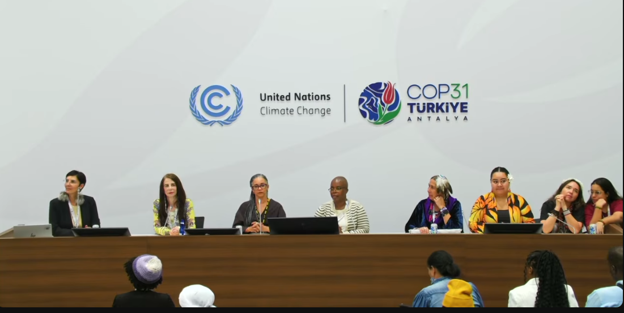
African countries must ensure that the global transition to clean energy does not reproduce the colonial, patriarchal and extractive systems that have historically exploited the continent’s resources while leaving its people impoverished, Dr Melania Chiponda of Shine Collab has warned.
Speaking at the 31st United Nations Climate Change Conference (COP31), Dr Chiponda challenged the celebration of Africa’s growing recognition in climate negotiations, arguing that inclusion in policy declarations means little without adequate financing, energy access and decision-making power for local communities.

“We cannot celebrate a just transition simply because Africa and indigenous peoples are mentioned in the preambles. Where are the resources? Our communities and economies need to be adequately resourced, without conditions that erase our identities, undermine our knowledge systems or impose externally driven development models,” she said.
Dr Chiponda warned that the growing global demand for transition minerals, particularly lithium, risks turning African countries into sacrifice zones once again, supplying resources to industrialised economies while their own populations remain energy-poor.
Drawing on Zimbabwe’s experience, she highlighted the contradiction between the country’s substantial lithium reserves and persistent energy deprivation, particularly in rural areas. Citing electrification levels of approximately 66 per cent in urban areas and 20 per cent in rural areas, she questioned the fairness of an energy transition that excludes communities living closest to mineral deposits.
She cited the indigenous Tonga people, whose communities host significant mineral resources but continue to experience severe energy poverty.
“It is deeply unjust that communities sitting on some of the country’s largest lithium deposits have no electricity, cannot afford lithium batteries and continue relying on polluting energy sources, while minerals extracted from their land are shipped elsewhere to power other economies,” she said.
Dr Chiponda said this reflects a longstanding pattern of resource extraction in which Africa supplies the raw materials underpinning global industrial development but captures little of the resulting benefits. She drew parallels with the colonial exploitation of African coal, copper and other minerals, warning that the current scramble for transition minerals could perpetuate these inequalities under the banner of climate action.
She also challenged the continued marginalisation of African knowledge systems, cultures and identities, arguing that externally imposed development models have historically privileged knowledge from the Global North over indigenous expertise and community-led solutions.
For Shine Collab, a women-led ecofeminist organisation advancing climate justice, renewable energy access and a just transition, the challenge goes beyond replacing fossil fuels with renewable energy. It requires transforming the economic and political systems that determine who controls resources, who benefits from development and who bears its costs.
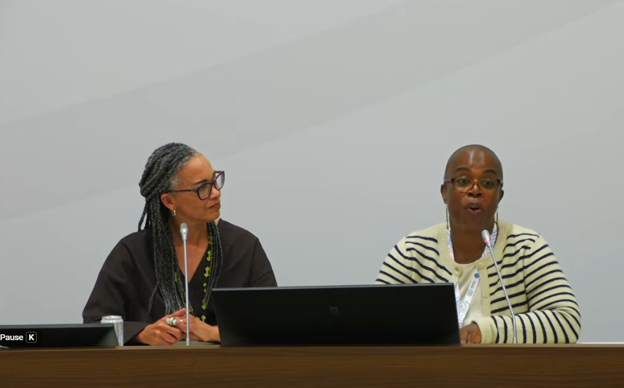
“A just transition must go beyond moving from fossil-fuel-driven energy systems to renewable energy. It must also be a transition away from extractive, patriarchal, colonial and imperialist systems. We cannot build a just future using the same structures that created historical injustices,” she said.
Shine Collab maintains that Africa’s energy transition must be measured not only by minerals extracted, renewable energy capacity installed or emissions reduced, but also by whether women and marginalised communities gain access to affordable energy, control over their resources and influence over decisions shaping their futures.
The organisation calls on governments, climate financiers and private-sector actors to move beyond symbolic commitments and deliver a feminist, decolonial and community-centred energy transition grounded in justice, dignity and equitable resource distribution.