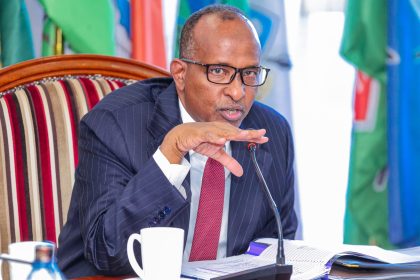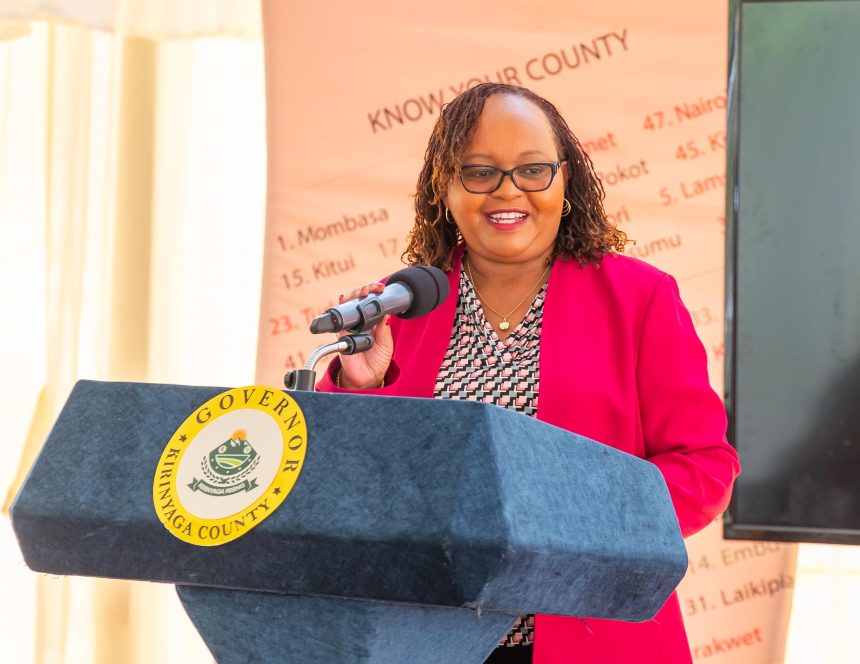
Kirinyaga Governor Anne Waiguru has called on County Governments to safeguard healthcare gains made under devolution against unconstitutional directives by the Ministry of Health.
Waiguru said health is a devolved function and therefore Ministry of Health must involve county Governments in making decisions that touch on healthcare.

Speaking in Kirinyaga on Tuesday during the Quarterly Consultative Meeting of County Executive Committee Members for Health, the Governor said counties are autonomous entities and have a clear way of working with the national government.
The Governor was reacting to a directive issued by Principal Secretary for Medial Services Ouma Oluga who had directed Social Health Authority (SHA) compliance officers to remove all payment paybills in government health facilities.
She said Ministry of Health should desist from issuing directives that are unconstitutional and undermines intergovernmental collaboration.
“The mechanism of communicating directives and policies is very clear and we urge that the Ministry of Health would adhere to the guidelines that we have always worked through,” Waiguru said.
The Governor said that the Ministry of health should seamlessly work with County Governments to consolidate progress made in healthcare over the past 13 years while addressing persistent challenges affecting service delivery.
Waiguru called for consultation and cooperation between the two levels of government, particularly in decisions affecting devolved health services.
“As County Executive Committee Members (CECMs) for Health, your leadership is critical in translating policies and investment into better health outcomes. Further you must be steadfast in defending devolution by rejecting directives to county officials by ministry of Health officials that are unconstitutional,” she said.

She said sustaining healthcare investments and programmes would require adequate financing, effective coordination between the two levels of government and accountability in service delivery.
The meeting brought together health sector leaders to assess the progress and challenges of implementing UHC within the devolved system.
On UHC implementation, Waiguru said the transition to the Social Health Authority (SHA) presented an opportunity to expand healthcare access and strengthen financial protection for Kenyans.
However, she cautioned that its success would depend on timely reimbursements, efficient claims processing and predictable financing at healthcare facility level.
She also called for clarity, equity and accountability in resource allocation, noting that counties needed clear information on the flow of funds, how resources would be disbursed and how they would be accessed.
“By the time we complete this workshop, we must be clear on the flow of funds,” she said.
On funding conditionalities, she called for measurable and achievable requirements, warning against vague provisions that could disadvantage some counties.
“We must ensure that the framework does not create a situation where some counties benefit from the funds while others do not,” she said.
The Governor also called for the elimination of unnecessary bureaucracy and emphasized that funding decisions must reflect the unique priorities of individual counties.
“County priorities must be key; our needs should determine the resources we receive,” she said, citing Kirinyaga’s irrigation-dependent economy and associated malaria burden as an example of why interventions must address county-specific challenges.
Waiguru urged counties to learn from those already implementing the Government-to-Government (G2G) framework, saying their experiences could provide practical lessons for improving implementation.
She said healthcare remained one of the most visible measures of the success of devolution, noting that counties had transformed a sector that, in 2013, was characterized by dilapidated and understaffed facilities.
“In 2013, the country had 8,466 health centres and dispensaries. Today, there are 14,710 operational health facilities,” she said, adding that counties had constructed 1,419 dispensaries and health centres during the first five years of devolution alone.
She noted that County Governments now employ approximately two-thirds of the country’s health workforce, while 107,831 Community Health Promoters are taking primary healthcare services to households across all 47 counties.
The expansion of health infrastructure and improvements in antenatal care and skilled deliveries had brought healthcare closer to Kenyans and contributed to better maternal and child health outcomes.
Waiguru further observed that specialized services previously available mainly in Nairobi and a handful of provincial hospitals, including intensive care, dialysis, cancer treatment and modern imaging, were now accessible in county hospitals.
She attributed the expansion partly to the partnership between the National and County Governments in providing specialized medical equipment, enabling patients to receive treatment closer to home.
Waiguru said Kirinyaga’s experience reflected the broader transformation taking place across the country, citing improvements in maternal and neonatal health, hospital capacity and access to healthcare noting that maternal mortality had declined from 88 deaths per 100,000 live births in 2017 to 49 in 2025, while neonatal mortality had dropped from 26 to 11 deaths per 1,000 live births.
Bed capacity at Kerugoya County Referral Hospital had more than doubled, increasing from 220 to 450, while the county’s public healthcare facility network had expanded from 63 to 76 facilities.
The meeting also marked the first anniversary of the County Inter-MPDSR initiative, which strengthens maternal and perinatal death surveillance and response.
With the 2027 General Election approaching, Waiguru called for an orderly transition of county administrations to prevent disruptions to ongoing health programmes.
She said counties had a responsibility to document achievements and commitments, safeguard existing programmes and strengthen institutions to ensure continuity of healthcare services beyond the current administrations.
The Governor urged CECMs for Health to use the meeting to share experiences, address common challenges and develop practical solutions to strengthen healthcare delivery.
She said the true measure of achievement in the health sector would be reflected in the lives saved, the quality of care delivered and the confidence Kenyans have in their health systems.
Council of Governors (CoG) Chief Executive Officer Mary Mwiti recognized Waiguru’s leadership during her tenure as CoG Chairperson, describing her as the initiative’s flag bearer with intervention in Kirinyaga already yielding results.
Mwiti emphasized the importance of health officials understanding their mandates and exercising professional judgement rather than blindly following instructions.
On the proposal to take down hospital paybills, she said the move would be impractical because some patients paid in cash and SHA did not cover all health services. She said hospital paybills therefore needed to remain operational to facilitate payments for services outside the scheme.