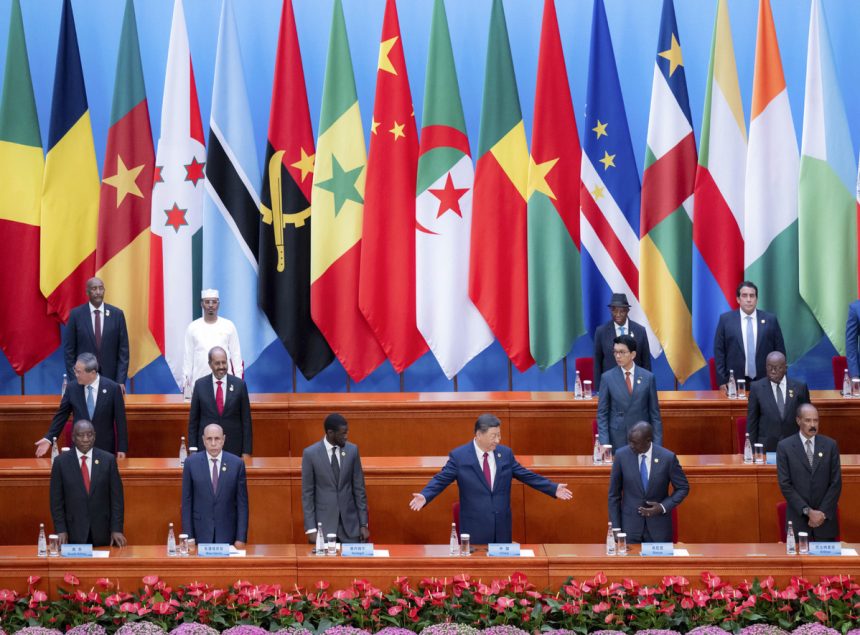
In 2021, President Xi Jinping’s keynote address at the Eighth Ministerial Conference of the Forum on China-Africa Cooperation (FOCAC) in Dakar, Senegal, outlined a vision for China-Africa relations extending beyond diplomatic friendship. He called for a partnership focused on advancing economic transformation, strengthening African institutions, and improving livelihoods across the continent.
Five years later, this speech remains an important reference point for understanding the trajectory of China-Africa cooperation. Its core message was the need to build a community with a shared future through practical cooperation, mutual benefit, and a common commitment to development.

Xi’s vision was rooted in a historical relationship forged by solidarity during Africa’s anti-colonial struggles and China’s own development journey. He emphasized that the relationship’s enduring strength lay in sincere friendship, equal treatment, mutual benefit, common development, and respect for national sovereignty.
These principles formed the political bedrock for his four propositions: uniting against the COVID-19 pandemic, which at the time had caused a global health crisis; deepening practical cooperation; promoting green development; and upholding fairness and justice.
They also acknowledged Africa’s need for investment, technology, trade opportunities, and greater capacity to determine its own future.
Significantly, Xi prioritized Africa’s development, positioning African countries at the heart of a partnership designed to expand productive capacity, create employment, and strengthen economic resilience, rather than merely viewing them as aid recipients.
This approach informed the China-Africa Cooperation Vision for 2035, the partnership’s long-term framework. Its first three-year implementation plan comprised the nine cooperation programs announced in Dakar, covering health, agriculture, trade, investment, digital innovation, green development, capacity building, people-to-people exchanges, and peace and security.
These commitments addressed immediate challenges like the COVID-19 pandemic while supporting Africa’s long-term economic transformation.
In agriculture, commitments included ten poverty-reduction and agricultural projects, deploying 500 agricultural experts, and supporting modern agricultural technology to enhance food security, improve productivity, and sustain rural livelihoods.
Trade and investment were equally prominent, with Xi pledging to import $300 billion worth of African goods over three years, provide $10 billion in trade finance for African exports, and promote at least $10 billion in Chinese investment in Africa.
These proposals also supported small and medium-sized enterprises, industrialization, and job creation, recognizing that sustainable development requires productive industries, market access, technology transfer, and the ability to generate employment from domestic resources, beyond just infrastructure.
The digital innovation and green development programs further expanded this agenda. Proposed cooperation in satellite applications, scientific research, renewable energy, and climate adaptation offered avenues to tackle emerging development challenges while facilitating Africa’s transition to more sustainable economies.
The capacity-building program was similarly vital, with President Xi proposing ten new or upgraded schools, expanded vocational education and training, and opportunities for African professionals to participate in research and exchange programs. Such human capital investments are crucial for translating external cooperation into lasting domestic capacity.
The critical question, however, is the extent of implementation. There is evidence of progress. At the 2024 FOCAC summit in Beijing, China and African leaders acknowledged the implementation outcomes of the nine programs and the Dakar Action Plan for 2022-2024. They also adopted a new action plan for 2025-2027, ensuring continued cooperation.
The continuation of these programs suggests that the 2021 commitments were not mere diplomatic declarations but established a practical framework for cooperation.
For instance, China introduced a comprehensive, unilateral zero-tariff policy at the 2024 FOCAC Summit in Beijing, taking effect on December 1, 2024. Initially granting zero-tariff treatment for all tariff lines of 33 African Least Developed Countries with diplomatic relations, the policy was extended in May 2026 to all 53 African countries with diplomatic ties, removing duties even for middle-income economies like Kenya, Nigeria, and Egypt, to encourage African exports to China.
Xi also voiced opposition to interference in internal affairs and unilateral sanctions, reflecting a broader argument for developing countries to have a greater voice in shaping international economic and political arrangements.
African leaders have championed this principle as the most meaningful when translated into stronger negotiating capacity, policy autonomy, and partnerships that respect national development priorities.
The promise of a China-Africa community with a shared future ultimately hinges on converting political goodwill into measurable development gains. The 2021 Dakar summit established an ambitious framework. The subsequent implementation of its programs provides grounds for recognizing progress, while remaining commitments demand continued attention.
China has since unveiled other initiatives, including the Global Development Initiative, Global Security Initiative, Global Governance Initiative and Global Civilization Initiative. These, alongside the Belt and Road Initiative and FOCAC, foster partnerships to improve healthcare, strengthen food security, expand economic opportunity, and empower African countries to pursue their development ambitions with greater confidence.