The world faces unprecedented environmental and economic challenges that signal a shared commitment to shaping a future that is not only prosperous, but sustainable, equitable, and resilient.
The linear model of resource extraction, production and consumption that has long powered the global economy is reaching its ecological limits. The United Nations estimates that humanity uses resources at 1.7 times the ecological capacity of the planet every year. Meanwhile, extreme climate events have grown five times in the last 50 years, resulting in more than $3.6 trillion in global economic losses. These statistics represent very real impacts on lives, property and economic activity. In this context, a green economy is not a luxury, it is a necessity.

The United Nations Environment Programme (UNEP) defines a green economy as an economy that delivers on human well-being and social equity, while minimizing risks and reducing environmental pressures and scarcities. It is a low-carbon, resource efficient and socially inclusive economy. But the shift towards this type of economy is not only an environmental problem – it’s also a financial, policy and strategic problem.
This is a challenge and opportunity for financial managers. In 2023, over $1.7 trillion was spent on clean energy, surpassing fossil-fuel investment for the first time. And renewable energy now accounts for nearly 30% of global electricity generation. These are changes in investment trends – trends that financial leaders need to understand, model and control.
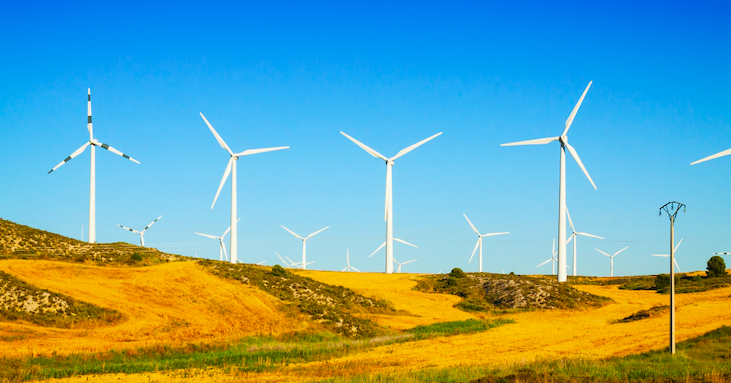
Consider Denmark, which has transitioned to a sustainable economy. The country now generates more than 50% of its electricity from wind, thanks to strong policy frameworks, public-private partnerships and financial strategies. This did not happen overnight. It has been a long time in the making, with decades of investment, policy stability and public acceptance. Denmark is now not only energy independent, but also exports renewable energy technologies.
Another example is Costa Rica. It generates 99% of its power from renewables such as water, wind and geothermal. The country has shown that developing nations can be green and prosperous by investing and protecting their environment. Look at China, which is often described as industrializing, is also green. It is the world’s biggest maker of solar panels and electric vehicles, and is seeking carbon neutrality by 2060. China has already invested more than $500 billion in green infrastructure and renewable energy in 2022. This is not just a testament to its environmental concerns but also to the huge market opportunities of green industries.
The above examples underline the fact that the green transition is not a cost but an investment. This echoes the words of the great economist John Maynard Keynes, who said, “The trouble with ideas is that you can’t get out of the room.” The old idea that economic growth and sustainable development cannot occur together, is replaced by the latter idea that sustainability is innovation, competitiveness and value creation.
This shift is being driven by financial philosophy. Traditional financial thinking is short-term, and often ignores environmental and societal risks. However, the rise of Environmental, Social and Governance (ESG) investing is shifting this imperative. More than $40 trillion of ESG assets under management are anticipated by 2030, representing a significant proportion of the global managed assets. Investors are recognizing that the lower risk, more resilient and more profitable companies are those with better sustainability credentials. This is in line with sustainable finance, which takes into account environmental and social factors when making investments. This makes this concept consistent with Peter Drucker’s quote, “What gets measured gets managed”. By taking into account sustainability indicators in financial reporting and management decision-making, companies can better manage risks and seize opportunities in line with the principles of the green economy.
Innovation is creating business opportunities, increasing efficiency and reducing environmental impacts. For instance, the cost of solar photovoltaic systems has declined by over 80% in the past ten years, making it the lowest cost energy source. Similarly, developments in batteries and electric cars are changing the transportation sector, reducing emissions and enabling new business opportunities.
In the financial sector, FinTech is enhancing green finance. Digital platforms are making it easier for small and medium-sized firms to access financing to undertake sustainable projects, and blockchain is improving transparency in carbon and supply chains. These technologies are not only accelerating the shift, but also democratizing it, enabling more participation.
Policy is also vital. Government plays a key role in rule setting, incentives and enforcement. Pricing carbon, green bonds, tax credits and regulations can help create a sustainable market. There are now over 70 carbon prices in place globally, covering 23% of greenhouse emissions by 2024. But more needs to be done to scale up and standardize. In particular, green bonds play a critical role. In recent years, more than $500 billion in green bonds have been issued for renewable energy, green infrastructure and climate adaptation. These bonds provide a model for how financial markets can be used to achieve environmental outcomes and deliver investment returns. But the transition isn’t without obstacles.
But the shift is not without problems. Developing countries, especially in Africa, face constraints in terms of access to financing, technology and capacity building. The continent of Africa is responsible for less than 4% of the world’s greenhouse emissions, yet it is disproportionately impacted by climate change. To redress this, we need international cooperation, innovative financing and climate justice. A form of blended financing, which involves public and private capital, could help. Blended finance can mobilize private investment through the use of public capital to de-risk projects.
It is particularly valuable to build infrastructure, renewable energy and sustainable agriculture in the developing world. For example, in Kenya, geothermal energy in the Rift Valley has helped the nation create the renewable energy hub of Africa. Over 90% of electricity produced in the country now comes from renewables – geothermal, hydro and wind. The largest wind farm in Africa, Lake Turkana Wind Power showcases how investment and collaboration can lead to social and economic sustainability.
As we make this journey, we need to think in terms of a system. Sustainability is not just an environmental issue – it is also a financial, technological, policy and social issue. It requires working across these areas. As the African proverb goes, “If you wish to go quickly, go alone. If you wish to go far, go together”. Capacity building and education are also critical. We need to train the next generation of leaders in sustainability and bring sustainability into education and training, and into business cultures. The education of investors must be based on climate change, sustainable finance and ethical investment.
Let’s consider the philosophy of this transformation. In essence, the green economy requires a value shift. It calls for us to look beyond GDP growth as the sole measure of growth, and consider other measures of well-being, resilience and sustainability. Remember the great Mahatma Gandhi’s quote: “There is enough for everyone’s need but not for everyone’s greed.” Therefore, being green is a question of values, ethics and responsibility.
Finally, achieving a green economy is not a simple task, but it is a promising one. It takes courage to question the status quo, to be innovative in seeking new possibilities and to be determined in making changes. We all have a part to play, be we policymakers, academics, bankers, businessmen or CEOs. Let us seize this moment to align our financial systems with the needs of our planet, to invest in solutions that deliver both economic and environmental returns, and to build a future that is inclusive, resilient, and sustainable.
Prof. Tom Nyamache is a Senior Lecturer at the Turkana University.