China has reaffirmed its calls for de-escalation in the Middle East conflict amid ongoing ceasefire negotiations related to Iran’s proposed “10-point plan,” which is currently under review by the United States.
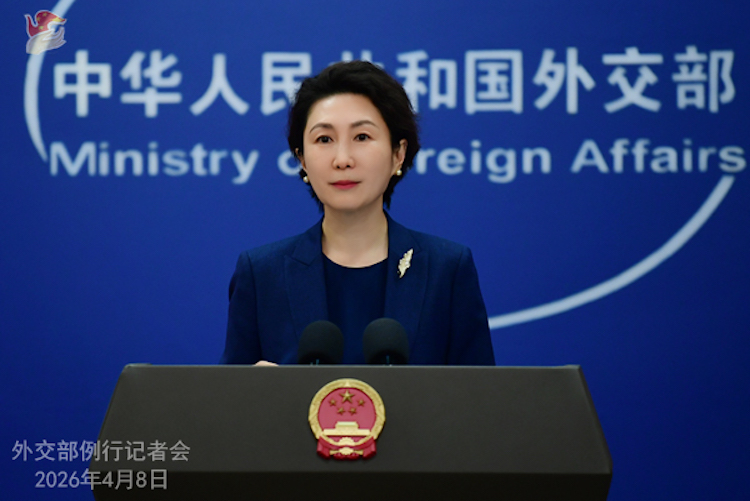
Speaking at a regular press briefing, Foreign Ministry spokesperson Mao Ning detailed Beijing’s recent mediation efforts, indicating a sustained commitment as geopolitical tensions intersect with global energy security concerns.
“Since the fighting began, China has worked actively to help bring about an end to the conflict,” Mao stated, highlighting extensive diplomatic outreach.
She noted that Foreign Minister Wang Yi has made 26 calls to counterparts in relevant countries, while China’s special envoy has engaged in shuttle diplomacy throughout the Gulf and the broader Middle East.
“China and Pakistan jointly put forward the five-point initiative for restoring peace and stability in the Gulf and Middle East region,” Mao said, describing China’s approach as consistent with its role as a “responsible major country.”
She affirmed that China will continue to play a constructive role and contribute positively to restoring peace and tranquility in the region.
Mao highlighted the importance of the Strait of Hormuz, a crucial international trade route for goods and energy that handles approximately one-fifth of the world’s oil supply. Disruptions in the Strait have raised international concerns, affecting energy markets and supply chains.
“Keeping the area safe and stable and ensuring unimpeded passage serves the common interest of the international community,” she remarked.
“We hope that all sides can work together for the early resumption of normal traffic at the Strait,” she added.
Reports indicate that Iran has submitted a 10-point framework to the United States, which Washington has described as a “workable basis” for negotiations. However, disagreements remain over critical provisions, including the geographic scope of the ceasefire and the status of uranium enrichment.
At the same time, Mao reiterated China’s stance at the United Nations Security Council, emphasizing that the sovereignty, security, and territorial integrity of Gulf States must be fully respected, and that the safety and security of shipping lanes and energy infrastructure should be protected.
She attributed the disruptions in the Strait of Hormuz to what she termed the U.S.-Israel “illegal military operations” against Iran.
“The fundamental solution to ensuring safe passage of ships through the Strait of Hormuz is to end the conflict as soon as possible,” she asserted.
According to Mao, actions by the UNSC should focus on de-escalation and must not provide a “legal veneer” for unauthorized military operations.
“The Council’s actions must not grant a license to the use of force, let alone add fuel to the fire, thereby leading to an escalation of the conflict. China’s position on the vote is objective and impartial, and will stand the test of history,” the spokesperson stated.
China, along with Russia, has circulated a draft resolution at the UNSC addressing the situation in the Strait of Hormuz. The proposal advocates for de-escalation, dialogue, and the protection of navigational rights. Mao described the draft resolution as objective and fair, aimed at easing tensions.
“China is ready to work with parties concerned to make relentless efforts for early de-escalation and restoration of peace and stability,” she said.
Mao reiterated China’s readiness to work with all parties to bring an end to the conflict.