A specialist appointment across town. A long-dreamed-of safari. A grandmother who hasn’t left her compound in months, because the only vehicle available to her is a matatu she cannot climb into.
For millions of Kenyans living with disability, chronic illness, or simply the frailty that comes with age, the biggest barrier to essential care, and to travel itself, has rarely been distance. It has been the vehicle. That is the gap Muthuri Kinyamu set out to close.

In 2022, after a decade spent growing travel brands, digitising tourism MSMEs and helping hotels claw back occupancy through the pandemic, Kinyamu founded Accessible Travel Kenya, the country’s first dedicated accessible travel and transport company.
It was, on paper, a niche business. In practice, it was a market hiding in plain sight.
“Kenya has world-class doctors, good hospitals, and some of the most beautiful destinations on earth. What it didn’t have was a dignified way to get people there,” said Muthuri Kinyamu. “A wheelchair user shouldn’t have to choose between missing a physiotherapy session and being lifted into a car that was never built for them.”
Fleet built for every kind of journey
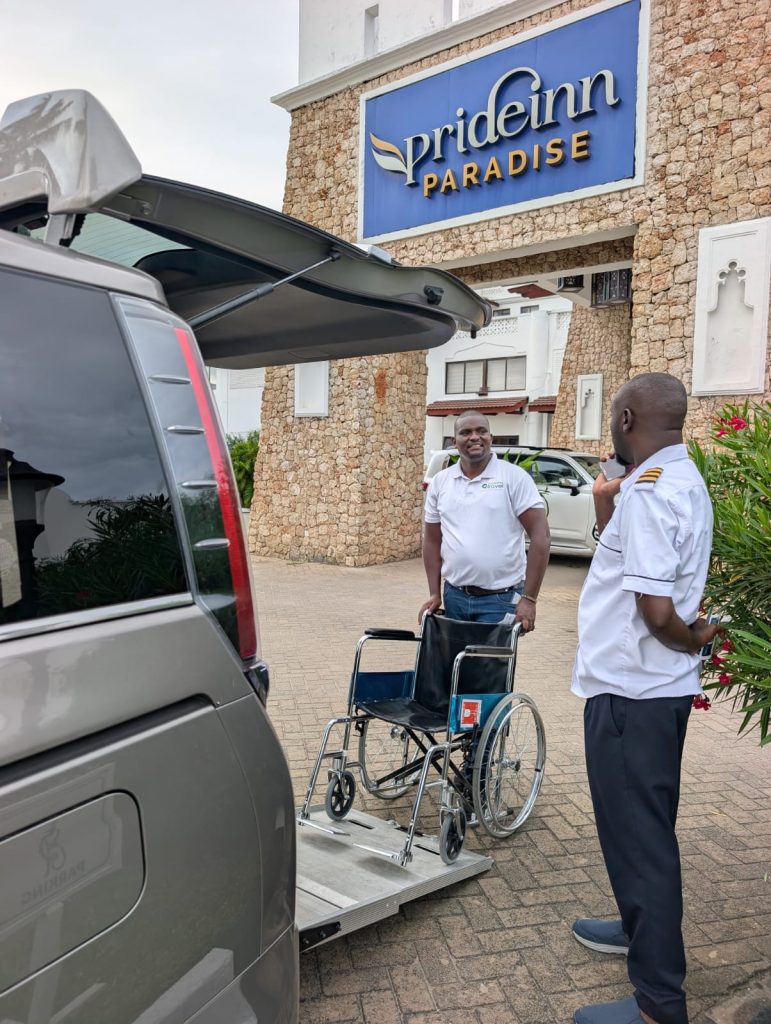
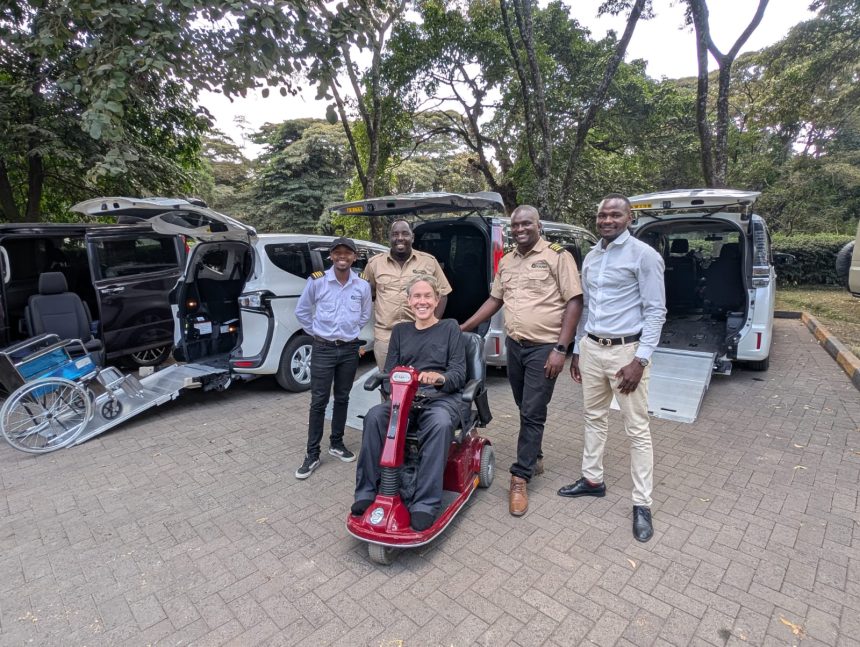
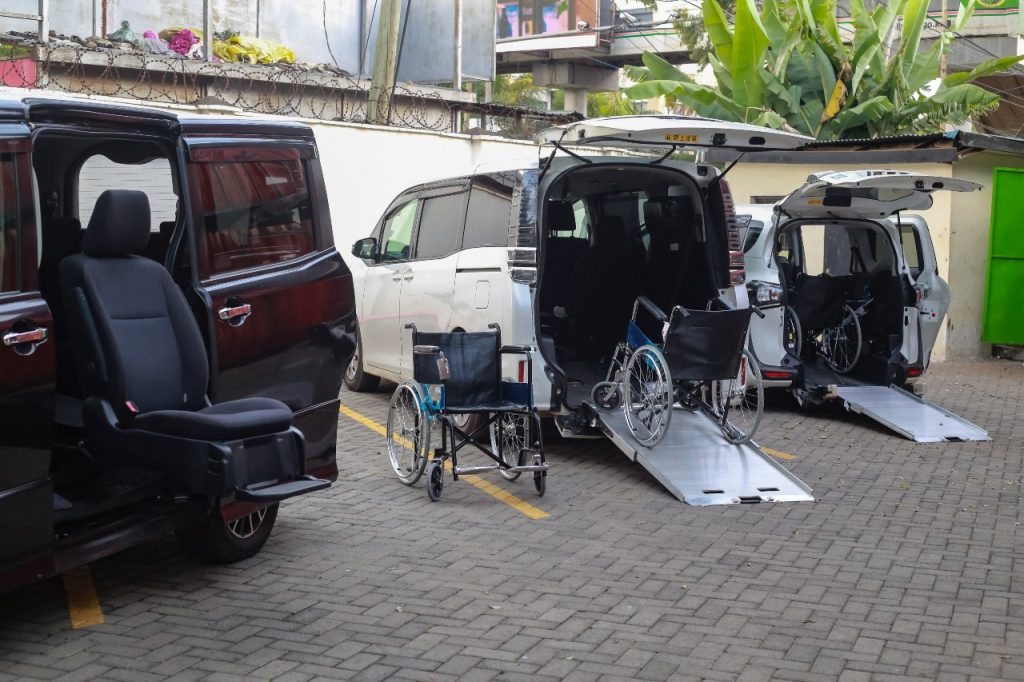
Today Accessible Travel Kenya owns and self-funds a core fleet of six wheelchair-accessible vehicles — Toyota Voxys, Esquires, Noahs and Sientas fitted with ramps, powerlifts and swivel seats — used daily for airport pickups, city transfers and medical appointments.
Alongside them sits something rarer still across East Africa: a dedicated safari-adapted 4×4 Land Cruiser fleet, purpose-built for national park game drives and rural outreach, with rear-entry, side-entry and ramp configurations to match each guest’s needs.
For travellers who need more than a vehicle, Accessible Travel Kenya also rents out the equipment that turns a trip into a possibility — electric and manual wheelchairs, retractable ramps, shower seats and commodes — by the day, so that a holiday, a hospital stay or a family visit no longer depends on what mobility gear a traveller can carry with them.
First Responders as drivers
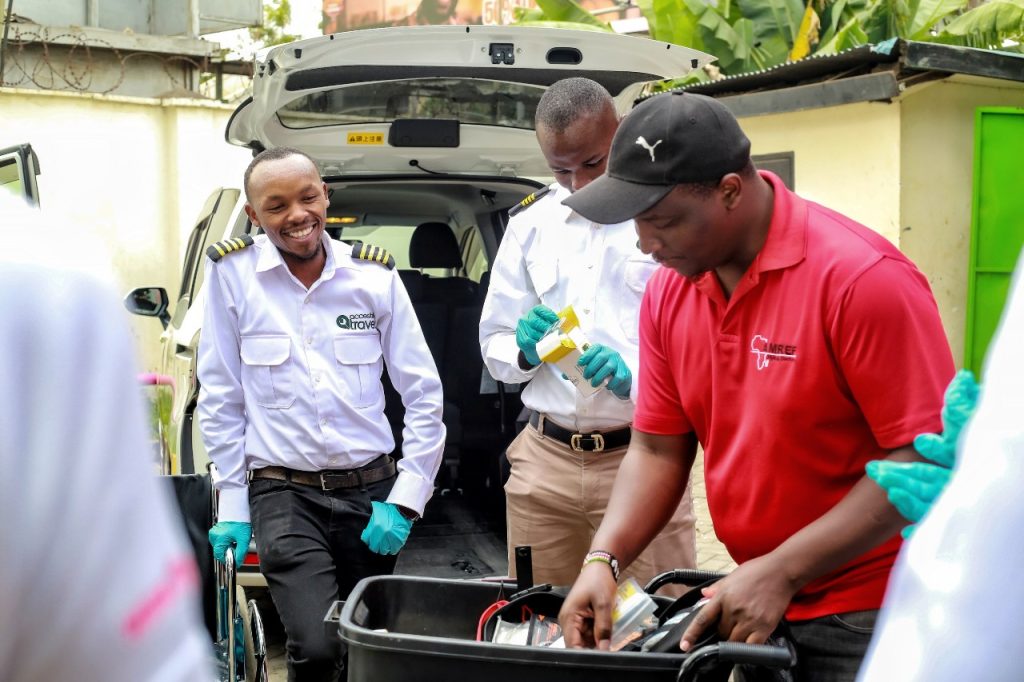
A vehicle with a ramp solves only half the problem. The other half is who is behind the wheel.
Every Accessible Travel Kenya driver-guide is AMREF-trained and certified in Basic Life Support and safe patient handling and transfer, trained to move a passenger from wheelchair to seat without strain or injury, and to recognise and respond if a client’s condition changes mid-journey.
It is a standard drawn less from the tourism industry than from healthcare logistics, and it is central to why Accessible Travel Kenya has become the trusted transfer partner for patients travelling to dialysis, physiotherapy and specialist appointments, not just tourists heading out on safari.
“Accessibility isn’t a ramp bolted onto a van. It’s a driver who knows how to lift a passenger safely, who knows what to do if something goes wrong on the road, and who treats every client with the same dignity, whether they’re headed to the Maasai Mara or to a physio session in Nairobi,” said Mr Kinyamu.
Etiquette is not an afterthought
Accessible Travel Kenya’s guides, drivers and front-of-house staff go through disability-etiquette training as standard; these include how to offer assistance without assuming it’s needed, how to speak to a client rather than over them, and how to handle mobility equipment with care.
Kinyamu has also recruited and trained sign language safari interpreters fluent in Kenyan and American Sign Language, so that Deaf and hard-of-hearing travellers can follow a guide’s commentary through the Mara as fully as anyone else on the vehicle.
Through a partnership with the Horizon Sign Language Training Centre, Accessible Travel Kenya aims to offer basic Kenyan Sign Language programme for tour operators, guides, receptionists and cabin crew across the industry, and matches graduates to paid roles once they qualify.
Trusted by the names that move Kenya
That standard has not gone unnoticed. Accessible Travel Kenya is the official ground-transfer partner for Kenya Airways’ KQ Ezesha accessibility programme at JKIA, and provides accessible transfers for Persons with Reduced Mobility flying through Wilson Airport in partnership with Safarilink.
Its non-emergency medical transfers run through a structured clinical partnership with Rescue by Flair, and it is a founding member of the Kenya Tourism Board’s Magical Kenya Medical Tourism Product Club.
For now, the mission stays close to the ground — one ramp, one swivel seat, one trained driver-guide at a time.
“Every time someone tells me they finally made it to a family wedding, dinner with friends or back to the Mara after years of thinking it wasn’t possible for them anymore, that’s the whole business case,” Kinyamu says. “We’re not just moving people. We’re giving them back a part of their life.”