The Ethics and Anti-Corruption Commission (EACC) and the Office of the Director of Public Prosecutions (ODPP) have agreed to strengthen their collaboration in investigating and prosecuting corruption and money laundering cases.
The latest move signifies a renewed commitment to improving case outcomes and enhancing accountability.

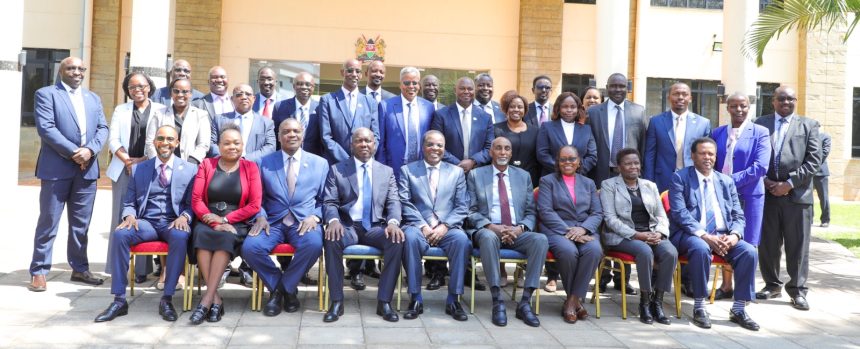
The commitment was made during a high-level strategic meeting at the Kenya School of Government that brought together EACC Chairperson Dr David Oginde, Director of Public Prosecutions Renson Ingonga, EACC Chief Executive Officer Abdi Mohamud, along with commissioners and senior officials from both organisations.
The meeting focused on reviewing the existing partnership between the agencies, evaluating challenges impacting corruption and money laundering cases, and adopting measures to improve coordination between investigators and prosecutors.
Speaking during the meeting, Dr Oginde described corruption as one of Kenya’s most significant development challenges, saying it continues to erode public confidence in institutions and undermine service delivery.
He emphasised that closer collaboration between investigators and prosecutors would bolster the criminal justice process and enhance the country’s response to corruption and financial crimes.
EACC Chief Executive Officer Abdi Mohamud stated that collaboration among justice sector institutions is both a constitutional obligation and a practical necessity.
He noted that the public expects tangible results, not institutional distinctions, adding that successful investigations, prosecutions, and the recovery of assets acquired through corruption are the benchmarks by which justice is measured.
DPP Renson Ingonga remarked that the engagement would help improve the quality of investigations and prosecutions. He noted that both institutions share the responsibility of protecting public resources, safeguarding public interest, and upholding the rule of law.
Among the resolutions reached were the introduction of joint capacity-building programmes for investigators and prosecutors, enhanced collaboration during case review processes, and greater focus on high-impact corruption and money laundering cases.
The two institutions said they would continue strengthening inter-agency cooperation to improve the administration of justice, enhance accountability and support the recovery of public assets linked to corruption.