Kenya has strengthened preparedness measures against Ebola and other emerging public health threats at Jomo Kenyatta International Airport (JKIA), the country’s busiest port of entry, to enhance early detection, response capacity and public health security.
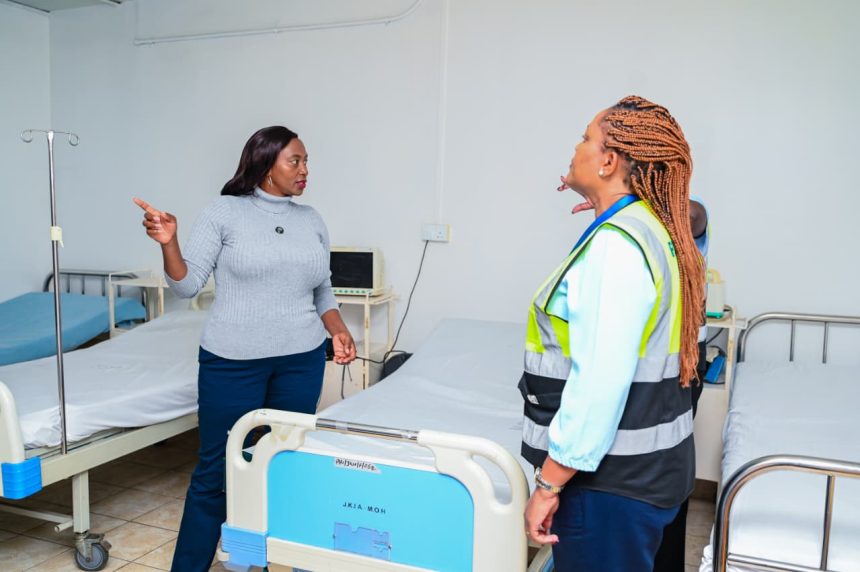
Principal Secretary for Public Health and Professional Standards, Mary Muthoni, Saturday conducted an assessment visit to JKIA to evaluate the effectiveness of Port Health Services and review ongoing preparedness interventions aimed at preventing the importation and spread of infectious diseases.

The assessment focused on passenger screening procedures, thermal scanners, isolation facilities, laboratory readiness, aircraft and wastewater surveillance, and emergency response coordination mechanisms.
The border management team domiciled at the airport has increased surveillance at the six international arrivals gates, with gate number 16 now designated for passengers coming from high-risk countries.
“At gate number 16, an isolation center, completely manned by port health officials, has been set up to ensure preparedness in case suspected cases arise”, she said.
Additionally, the Ministry of Health has activated collaborations with airlines to ensure clear and honest reports on the health status of all passengers, demanding that forms be presented at passport control centers upon entry.
Consequently, all travellers to Kenya are required to fill out online self-check forms to gather previous travel history and confirm their health status.
To improve surveillance quality, genomic sequencing has been enhanced by collecting and testing waste samples from all planes arriving at the airport—both national and international—through national laboratories
The Principal Secretary commended frontline health workers for their dedication and vigilance in safeguarding public health.
Although Kenya has no confirmed Ebola cases, the country remains on high alert and continues to strengthen preparedness through enhanced screening at points of entry, deployment of additional health personnel, expanded laboratory diagnostic capacity, faster specimen processing, strengthened surveillance across air, sea and land borders, and sustained readiness of rapid response teams.
Mary Muthoni reaffirmed the Ministry of Health’s commitment to maintaining robust preparedness systems and ensuring rapid detection and response to public health threats.
She urged the public to remain vigilant, observe proper hand hygiene, seek medical attention when unwell, and rely on official Ministry of Health communication channels for accurate and timely information.
She noted that preparedness, vigilance and coordinated action remain Kenya’s strongest defence against Ebola and other emerging public health threats