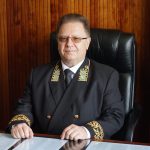
The establishment of a grain hub in Oman will, in the future, make it possible to increase supplies of Russian grain to East African countries, while the recently launched liner service on the Novorossiysk – Lagos – Dakar route is already reducing cargo delivery times to 21 days. This assessment of the current state of Russian-African logistics projects was given in an exclusive comment to TV BRICS by Russian international economist and Corresponding Member of the Russian Academy of Sciences (RAS), Vitaly Melyantsev.
“The first direction is the direct maritime route Novorossiysk – Lagos. This project has already moved into the practical phase. […] The establishment of a terminal in Nigeria’s Lekki Free Zone is also under discussion, which should secure the route as a permanent trade channel. The second direction is the grain hub in Oman for supplies to East Africa. As of 2026, the project remains at the stage of planning and negotiations. Its logic is to use the Middle East as a transshipment point for Russian grain, followed by onwards delivery to East African countries” said Melyantsev

The expert stressed that the BRICS countries are consistently expanding instruments aimed at reducing trade barriers with Africa. Alongside direct maritime routes and grain hubs, the group is developing new transport corridors, financial mechanisms, and educational programmes.
Among the logistics solutions are the introduction of “seamless” digital platforms such as India’s Bharat Africa Setu (a trade and logistics platform supported by the Government of India and created with the aim of doubling trade turnover between India and African countries by 2030), as well as smart customs systems operating without paper documentation, significantly accelerating cargo clearance.
“The International North–South Transport Corridor links Russia, Iran, and India, reducing cargo delivery times to Africa. […] The India–Middle East–Europe Economic Corridor (IMEC) creates an alternative supply chain via the UAE and Saudi Arabia, easing pressure on logistics. The ‘mineral corridors’ project establishes direct supply chains for critical raw materials (cobalt and copper) from Africa to BRICS countries, with processing carried out locally rather than through the export of raw ore,” Melyantsev explained.
The professor described the development of financial infrastructure as an especially significant step. The BRICS Bridge payment system, based on central bank digital currencies, creates an alternative to existing international mechanisms, and according to Melyantsev, South Africa is already testing cross-border settlements through this system.
Melyantsev also noted that the education of more than 30,000 African students at Russian universities in engineering, geology, and medical disciplines is strengthening the continent’s human capital.
“Africa is receiving not theoreticians but practitioners: mining engineers for the extraction of mineral resources, irrigation specialists for agriculture, doctors, and pharmacists. […] Graduates do not simply return home – they become carriers of Russian standards and equipment. Many establish laboratories and introduce Russian methods of medical treatment or machinery repair.[…] Today, graduates of Russian universities form the backbone of the technical ministries and state corporations of many African countries (Angola, Ethiopia, Mozambique, and Nigeria),” the expert added.
Melyantsev separately commented on the BRICS membership of Egypt and Ethiopia, as well as the partnership of Nigeria and Uganda with the group, as a factor accelerating their economic growth. Participation in BRICS gives these regions access to financing through the New Development Bank (NDB), helping to implement infrastructure and energy projects.
Russia remains an important supplier of grain and fertilisers to Tanzania, Nigeria, and Ethiopia, contributing to the strengthening of the region’s food security. According to the expert, the modernisation of Nigeria’s metallurgical complex with the participation of Russian specialists is also under discussion.
Melyantsev emphasised that “BRICS does not impose external rules but integrates into existing African structures”: particular attention is being paid to synchronising BRICS logistics and financial mechanisms with the African Continental Free Trade Area (AfCFTA) and regional blocs such as the Common Market for Eastern and Southern Africa (COMESA) and the Southern African Development Community (SADC).
Courtesy/TV BRICS