As Nairobi’s traffic pressure continues to mount, the Gitaru Interchange is set to transform travel and commerce across the Kikuyu corridor.
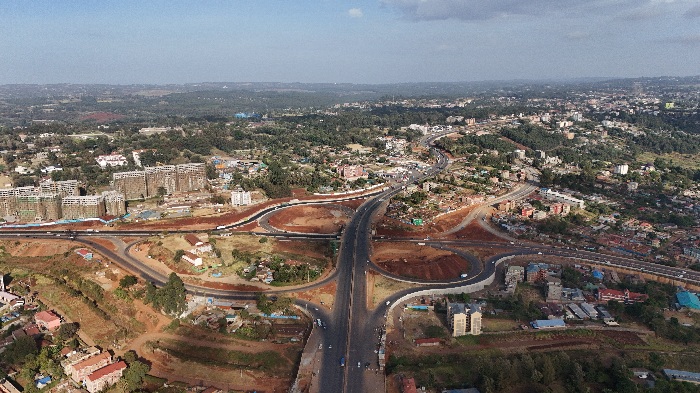
Featuring four sweeping cloverleaf loops, construction on the interchange is now nearing completion, with works progressing steadily on one of the country’s busiest transport junctions.
Once operational, the interchange will connect the Nairobi–Nakuru Highway with both the Southern and Western Bypasses, a link expected to significantly ease traffic flow across the capital, Nairobi.
According to the Kenya National Highways Authority (KeNHA), the project is now approaching its final stages.
“The project is currently about 85 per cent complete, with completion targeted for December 31, 2026. Beyond infrastructure, the construction has also created employment opportunities for more than 1,100 people involved in various stages of the works,” notes KeNHA Director General Eng. Luka Kimeli. The design, he explains, allows traffic to flow continuously between highways without interruptions, reducing congestion while cutting travel time for motorists.
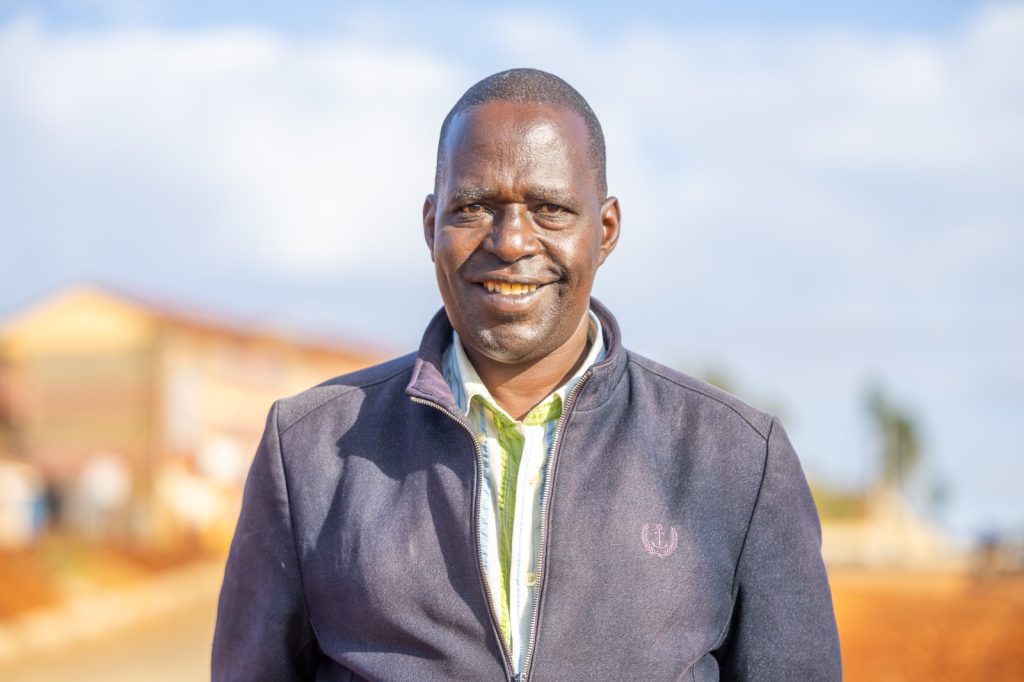
The transformation is already being felt by Gitaru residents like George Larama, a business owner and longtime resident of the area, who says the road project is beginning to ease movement along the once-congested route.
“This road helps a lot in transportation; it is very long, and we are asking the government to fast-track the construction because it is going to bring development to Gitaru,” he said.
Before the interchange works began, navigating the area often meant long detours and heavy traffic. Larama recalls how motorists previously had to drive all the way to Zambezi to make a turn toward Nairobi.
“People used to go up to Zambezi, a local town centre along the route, just to make a turn to Nairobi. But now, if someone comes from Kikuyu, it becomes very simple,” he explained.
Better connectivity has also improved convenience and safety for early morning commuters heading to the capital.
“It’s easy now going to Nairobi, no matter what time you wake up. In the past, when there were no good roads, people used to think it was risky to wake up at 2:00 am or even 3:00 am, but now, even at nine, you just take the road and go to Nairobi,” Larama added.
Transport officials say the project had previously slowed due to financial constraints before a new funding model helped revive stalled works.
“The Gitaru Interchange had stalled due to funding constraints, but securitisation enabled us to resume this critical project,” explains Eng. Kimeli, adding that the government is prioritising completion of long-delayed infrastructure projects.
“In line with the President’s directive, the government is completing stalled road projects regardless of when they began or which administration started the road project because the government is perpetual, and leaving unfinished projects from previous administrations punishes Kenyans.”
The Gitaru Interchange forms part of the wider A104 highway rehabilitation programme, a key transport corridor linking Nairobi to Central Kenya and the Rift Valley.
Once complete, it is expected to reduce travel times, cut fuel costs and improve logistics for regional trade.
Long-distance freight operators are likely to benefit from more reliable transport routes, while daily commuters could enjoy shorter and more predictable journeys.
The project is fully funded by the Government of Kenya and supported through innovative financing measures.
When President William Ruto’s administration took office, it inherited Ksh1 75 billion in pending bills owed to 580 contractors, some dating back nearly nine years.
In April 2025, the Cabinet approved securitisation, a debt-free financing model allowing the Kenya Roads Board to raise funds by leveraging future revenues from the Road Maintenance Levy Fund.
The move unlocked financing for several stalled projects, including the Gitaru Interchange.
As construction advances toward completion, residents and traders along the corridor say the changes are already visible, with improved mobility and new economic opportunities gradually taking shape across the Kikuyu corridor.