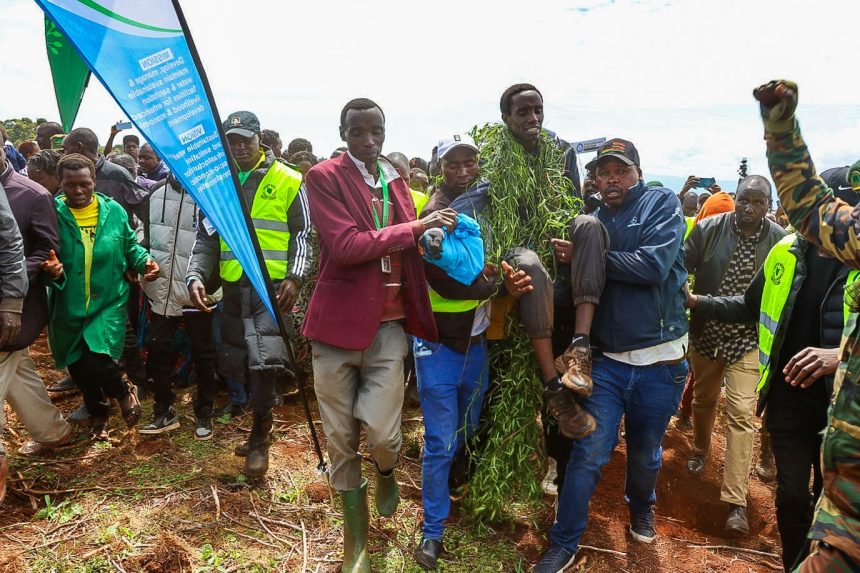
When Hillary Kibiwott stepped into the cold, mist-laden forest of Kaptagat at Kessup block in Elgeiyo Marakwet, he was not simply attempting to plant a tree; he was setting a pace, one that calls on all of us to follow. Over 24 relentless hours, working through the night in the thin, high-altitude air, he planted 23,326 trees.
“Hillary Kibiwott has not just challenged the existing Guinness World Records for the most trees planted in 24 hours by an individual; he has challenged us to do more, to be more intentional about climate action and to restore more forests,” said George Tarus, Secretary, Forest Development, Ministry of Environment, Climate Change and Forestry

It is a number that captures attention, but the real story lies in what it represents: sacrifice, discipline, and the quiet resilience to keep going when conditions are at their toughest. Kaptagat is no ordinary forest. Known globally as a training ground for elite athletes, its high altitude and fresh air have shaped champions who go on to conquer the world. Yet beyond the trails and training camps lies another kind of strength, one rooted in community, conservation, and survival.
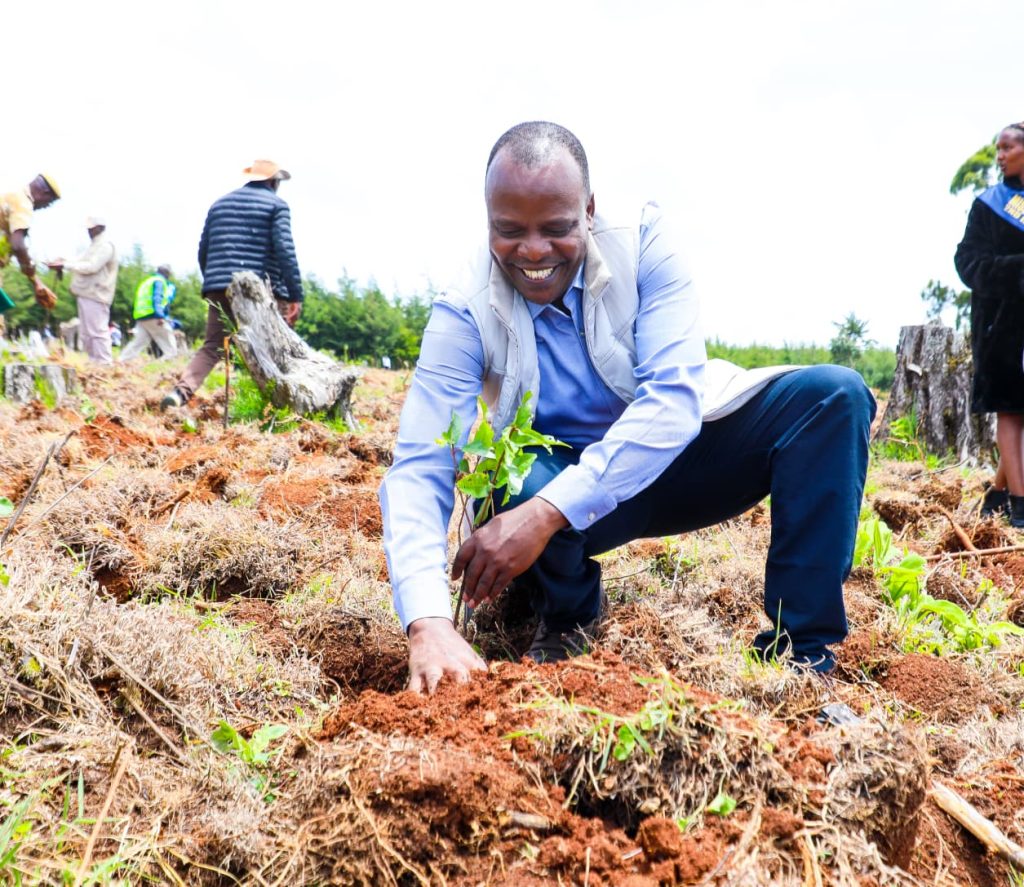
The forest is home to the Kaptagat Integrated Conservation Programme (Kaptagat-ICP), a community-led initiative that places the livelihoods of forest-adjacent communities at the centre of conservation. Here, the forest is not just protected; it is lived, depended on, and sustained. As its Patron, Dr. Chris Kiptoo, who is the Principal Secretary of the National Treasury, describes it, this is “an economy powered by the forest.”
Now in its tenth year of rapid tree planting and roll-out of nature-based enterprises, the Hope Kaptagat programme has evolved into a model where conservation meets livelihoods. It is built on four simple but powerful ideas: putting money in people’s pockets (Pesa mfukoni), promoting clean energy (Kawi safi), ensuring access to water (Maji safi nyumbani), and protecting the environment (Mazingira safi). The story of Kaptagat forest restoration tells a story that is often overlooked: that forests do not just stand as the green lungs of the earth, but they also sustain the economy.
It is within this living system that Hillary’s effort takes on deeper meaning. As Tarus, the Forest Development Secretary, notes, Hillary’s achievement is not just about challenging a record; it is about challenging all of us.
“To plant 23,326 trees in 24 hours, working through the night in the cold conditions of high-altitude Kaptagat, is not easily defined. It speaks to sacrifice, discipline, and the resilience to keep going. It is also a reminder that individual action matters, that what each of us chooses to do, however small it may seem, has the power to either heal or harm the only place we call home.”
In a world where climate change can feel overwhelming, Hillary’s action strips it down to something simple and human. One person. One tree at a time. One decision to act. Tree by tree, minute by minute, hour by hour.
Kaptagat has always been a place where limits are tested and redefined. This time, it is not about speed or medals, but about endurance of a different kind, endurance for the planet. And perhaps that is the question Hillary leaves behind: If one person can plant 23,326 trees in a day, what could millions of us do together?