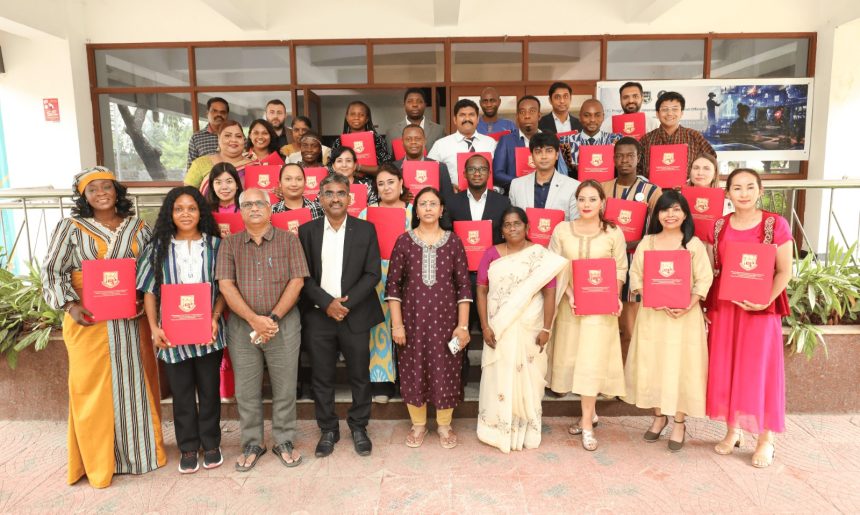
As Artificial Intelligence (AI) and immersive virtual spaces rapidly reshape global education and content creation, 30 educators, media professionals, and administrators representing 19 countries, came together at National Institute of Technical Teachers Training and Research (NITTTR) in Chennai, India, to sharpen their digital storytelling skills through an intensive upskilling program.
The two-week course initiated by Indian Technical and Economic Cooperation ITEC on ‘Emerging Trends in Multimedia Content Creation with AI and Immersive Technologies’ was held from 12th to 25th August 2026 where participants got a chance to up skill their multimedia content creation using AI and immersive technologies.

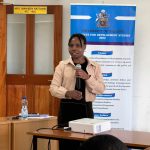
Speaking during the closing ceremony, the institute’s director Prof. Dr.Usha Natesan, noted that technology keeps changing and it is important to keep updated on the latest technological advancements.
“In the two weeks, you had an opportunity to get exposed to immersive technology and associated AI. Definitely you’re keeping in pace with the current, if you are an educator or from any other organization, this technology has a role to bring in any field, immersive technology is really useful and so you can plan how this can be applied,” said Dr.Usha.
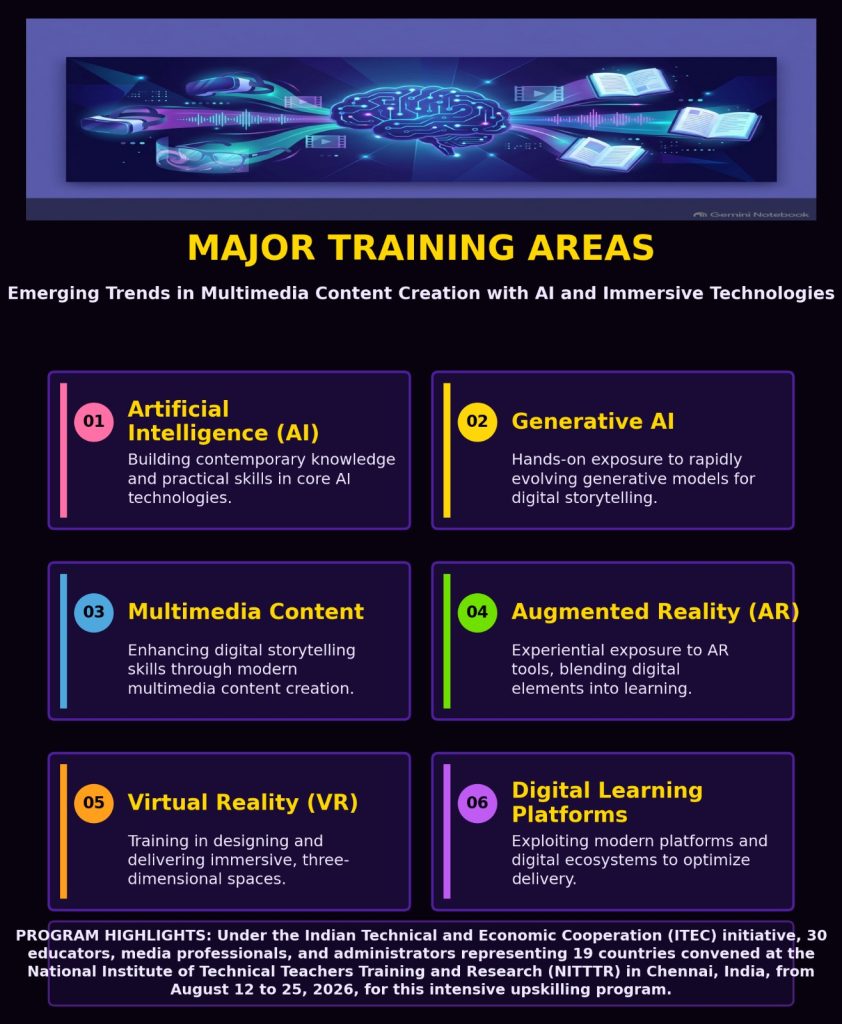
The program provided participants with contemporary knowledge, practical skills, and experiential exposure to the rapidly evolving areas of Artificial Intelligence, Generative AI, multimedia content creation, Augmented Reality, Virtual Reality, and digital learning platforms.
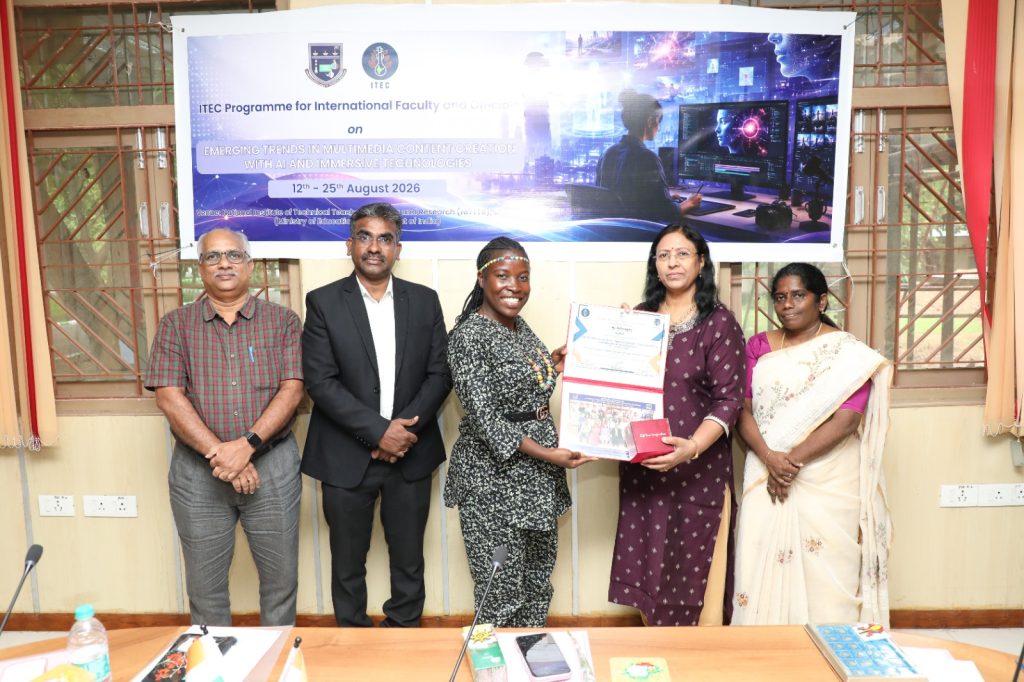
Dr. Subha Thangarajan associate Professor at NITTTR and the course coordinator, pointed out that participants explored how text, images, audio, video, animation, and interactive elements can be integrated to create meaningful digital learning experiences.
“The participants were introduced to AI and Generative AI for content creation, including prompt engineering, adaptive learning, and future-ready learning experiences,” noted Dr.Subha.
It is equally important for content creators to understand the psychology of their target audience so they can develop content in ways that are easily understood and engaging, while avoiding unintended negative effects on the audience. Participants explored how psychological principle influence audience or learner engagement, cognitive processing, and usability.
Dr.Usha Natesan emphasized the importance of networking and cultural exchange between countries as a way of strengthening cooperation.
“It is not only the technology we would like to give you, we also wanted you to see the culture of India, the tradition which we follow. Nice to see many of you have learnt Indian words. So we have made you change to Indian culture,” said the delighted Dr.Usha.
 The participants also got the chance to visit institutions of higher learning, industrial exposure, international conference, and a study tour. They visited SRM University, one of the centers of academic excellence sitting on 350 acres piece of land, as part of an international workshop on Generative AI.
“The visit to Kalaignar Ulagam, a memorial digital museum provided participants with an interesting example of how technology can transform conventional exhibitions into interactive and immersive experiences. The visit demonstrated how digital technologies can be used to: Present historical and cultural information interactively, combine visual storytelling with digital media, and create engaging visitor experiences,” Dr.Subha.
The industrial visit to Monolith Research and Training Labs provided participants with an opportunity to experience immersive technologies in a practical environment.
These visits provided hands-on exposure to emerging technologies and demonstrated how modern technological tools can be effectively used for education, training, content creation, and experiential learning.
The participants were grateful to the Government of India through the ITEC program for the opportunity not only to gain skills but experience the Indian culture and network.
“You are taking lots of memories from India apart from what you learnt at the institute. And I am also happy to see that you came as an individual person. but now you are going back as a part of the NITTTR family and you have developed your very strong networks with each other. This is what we want,” concluded Dr.Usha.