A rising trend of local companies opting to develop various technology solutions internally leveraging on Artificial Intelligence (AI) is expected to drive demand for skilled workforce in Kenya.
Analysis conducted by Deloitte on 1,300 firms who made their submissions for the 2026 CIO100 Awards show that many firms in Africa are transitioning from external sourcing towards building internal teams to develop various enterprise solutions to remain competitive.

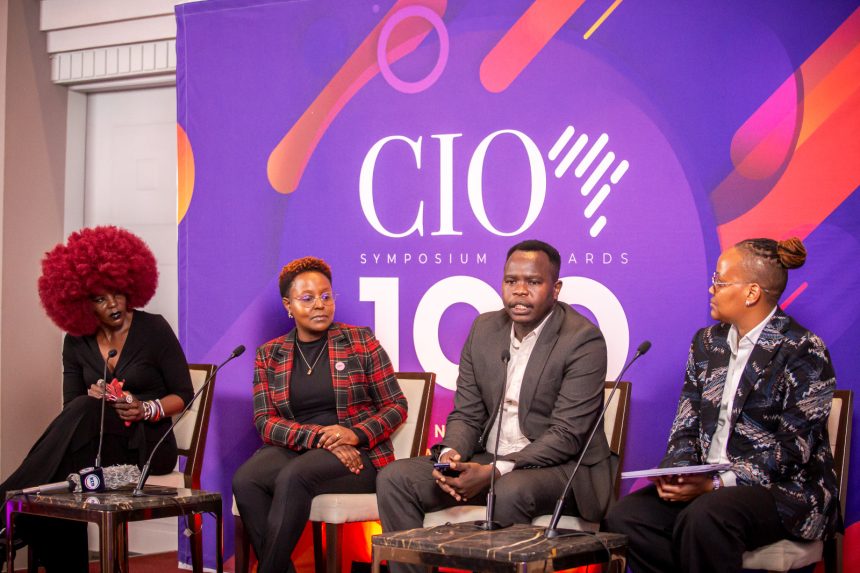
“Organizations are investing internally to develop their teams so that they are able to develop applications that suit them, have a quicker turnaround, save up on their costs and at the same time be able to develop desired impacts with less complexity that is usually the norm when people go outwards in terms of investments,” said Arnold Ng’ang’a, Senior Manager for Consulting Services at Deloitte.
The shift in developing in-house solutions has further been enabled by AI which is the leading technology investment priority among participating organisations.
The trend has been backed as crucial in creating demand for high skilled workforce in areas among others, AI training, cybersecurity, data annotation and AI product management.
“This is actually a good indicator of employment. There is demand from all organizations and with this growing demand in development of internal solutions, it opens up an opportunity for skilled graduates to join organizations to help them in developing in house applications,” added Ng’ang’a.
A total of 84.8% of submissions identify AI as a priority for investment over the next 12 to 24 months.
“The research we did, we are seeing now there is an increase in people developing their own products their own solutions. They are developing them internally in their businesses and most of it is because they are using AI,” said Harry Hare, Chairman CIO Africa by dx5.
The analysis further shows that only 61.8% of the projects entered into the awards used AI, while 25.7% used generative AI which involves creation of text, images and other content.
However, while many firms are developing solutions supported by AI, many firms remain unprepared against AI driven cyber threats.
“From a security perspective, there is quite low number in terms of incident response capability around 38.6% of these organizations actually have incident responses capability which opens their apps to threats from AI assisted attacks which are growing every day within ecosystem that is being driven by AI,” added Nga’nga.
Additionally, AI use has increased from 54.8% in last year’s submissions, showing that more organisations are adopting the technology.
However, the gap between investment plans and actual use suggests that many organisations are still working out how to put AI into practice.
“In the adjudication process what we look at is did you identify the problem correctly, how did you choose your solution, was that the most effective way of selecting a solution, was the solution picked the right solution for that problem? So we are trying to measure weather the solution that has been created is apt to the problem that it was solving,” stated Hare.
Submissions for the this year’s CIO100 Awards slated for next month attracted firms from ten countries including Kenya, Nigeria, Ethiopia, Tanzania, South Africa, Rwanda, Uganda, Malawi, Zimbabwe and the United Kingdom.