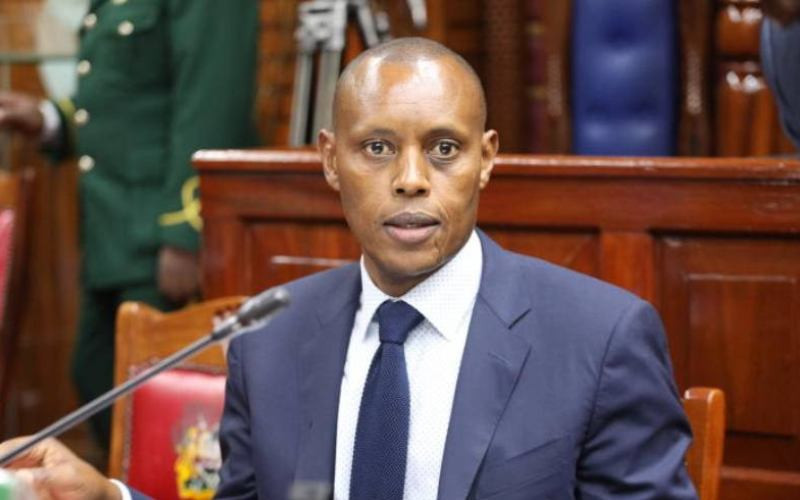
The Chairperson of the National Assembly’s Departmental Committee on Defence, Foreign Affairs and Intelligence, Nelson Koech, has defended Parliament’s handling of the proposed Kenya-United Kingdom Defence Cooperation Agreement, dismissing what he described as misleading reports over the committee’s engagement with the British Army Training Unit Kenya (BATUK).
In a statement, Koech clarified that the committee’s role is limited to scrutinising the agreement on behalf of the Kenyan public and submitting recommendations to the National Assembly. He emphasised that the negotiation, conclusion, and ratification of treaties are constitutional responsibilities of the National Executive.

“Under our Constitution and the Treaty Making and Ratification Act, the initiation, negotiation, conclusion, and ratification of treaties and international agreements are functions of the National Executive, not of a parliamentary committee,” Koech stated.
He explained that Parliament’s involvement begins only after the Cabinet approves a treaty and submits it to the National Assembly for consideration, where members then debate and decide on its ratification.
Koech reported that the committee conducted a two-year inquiry into BATUK’s operations in Kenya, tabling its report in the National Assembly in November 2025.The inquiry, he said, recommended that the Defence Cooperation Agreement should only be ratified if stronger accountability measures are implemented to govern the conduct of visiting British troops.
Among its recommendations were the recognition of Kenyan courts’ jurisdiction over serious offences allegedly committed by visiting personnel, mandatory cooperation with Kenyan criminal investigations and parliamentary inquiries, environmental obligations, child support and welfare responsibilities, and enhanced protection for host communities.
Koech explained that these recommendations were based on concerns raised during the inquiry, reflecting Parliament’s duty to safeguard Kenya’s sovereignty while preserving an important bilateral partnership.
He noted that the most contentious aspect of the agreement remains the legal framework governing British military personnel operating in Kenya.
“The point of contention remains legal jurisdiction over British personnel, immunity, and accountability for foreign forces in Kenya,” Koech said, adding that the debate had been intensified by the murder of Agnes Wanjiru and long-standing grievances from communities in Nanyuki and Laikipia.
The committee’s recommendations, according to Koech, aim to address these concerns by strengthening legal accountability without undermining the broader defence relationship between Kenya and the United Kingdom.
Koech acknowledged Kenya’s significant benefits from its long-standing military partnership with the UK, citing cooperation in counter-terrorism, professional military training, and defence capacity building. However, he maintained that future cooperation must be founded on clear principles of equality and accountability.
“Kenya values its defence partnership with the United Kingdom, but partnership must be anchored on equality, respect for Kenyan law, and genuine accountability,” he asserted.
He said those principles would continue to guide Parliament’s oversight of the agreement, reiterating the committee’s commitment to protecting the interests of host communities, safeguarding Kenya’s sovereignty, and ensuring justice for victims affected by incidents linked to the presence of foreign troops in the country.