The Kenya Ports Authority (KPA) has commissioned a new Sh1 billion Vessel Traffic Management and Information System (VTMIS) at the Port of Mombasa to improve turnaround time.
The system is part of a broader wave of strategic marine investments that includes a new search-and-rescue helicopter worth between Sh400 million and three new tugboats valued at approximately Sh1.5 billion to Sh1.6 billion.

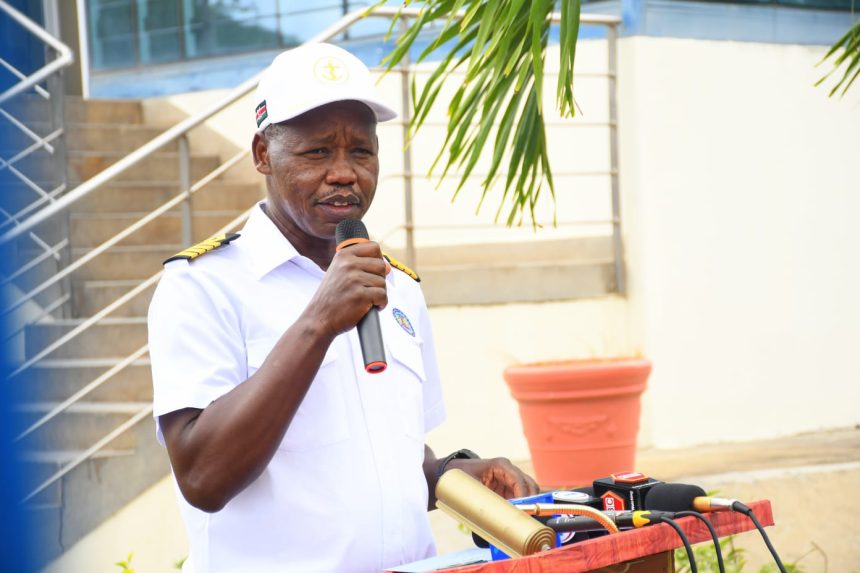
Speaking during the commissioning, KPA CEO Capt. William Ruto said the VTMIS was financed separately from the helicopter and tugboat projects, though all three form part of the Authority’s push to modernise marine operations.
“These are three different projects. The VTMIS is a different project, but it is all for marine,” Ruto said.
He explained that the helicopter, expected to be delivered to the port within the next two months, would cut pilot transfer time between Lamu and Mombasa to about 30 minutes, down from the 30 to 45 minutes currently taken to board vessels by pilot boat, thus improve efficiency for maritime operators.
He noted that the VTMIS had been deployed across three interconnected sites, the Vessel Traffic Services Control Tower, the Ras Serani Signal Station and the Shimanzi Oil Terminal Radar Site, creating what he described as a single intelligent operational environment for the port.
“Together, these facilities create a single intelligent operational environment that gives our marine teams unprecedented visibility and control over vessel movements within the Port and its approaches,” Ruto said.
He explained that the system integrates real-time vessel tracking, advanced radar surveillance, integrated marine communications, meteorological monitoring, oil spill detection capability and digital port management functions, placing Mombasa firmly within a broader wave of digital transformation reshaping global trade, logistics and maritime operations.
“This places the Port of Mombasa firmly at the centre of the digital transformation that is reshaping global trade, logistics and maritime operations,” he said.
Ruto said the project was implemented in line with regulations set by the International Maritime Organization (IMO) and the International Association of Marine Aids to Navigation and Lighthouse Authorities (IALA), and would further strengthen traffic management, resource allocation and logistics coordination at the port.
He linked the investment to impressive growth recorded at the port over the last three years, noting continued record-breaking cargo volumes and vessel traffic, a trend he attributed to growing stakeholder confidence in the port’s capacity and efficiency.
“The number of first callers have been growing at an unprecedented rate, making our port even busier than it usually is. The net effect of this positive outcome is that we have had to implement a raft of measures to ensure that our port remains fluid and efficiency is not compromised,” Ruto said.
On human capital, Ruto said more than 30 KPA staff had been trained to competently manage the new system, undergoing specialised instruction in vessel traffic services, radar operations, port management information systems, pilotage support and internationally recognised IALA certification programmes.
“Equally important is the investment we have made in human capital through the skilling of more than thirty KPA staff,” he said, adding that the training had strengthened both the Authority’s technological capability and its institutional capacity to sustain the system.
Marine Operations Manager Capt. Patrick Onyango, said all core subsystems of the VTMIS, including X-band radar, AIS, marine VHF radio communication, CCTV, hydro-meteorological monitoring, oil spill detection and the Port Management Information System, had been installed, tested and commissioned across all three sites under a contract that ran from December 2024, with all 13 major project milestones successfully met on schedule.
He said the system went live on May 22, 2026, following factory acceptance tests in Dubai and Italy and a site acceptance test conducted between April 27 and May 22, and is now in a one-year defect notification period that began June 3, 2026.