Kenya’s National Biosafety Authority (NBA), which is mandated to regulate research activities involving genetically modified organisms (GMOs), has urged research institutions conducting Confined Field Trials (CFTs) to strictly comply with the biosafety protocols stipulated in the Biosafety Act, 2009.
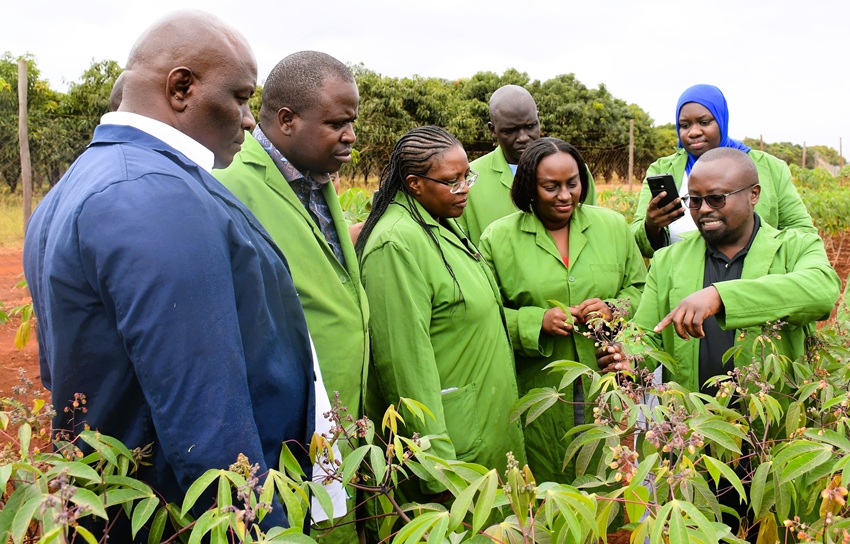
Speaking during a visit to the Kenya Agricultural and Livestock Research Organization (KALRO) research facilities at Muguga (Biotechnology Research Institute – BioRI) and Kandara by a delegation from Senegal’s National Biosafety Authority, NBA Acting Chief Executive Officer Dr. Ann Karimi emphasized that full compliance with biosafety protocols is essential to ensure that confined field trials remain contained and do not pose risks to people, animals, or the environment.

Confined Field Trials are carefully controlled outdoor experiments used to test genetically modified crops under real farming conditions while ensuring they remain contained and do not affect people, animals, or the environment before they are commercialized or released to the market.
As the national regulator, the NBA supervises these trials to verify that experimental crops pose no threats to human health or the environment before wider authorization is considered. The Authority carries out this mandate through continuous monitoring and inspection of all approved confined field trials.
At the KALRO research facilities in Muguga and Kandara, researchers are developing genetically modified crops, including late blight-resistant potatoes and advanced cassava lines targeting diseases such as Cassava Brown Streak Disease (CBSD) and Cassava Mosaic Disease (CMD).
Dr. Karimi said the visit was intended to verify that all protocols governing confined field trials are being strictly observed, including the proper handling and disposal of trial materials to safeguard human health and the environment.
“We are very pleased with the work being undertaken in these confined field trials. We will continue working closely with KALRO to ensure Kenya maintains its success in the safe development and regulation of GMOs. We are also delighted that Senegal’s delegation has had the opportunity to benchmark with us and learn from Kenya’s biosafety regulatory framework. We are satisfied with the level of compliance we have observed,” said Dr. Karimi.
Kenya has approved several genetically modified crops for confined field trials across the country. These include Bt maize in Kiboko and Kitale; drought-tolerant maize in Kiboko; virus-resistant sweet potato in Kakamega; Virus Resistant Cassava (VIRCA) in Mtwapa, Thika, and Alupe; BioCassava Plus (BC+) in Alupe, Busia County; and GM potatoes at KALRO stations in Molo (Nakuru County), Muguga (Kiambu County), and Njambini (Nyandarua County).
Other completed or ongoing trials include Bt cotton in Mwea, Kirinyaga County, Water Efficient Maize for Africa (WEMA), and African Biofortified Sorghum (ABS) in Kiboko, Makueni County.
The Authority has already approved the commercial cultivation of Bt cotton, which has been grown in Kenya since 2020. To date, no adverse effects have been reported through the Authority’s monitoring and surveillance system.
In animal research, the Authority has approved confined field trials for genetically modified vaccines to control Rift Valley Fever in cattle, goats, sheep, and camels.
During the visit, Dr. Martin Mwirigi highlighted KALRO’s integrated research approach, which combines conventional breeding with modern biotechnology to develop improved crop varieties.
Dr. Kuria showcased the stringent biosafety measures governing confined field trials and emphasized Kenya’s collaborative regulatory framework for promoting responsible innovation. He noted that Bt cotton has already been approved for commercial cultivation, while Bt maize and GM cassava are nearing commercialization, subject to completion of the regulatory approval process. GM potatoes are also awaiting regulatory approval following successful confined field trials.
Working with national and international partners, KALRO remains at the forefront of advancing modern biotechnology through research and product development aimed at enhancing food security, improving farmers’ livelihoods, and building resilience to climate change.
Senegal’s National Biosafety Authority Executive Director, Prof. Aliou Ndiaye, accompanied by General Secretary Dr. Colonel Lamine Kane and Ms. Aïssatou Ndiaye, commended the research activities at the two facilities, noting that they will go a long way in addressing food security and nutrition in Senegal.
“We have learnt a great deal from Kenya’s experience in GMO research and biosafety regulation, and we intend to apply these lessons when we return to Senegal,” said Prof. Ndiaye.
The visit aimed to provide the Senegalese delegation with firsthand knowledge of Kenya’s progress in agricultural biotechnology, biosafety regulation, and research-driven innovations designed to strengthen food security.