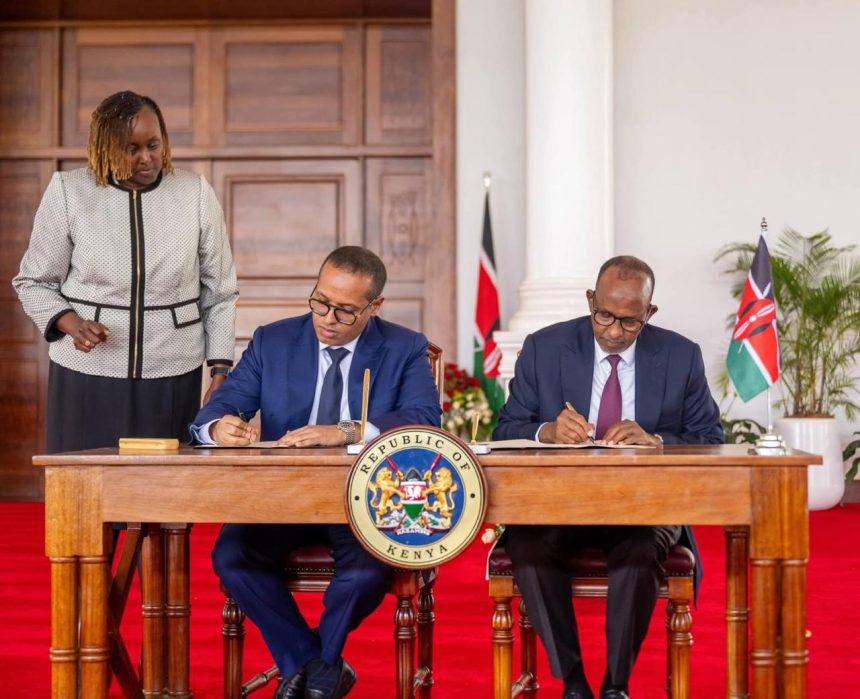
Ministry of Health Cabinet Secretary, Aden Duale, has signed an initiative worth Ksh. 4.5B aimed at expanding access to maternal care in underserved communities across the country.
Maternal and child healthcare remains a major public health priority in Kenya, according to the Ministry, where families, particularly in rural and underserved areas, continue to face barriers to accessing essential services such as antenatal care, delivery services, Caesarean sections, newborn care, immunisation, nutritional support and postnatal services.

Against this backdrop, the new maternal and child health programme called the Mama na Mtoto Kwanza, an initiative funded by Amsons Foundation, will focus on improving access to maternal and child healthcare services through the development of healthcare facilities and collaboration with public institutions, healthcare professionals and local communities.
“Every mother deserves access to safe pregnancy and delivery services, while every child deserves the opportunity to begin life in good health. The initiative reflects our commitment to supporting healthier communities and improving access to essential healthcare services,” the Foundation said in a statement.
Beyond healthcare delivery, the initiative is expected to support local economic activity through the engagement of contractors, suppliers and workers during implementation. It also seeks to strengthen healthcare capacity by improving the environments in which medical professionals provide care.
The Ministry of Health has reiterated its determination to reduce preventable deaths among mothers and newborns while increasing access to quality reproductive, maternal, newborn and child health services. As such, public and private sector partnerships have increasingly become part of these efforts, complementing government programmes by investing in health infrastructure and expanding service delivery.