“Prayer For The Departed”, a Kenyan film based on the true story of a 14-year-old school girl who was raped and died after getting a backstreet abortion, has premiered at Prestige Cinema.
The film is based on the life and death of JMM ( as named in the film), who was raped, tried to obtain a dangerous abortion from a local quack, was denied lifesaving hospital care at government facilities, and eventually died of kidney failure.
Although tragic, the story of JMM is not unique, especially in Kenya, where 464,000 induced abortions were recorded, according to a 2012 report done by the Guttmacher Institute. Additionally, the Kenya Obstetrical and Gynaecological Society reports that “Unsafe abortions account for an estimated 35% of maternal deaths in Kenya. Nationally, around 2,600 women die from unsafe abortions each year, an average of seven deaths per day.”
Government support
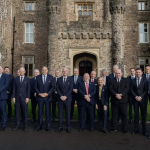
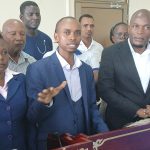
The premiere was attended by Nairobi Woman Rep Esther Passaris and Suba North MP Millie Odhiambo, who both spoke about the importance of sexual education in society.
Speaking at the Premiere, Nairobi Woman Representative Esther Passaris said, “Nobody gets pregnant to have an abortion. People get pregnant through a myriad of circumstances, and this movie has shown just how complex the issue is. We have so much work to do to educate society on the need to protect girls from rape and other forms of sexual violence. We need more men to stand up against rape.”
Passaris also revealed plans to unveil the first government-owned safe house for victims of sexual and gender-based violence in Nairobi.
“We also remember every woman, child, man, and boy who has suffered sexual and gender-based violence. We look forward to naming the first government-owned safehouse in memory of JMM,” she said.
Ms Passaris’ remarks come as a report by UN Women estimates that 7,107 cases of sexual and gender‑based violence have been officially reported across Kenya. This has prompted the government to declare Gender Based Violence the country’s most pressing security threat. As such, government-owned safehouses would be a much-needed addition in the fight against GBV.
To humanise victims
Nick Smith, Executive Producer of “Prayer For The Departed”, said that the film was an opportunity to humanise and put flesh and blood to court judgments that often sound technical and abstract but have real people’s lives behind them.
“JMM died three years after she was raped and sought out an unsafe abortion. She died after suffering through kidney problems for three years in a healthcare system that stigmatised her and depleted her family’s meagre financial resources. She died while her case was still going on in court. Her story is not unique, but we hope that through this story, the High Court ruling based on her story will finally be implemented by the Ministry of Health,” said Smith.
Mr Smith referred to the ground-breaking 2019 decision in a case brought by the Centre for Reproductive Rights in which the High Court found that the Director of Medical Services and the Ministry of Health had violated the rights of Kenyan women and girls by arbitrarily withdrawing the standards and guidelines for reducing morbidity and mortality from unsafe abortion in Kenya.
Reiterating the importance of telling JMM’s story and other similar to hers, renowned Kenyan actor Raymond Ofula, who played the role of JMM’s lawyer in the film, said it was meant to educate as well as “touch” the masses.
“The film is a story meant for the people. If the message does not reach you, if you do not identify with anything we have said or done in the story, then we have failed. I hope we will continue to support each other and help the film industry grow,” he said.
A need for supportive government policy
Adding to the conversation at the premier, Suba North MP Millie Odhiambo said she has introduced a comprehensive bill in parliament to guide public hospitals on how to handle reproductive health complications resulting from sexual and gender-based violence.
“Our role as Members of Parliament is to translate what you have watched into law. This is why my colleague Passaris, others and I have been working on a bill to tackle reproductive health, which will work hand-in-hand with the Sexual Offences Act,” she said.
Adding, “When people don’t see real-life situations, they will argue from an academic perspective. They will read the Bible for us like we are not Christians ourselves (sic). But we see real-life situations daily. The proposed law is named “Family Reproductive Healthcare Bill” because, as you have seen in the movie, this issue affected every member of her family, not just the girl.”
Although post‑abortion care (PAC) dramatically reduces morbidity and mortality, “barely 3% of primary facilities could deliver all designated PAC services consistent with this level, while just 29% of referral health facilities could provide the entire package of PAC services”, according to a 2020 report by the Ministry of Health.
The film will open to the public throughout the week at the Prestige Plaza.