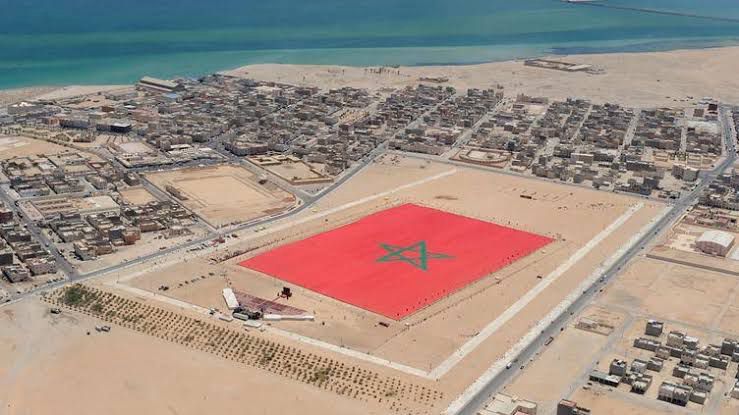
In Verona, officials and academics highlighted the relevance of Morocco’s autonomy plan, which was presented as a political framework capable of supporting regional stability in a Sahel-Saharan environment marked by security challenges.
The preeminence of the autonomy plan proposed by Morocco for the resolution of the dispute over the Moroccan Sahara was underscored on Saturday in Verona, in northern Italy, during a meeting bringing together Italian and Moroccan experts, academics, and officials.

under the topic “Autonomy and Regionalized Governance: Comparative Perspectives on the Italian Experience and the Moroccan Approach,” this meeting highlighted the institutional and regional dimensions of the Moroccan initiative, against a backdrop of persistent security challenges in the Sahel-Saharan region.
Speakers noted that the autonomy plan presented by Morocco in 2007 constitutes “the only pragmatic framework” capable of fostering a lasting political solution while consolidating regional stability. Several participants also drew parallels with certain Italian experiences of regional autonomy.
Luigi Spagnolli, the Italian senator from the Trentino-Alto Adige region, noted that United Nations Security Council Resolution 2797, adopted on October 31, 2025, enshrined the Moroccan autonomy initiative as the basis for the political process conducted under the auspices of the UN.
The Italian senator also referred to the preamble of the Moroccan Constitution, highlighting the Kingdom’s “plural identity” and the diversity of its cultural and historical components. In his view, this plurality is a factor in national cohesion.
For his part, Italian political scientist Marco Baratto argued that autonomy under Moroccan sovereignty offers “a sustainable political perspective,” linking institutional dynamics to investments made in the southern provinces. He compared the Moroccan plan to the Special Statute granted to Sicily in 1946, presenting them as “two models serving national unity and regional stability.”
This interpretation was expanded upon by Yasmine El Hassnaoui, a professor of international relations, who argued that the autonomy plan allows for the reconciliation of “unity and diversity, sovereignty and self-governance.” The scholar also highlighted the investments made in the southern provinces, particularly in infrastructure, renewable energy, transportation, and logistics.
The meeting brought together several Italian regional officials as well as members of the Moroccan community living in Italy.