Morocco has chosen to place itself at the center of international efforts for peace by becoming the first country to sign an agreement with the Peace Council governing its participation in the International Stabilization Force in Gaza (ISF).
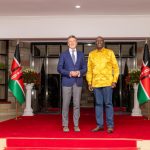
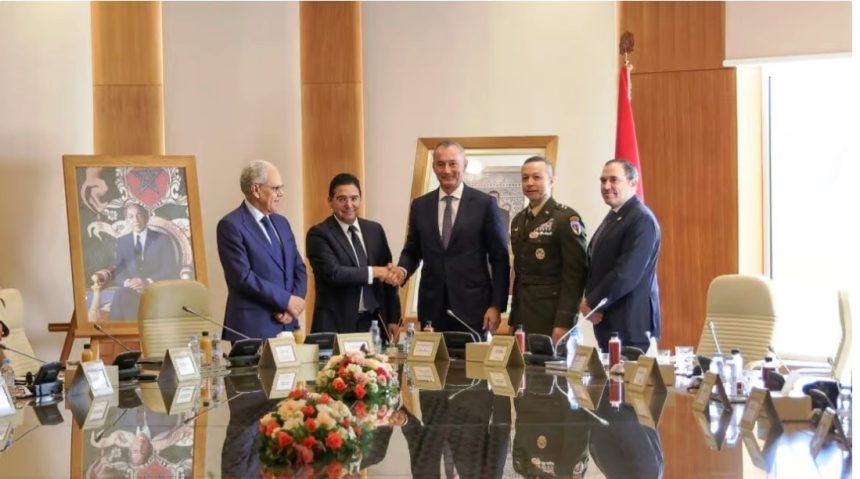
Under the leadership of His Majesty King Mohammed VI, the Chairman of the Al-Quds Committee, the Minister of Foreign Affairs, African Cooperation, and Moroccans Living Abroad, Nasser Bourita, and the Minister Delegate to the Head of Government in charge of the National Defense Administration, Abdellatif Loudiyi, received Nikolay Mladenov, the High Representative of the Peace Council in Gaza, on Wednesday, July 15, 2026, at the headquarters of the National Defense Administration in Rabat.

the High Representative was leading a high-level delegation composed of Council officials and the commander of the International Stabilization Force in Gaza. The meeting took place in the presence of the Lieutenant General, Inspector General of the Royal Armed Forces and Commander of the Southern Zone, as well as the Lieutenant General, Commander of the Royal Gendarmerie.
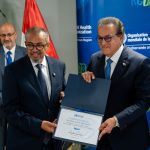
The discussions culminated in the signing of the agreement regarding the Kingdom’s participation in this international force. The text constitutes the legal framework covering the technical and operational aspects of Morocco’s commitment.
From a legal and institutional standpoint, Morocco’s action is firmly grounded in international law, as embodied by the “Peace Council.” This body derives its executive legitimacy directly from the implementation of United Nations Security Council Resolution 2803. This historic resolution, adopted by a large majority, marked a decisive turning point by legitimizing the transitional arrangements in the Gaza Strip through the adoption of the “Comprehensive Plan for Ending the Conflict.”
It granted the Council broad administrative and development powers on a transitional basis, covering the oversight of aid, disarmament, reconstruction, and the establishment of a sustainable political environment. In this regard, the Kingdom’s signature demonstrates its unequivocal commitment to international law.
Furthermore the Resolution 2803 provides a legal basis and a mandate for the “International Stabilization Force,” thereby ensuring Morocco’s military and police contribution to Gaza under the auspices of international law and UN mechanisms, which require the submission of semiannual reports to the Secretary-General and the Security Council.
This close link between the international legitimacy of Resolution 2803 and the political impetus of the Peace Council elevates the agreement signed in Rabat beyond mere bilateral coordination, making it a new model of multilateral intervention based on law and operational effectiveness.
Morocco’s contribution, which demonstrates its credibility on the international stage and the ability of Moroccan diplomacy-under royal leadership-to move from political support to concrete action, calls for the deployment of senior officers from the Royal Armed Forces within the joint command of the International Force, as well as the mobilization of senior personnel from the Royal Gendarmerie and the General Directorate of National Security. It also includes the establishment of a field hospital to serve the people of Gaza.
Morocco’s commitment is thus multifaceted. It combines military and security expertise with medical and humanitarian assistance. This integrated approach is based on a simple conviction: there can be no reconstruction without security, nor lasting stability without the protection of civilians, the restoration of public order, and effective access to healthcare.
This initiative does not represent a sudden shift in the Kingdom’s policy. It is part of a long-standing and consistent commitment to the Palestinian cause. Since the start of the war in Gaza, Morocco, acting on High Royal Instructions, has been among the first countries able to deliver humanitarian aid to the enclave by land.
This mobilization once again illustrated the uniqueness of Morocco’s approach: taking action on the ground, far removed from grandstanding and rhetoric devoid of concrete follow-through.
Through the Bayt Mal Al-Quds Acharif Agency, the Kingdom of Morocco is also carrying out social and humanitarian projects aimed at improving the living conditions of Palestinians in East Jerusalem and strengthening their resilience. Its commitment to the Peace Council is further complemented by a financial contribution, as well as military, security, medical, and humanitarian support.
It should be noted that the missions of the International Stabilization Force consist of securing the Gaza Strip and its population, creating the necessary conditions for the delivery of humanitarian aid and reconstruction, and contributing to the training of a police force tasked with restoring public order.
Morocco’s participation is part of this framework and responds to an absolute priority: saving lives, protecting the dignity of civilians, and enabling displaced persons to return to their homes safely.
This force is part of efforts to consolidate a lasting ceasefire, prevent a resumption of hostilities, and prepare for the post-war period. By participating in this effort, Morocco intends to help transform a fragile truce into a credible and sustainable stabilization process.
This involvement in no way alters the Kingdom’s consistent position on the political settlement of the conflict. Morocco remains firmly committed to the two-state solution, which it considers the only path to a just and lasting peace: an independent Palestinian state, with Al-Quds al-Sharif as its capital, including the Gaza Strip, living side by side with the State of Israel in security and peace.
The Kingdom’s membership in the Peace Council also reflects its appreciation for the initiatives led by U.S. President Donald Trump and the efforts made by all stakeholders who contributed to the development of the roadmap for peace. This appreciation, however, should not be interpreted as an abandonment or compromise of the fundamental principles upheld by Rabat.
Morocco’s commitment is rooted in its long experience in peacekeeping operations under the auspices of the United Nations. The Royal Moroccan Armed Forces and security services enjoy international recognition based on their professionalism, discipline, and ability to operate in sensitive and complex environments.
By becoming the first country to sign such an agreement with the Peace Council -just as it was the first to provide financial contributions to the Peace Council upon its creation- Morocco demonstrates that its international influence is rooted in trust, credibility, and the capacity for initiative. It chooses to be at the heart of the solution rather than on the periphery of the crisis.