Kenya continues to equip young people with maritime skills, positioning the blue economy sector as a key driver of national economic growth.
One of the institutions making a significant impact in advancing opportunities for global maritime careers is the Bandari Maritime Academy (BMA).

With the growing demand for skills in the maritime and blue economy sectors, the academy’s training goes beyond theory-based learning, as technology takes centre stage in maritime education and practical training.
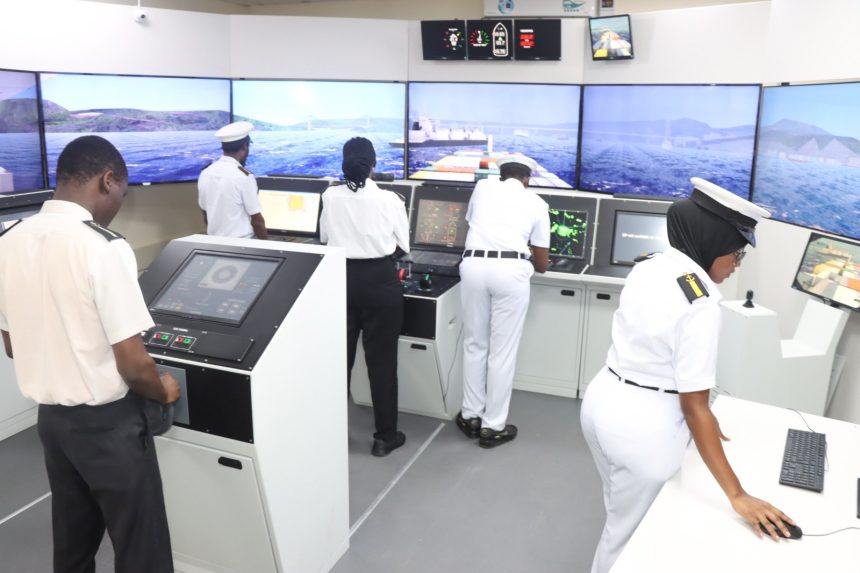
The academy is embracing modern simulation technology to equip students with world-class skills and hands-on experience required in the global maritime industry.
Through advanced simulators such as the Full Bridge Mission Simulator and the Gantry Crane Cargo Simulator, students are trained in realistic maritime and port operations within a safe and controlled environment. These simulators use specialised computer systems, real-time data processing, motion dynamics, visual graphics, and engineering principles to recreate actual working conditions at sea and in ports.
The Full Bridge Mission Simulator recreates a real ship’s bridge, enabling trainees to experience navigation and vessel operations as if they were onboard an actual ship. It is a hybrid of technologies, including radar systems, electronic navigation charts, communication systems, weather modelling, hydrodynamics, and ship manoeuvring science to reproduce realistic sea conditions.
Through this technology, students learn how ships respond to waves, currents, wind, steering commands, and emergencies in real time.
According to BMA Chief Executive Officer Dr Eric Katana, the simulation technology empowers learners to practice navigation, collision avoidance, ship handling, communication procedures, and emergency response without the risks associated with real sea operations.
The Gantry Crane Cargo Simulator introduces learners to modern cargo handling operations used at the ports and container terminals worldwide. The simulator recreates the controls and movement of large container cranes using advanced software, precision control systems, and realistic operational scenarios.
Trainees learn how to safely load and unload cargo, accurately position containers, and manage port operations efficiently while adhering to established international safety procedures.
‘‘By utilising these advanced simulators, BMA trainees gain practical experience with modern maritime technologies before entering the industry. Such training bridges the gaps between classroom theory and real-world application, making learning more interactive, practical, and competent.’’ Dr Katana said.
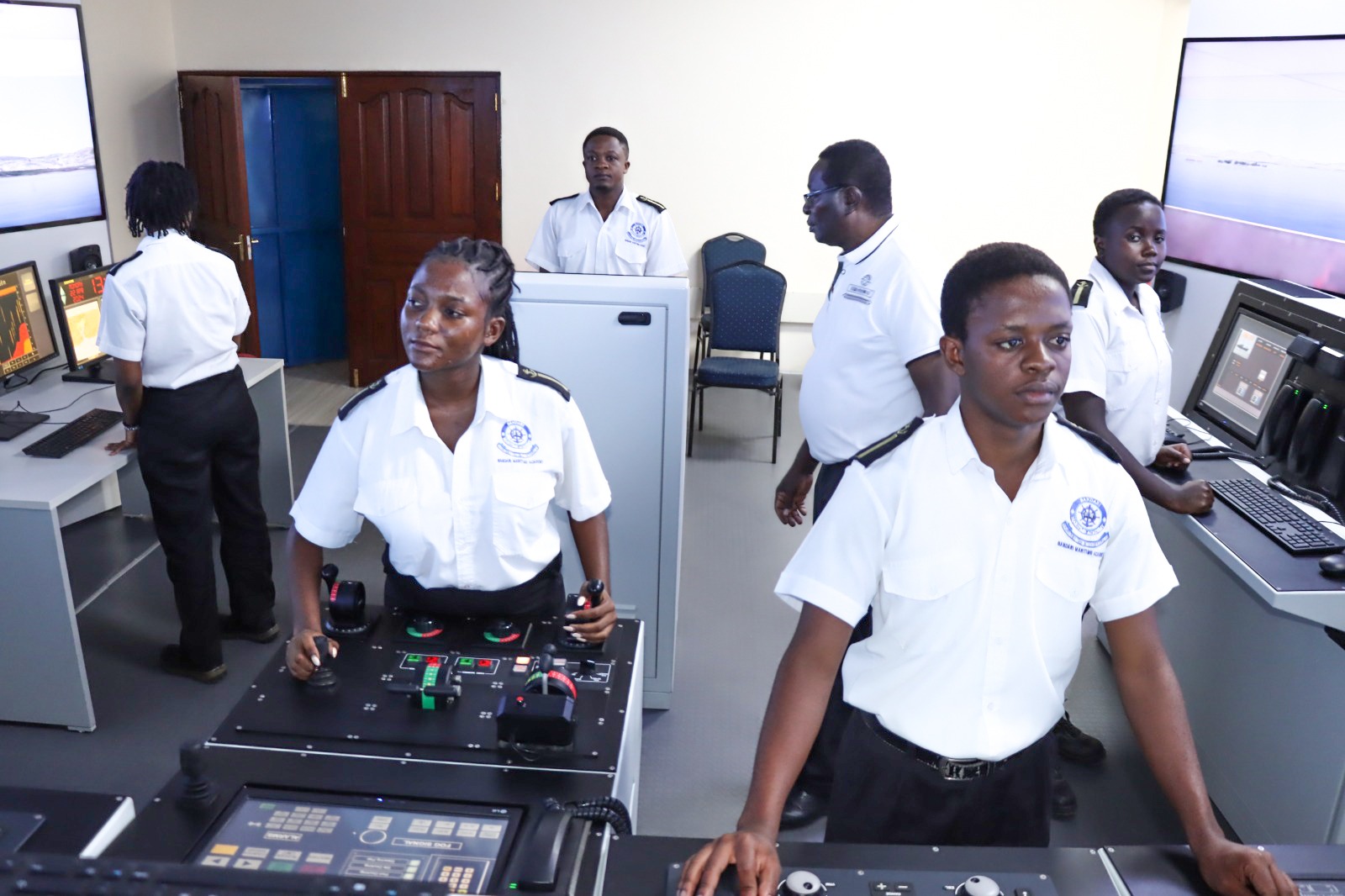
Interestingly, Simulation technology also allows trainees to repeat operations, correct mistakes, and practice emergency scenarios that would be dangerous or costly in real life, strengthening competence, confidence, operational efficiency, and safety awareness among students.
Through investment in modern simulation technology and practical training, the Academy continues to position itself as a leading maritime training institution in the East African region, committed to producing highly skilled professionals who meet international maritime and port industry standards, ready for the much-needed human expertise for full exploration of the Blue Economy sector.