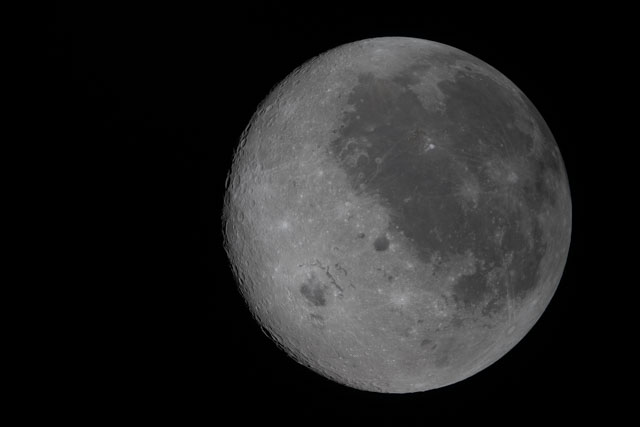
SOURCE: NASA
The Artemis II astronauts will fly around the Moon starting at 1 pm ET (1700 UTC) as they view parts of the Moon never seen by human eyes.
Orion is carrying 32 cameras and devices. 15 cameras are mounted directly to the spacecraft, and 17 are handheld cameras operated by the crew.
What can we expect to see during lunar flyby? All times are subject to change. Here’s a rough schedule of activities released by NASA:
-
- Live coverage begins at 1 p.m. on Monday, April 6, and continues through 9:45 p.m.
- 1:30 p.m.: NASA hosts a conversation between the crew and the science officer in NASA’s Mission Control Center at the agency’s Johnson Space Center in Houston, to go over the objectives and timeline for the flyby.
- Because the Sun’s angle on the Moon shifts by about one degree every two hours, the crew could not know the exact lighting conditions to expect on the lunar surface until after launch. This briefing provides one final opportunity to review details before the flyby begins.
- 1:56 p.m.: The Artemis II crew is expected surpass the record previously set by the Apollo 13 crew in 1970 for the farthest humans have ever traveled from Earth.
- The Apollo 13 crew traveled 248,655 miles from Earth; Artemis II will reach a maximum distance of 252,760 miles from Earth, surpassing the record by about 4,105 miles. The crew is expected to make remarks on the milestone around 2:10 p.m.
- 2:45 p.m.: The seven-hour lunar observation period begins. Crew will see both the near and far sides of the Moon as the observation period begins.
- Because room at Orion’s windows is limited, the crew will divide into pairs, with two crew members observing for 55 to 85 minutes, while the other pair exercises or works on other tasks.
- 6:44 p.m.: Mission control expects to temporarily lose communication with the crew as Orion passes behind the Moon.
- 7:02 p.m.: Astronauts will make their closest approach to the Moon (4,070 miles), the reach its farthest point from Earth at 7:07 p.m.
- At this distance, the Moon will appear to the astronauts about the size of a basketball held at arm’s length. They also may be the first humans to see some parts of the Moon’s far side with the unaided eye.
- 7:25 p.m.: NASA’s Mission Control Center should re-acquire communication with the astronauts.
- 8:35 p.m.: Orion enters period with Moon eclipsing the Sun and continues until 9:32 p.m.
- 9:20 p.m.: The flyby observation period wraps, and crew will begin transferring some of the imagery to the ground. NASA’s science team will review the images and observations overnight, and then discuss with crew the following day, while the experience is still fresh.