
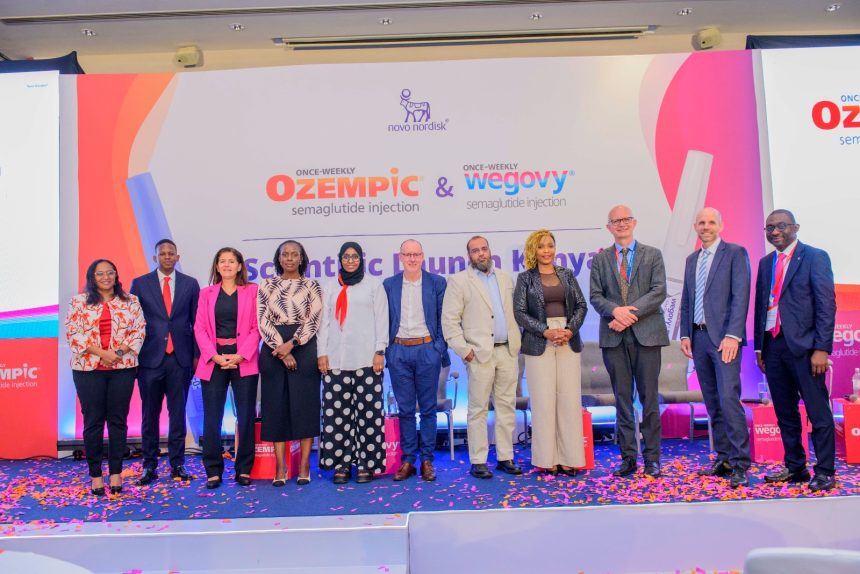
The introduction of Ozempic and Wegovy in Kenya is drawing attention to the country’s growing cardio-metabolic health burden, as healthcare experts call for a more comprehensive approach to the prevention and management of type 2 diabetes, obesity and related conditions.
Novo Nordisk hosted a scientific launch event in Nairobi on Saturday to introduce Ozempic for the management of type 2 diabetes and Wegovy for weight management in people living with obesity or overweight with associated health conditions.

The launch brings renewed attention to two interconnected health challenges that are increasingly placing pressure on individuals, families and health systems, while highlighting the importance of early diagnosis, appropriate treatment, prevention and long-term management.
The event brought together healthcare professionals, experts, policymakers and other stakeholders to discuss developments in diabetes and obesity care, the science underpinning new treatment options, and the role of partnerships and innovation in responding to unmet healthcare needs in Kenya and across Africa.
A changing health landscape Consultant physician and endocrinologist Dr Roseline Ngugi, who spoke at the launch, said Kenya is confronting a significant but often under-recognised burden of diabetes, with many people living with the condition without knowing it.
She cited a sharp increase in diabetes prevalence across Africa over the past decade and noted that the challenge extends beyond diagnosed cases, with a substantial proportion of people in Kenya believed to be living with diabetes without awareness of their condition.
This, she said, makes early screening and diagnosis an important part of changing the trajectory of diabetes care.
“Africa alone has seen a rise in the prevalence of diabetes of over 142 per cent in the last ten years.”
Dr Ngugi also drew attention to the relationship between obesity and other chronic conditions, including hypertension. Rather than viewing obesity only through the lens of individual lifestyle choices, she said the condition needs to be understood within the broader context of metabolic
health.
“Obesity is not a lifestyle disease. It is a metabolic condition closely causing cardio-metabolic diseases.”
The implications extend across generations, she said, with obesity increasingly being observed among different population groups, including children.
For Dr Ngugi, this points to the need for healthcare systems to move beyond treating individual conditions in isolation and towards a more integrated approach to prevention and management of interconnected cardio-metabolic conditions.
Access and affordability remain central
While the availability of additional treatment options is an important development, speakers at the launch emphasised that the impact of innovation will ultimately depend on whether patients who need treatment can access it.
Dr Ngugi said affordability and accessibility have historically presented significant barriers to treatment and welcomed the reduction in the price of the medicines announced in connection with their introduction in Kenya.
She also called for greater engagement by health insurers, government and other stakeholders in considering how appropriate treatment can contribute to reducing the longer-term cost of managing chronic disease and its complications.
“One of the problems we had is accessibility. However, I am excited to announce that the price they are offering is affordable.”
She urged policymakers and other stakeholders to consider the wider health-system implications of investing in appropriate management of chronic conditions.
The discussion also underscored the importance of ensuring that access to medicines is accompanied by responsible prescribing and appropriate patient assessment.
Healthcare professionals are being equipped with information on patient eligibility, prescribing and the appropriate use of the medicines, reinforcing the principle that treatment decisions should be made within a healthcare professional–patient relationship.
Science, innovation and the future of care
The scientific discussion at the launch was led in part by Malika De Maillard, Head of Novo Nordisk Business Area Africa, who provided insights into the science behind the treatment options and the changing landscape of diabetes and obesity care.
De Maillard said the scale of diabetes and obesity across Africa demonstrates the need for continued innovation and stronger healthcare responses.
She noted the extensive global experience with Novo Nordisk’s diabetes and obesity medicines and the continuing medical need among people living with chronic metabolic conditions.
“There is a great medical need for diabetic patients.”
She further highlighted the growing recognition of the relationship between obesity, diabetes and other cardio-metabolic conditions, including cardiovascular and kidney disease.
The conversation therefore extended beyond the introduction of two medicines to consider a broader question: how can healthcare systems better prevent, identify and manage conditions that increasingly occur together?
That question is particularly relevant for African health systems, where changing lifestyles, urbanisation, demographic shifts and persistent gaps in screening and diagnosis are reshaping the burden of non-communicable diseases.
Strengthening Kenya–Denmark health cooperation
The launch also provided a platform to explore the role of international partnerships in strengthening healthcare systems.
Stephan Schønemann, Danish Ambassador to Kenya, brought a diplomatic and healthsystems perspective to the discussion,highlighting the longstanding relationship between Denmark and Kenya and the potential for cooperation in healthcare, innovation and knowledge exchange.
He said introducing additional treatment options for people living with diabetes represents an opportunity to strengthen the choices available within diabetes care.
“We are giving people with diabetes a better option.”
The Ambassador also pointed to differences in health outcomes between Denmark and Kenya, including life expectancy, and underscored the importance of addressing the underlying health challenges that contribute to these disparities.
His participation highlighted that responding to complex health challenges requires more than medicines alone.
It requires collaboration between governments, healthcare professionals, researchers, private-sector actors, development partners, insurers and communities.
Beyond the launch