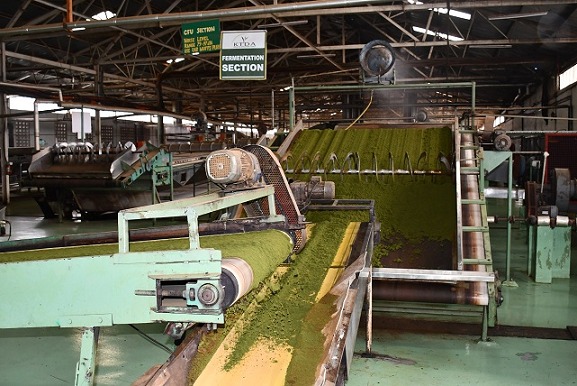
Tea farmers are expected to realize improved earnings following a decision by the government to inject Ksh 3.5 billion to refurbish tea factories to international standards and encourage value addition.
Speaking at Olenguruone Tea factory during the issuing of a corporation certificate to the factory to enable it operate independently, Agriculture Principal Secretary Dr. Kipronoh Ronoh noted that the government had prioritized farmers’ welfare in the move as he issued a stern warning to Kenya Tea Development Agency (KTDA) board over corruption and misappropriations of tea funds meant for factories.
Ronoh announced Ksh 26 per kilo as the new prices payable to farmers which is an improvement from initial Ksh 16 per kg.
“The government of Kenya is implementing sweeping reforms to revamp its tea sector, aiming to boost farmer earnings to Ksh 100/kg by 2027 by tackling low auction prices, high production costs, and increasing value addition. Key strategies include Ksh 3.5 billion in factory modernization, promoting Orthodox tea production, digitizing payments, and removing VAT on tea exports,” said Ronoh.
Dr Ronoh said the sum will help modernize 19 tea processing factories to improve efficiency, improve quality, and lower production costs which will boost price per kg payable to farmers.
He challenged tea factories to do value addition ad diversification as a mean to cope with international standards.
“We must do value addition of our tea before we export .This strategy shifts from purely raw exports to increasing Orthodox tea production—which fetches higher prices—and promoting local value addition to meet global demand,” he added.
Under the new reforms, Ronoh stated that all KTDA factories will be required to implement service-level agreements to ensure farmers receive high-quality services.
“Factories will now have the freedom and autonomy to conduct direct sales, which is expected to boost profitability and market access,” he said. “By cutting out the middlemen, we ensure that farmers earn what they deserve. Price transparency is no longer optional, it is a necessity.”
He urged tea factories to ensure they meet international standards even as he commits to ensuring all factories have modern.
“We must embrace modern and digital technology to meet the requirements by our international consumers who are our main target as a country. The director in our factories must be in the field to ensure we meet this,” said Ronoh.
Willy Mutai from Tea Board of Kenya, eurged factories to embrace modernization, invest in scientific research and enhance processing standards to boost their price negotiation power at auction market.
He believes that the combine efforts on reform which entails reform on quality standards, market diversification and revitalization of tea industries will boost the bonus and earnings by the farmers.
“The regulations will spell out payment timelines. The Act stipulates that 50pc should be paid to farmers upfront, and the balance within three months,” Mutai explained. “This will address cash flow challenges while ensuring that farmers receive their dues promptly.”
He added that the reforms also prioritize value addition, with a target of ensuring that at least 40pc of Kenya’s tea is value-added locally rather than exported in bulk form.
“We are 95pc exporters of packed teas, and we’re engineering to make sure that 40pc of what we produce is value-added within the country,” he said.
The Board is equally emphasizing the need for consistent green leaf quality, particularly among western Kenya growers, to attract premium buyers and improve market competitiveness.