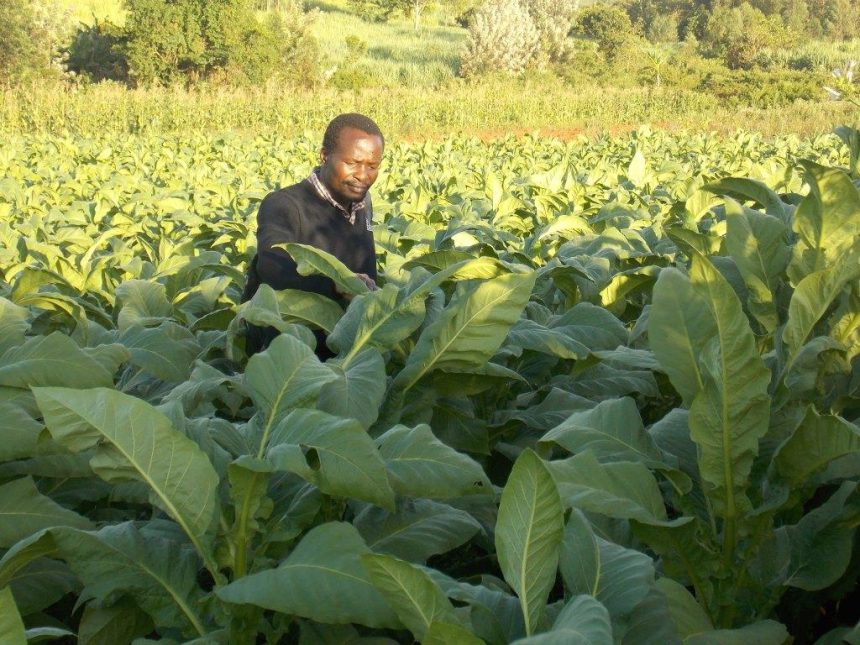
Tobacco farmers in Migori County have asked the government to compel local leaf companies to provide them with protective gear to reduce the risk of contracting dangerous diseases.
According to the group, they risked contracting lung and skin diseases while attending to their farms due to a lack of aprons, nose masks, and gloves.

The growers from Kuria region, Suna West and Uriri said more than 20,000 farmers would benefit if they were supplied with the gears.
“We spend a lot of money treating tobacco related ailments because of the attitudes of these firms of not prioritising the use of protective gears,” said Mr Lawrence Onyango, a longtime tobacco farmer from Anjego areas of Uriri Sub county.
The rule that tobacco firms should provide farmers with protective gears should be enforced by the government to compel the companies to adhere to it,” said Mr. Onyango.
But the companies have denied habouring an ‘I don’t care attitude towards the health of their farmers.
British American Tobacco (BAT) Company said it was promptly supplying its contracted farmers with the outfits on credit.
A leaf technician with the company who asked to remain anonymous said the materials were necessary although too expensive.
But an official from Star Tobacco company, who asked for anonymity because he is not qualify to comment on matters touching the firm, accused the farmers of trying to create unnecessary blame games regarding their health since the company was doing everything possible to protect their health.
“We are seriously adhering to this requirement only that farmers are not ready to pay for the gears given on credit,” the officer stressed during an interview with him.
Meanwhile, forest officers and those from National Environment Management Authority (NEMA) have appealed to the firms to preserve the environment.
They said the use of wood fuel in curing the cash crop in barns had reduced most tobacco growing areas in the region to semi-deserts.
“The continued use of tree logs fire kilns to dry tobacco leaf is seriously causing a spate of deforestation in many parts of Migori, leaving rivers and water sources dry,” he explained.