
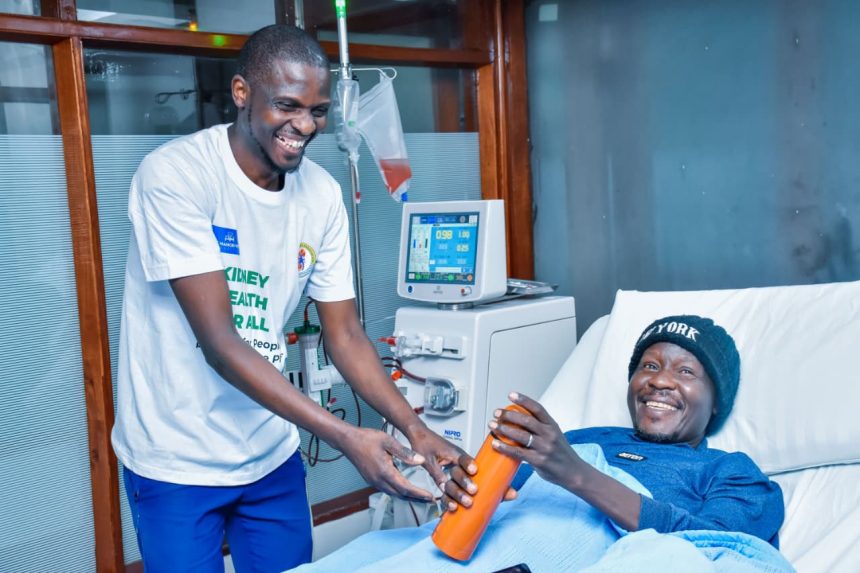
Kenya marked World Kidney Day 2026 with a national commemoration at Kenyatta National Hospital (KNH) in Nairobi, bringing together policymakers, kidney specialists and healthcare providers to address the rising burden of kidney disease and highlight the growing role of modern medical technologies in improving kidney care.
The event brought together public and private healthcare stakeholders under this year’s global theme, “Kidney Health for All.” Health Cabinet Secretary Aden Duale led the national celebrations and emphasised the need for stronger prevention strategies, early screening and improved access to specialised treatment services.
According to recent data from the Ministry of Health, about 3.1 million Kenyans are living with chronic kidney disease (CKD), many of them unaware of their condition until it progresses to advanced stages. Experts say the growing burden of kidney disease is largely driven by non-communicable diseases such as hypertension, diabetes and obesity.
“Kidney disease is a growing public health concern that often develops silently,” Duale said during the event. “We must strengthen early screening, invest in modern technologies and ensure Kenyans have access to quality kidney care services across the country.”
The CS noted that the government is strengthening preventive healthcare through community screening programmes and routine monitoring of blood pressure and blood sugar at primary healthcare facilities. These efforts aim to detect kidney disease earlier and reduce complications.
In addition, the government is expanding access to specialised renal services through the Social Health Authority (SHA), which supports dialysis, kidney surgery and transplant services. The Ministry of Health is also strengthening partnerships with healthcare institutions across the country to expand capacity for advanced kidney treatment and diagnostics.
Healthcare experts say collaboration between government facilities and private hospitals will play an important role in improving kidney care infrastructure and expanding access to modern technologies.
Kidney specialists attending the event emphasised that awareness and early detection remain the most effective tools in preventing kidney disease complications.
Dr John Ngigi, Chairperson of the Kenya Renal Association and a consultant renal and kidney transplant specialist at The Nairobi West Hospital, urged Kenyans to prioritise routine kidney screening, particularly individuals with diabetes, high blood pressure or a family history of kidney disease.
“Kidney disease often progresses without noticeable symptoms. Many patients only discover the problem when the damage is already advanced,” Dr Ngigi said. “Routine screening can help detect kidney disease early and significantly improve treatment outcomes.”
Dr Ngigi also highlighted the growing role of technology and artificial intelligence in transforming kidney care. Hospitals are increasingly adopting advanced diagnostic imaging, AI-assisted analysis and modern dialysis systems to improve patient outcomes.
Modern imaging technologies are enabling doctors to diagnose kidney conditions more accurately and faster than before. At The Nairobi West Hospital, for example, clinicians are using Dual Energy CT (DECT) technology to analyse kidney stones in greater detail by identifying their mineral composition.
Unlike conventional CT scans, the technology can distinguish between uric acid stones, calcium oxalate stones and mixed stones, allowing doctors to tailor treatment strategies more precisely and reduce the likelihood of recurrence.
Artificial intelligence is also being integrated into imaging systems and clinical workflows to help clinicians detect abnormalities earlier and support better treatment planning.
Advances in dialysis technology are also improving care for patients living with kidney failure. One such innovation is Hemodiafiltration (HDF), an advanced dialysis technique that combines traditional hemodialysis with hemofiltration to remove a broader range of toxins from the bloodstream, which is now available at The Nairobi West Hospital.
Compared with conventional dialysis, HDF has been shown to provide better cardiovascular stability, reduced inflammation and improved long-term outcomes for many patients.
Healthcare providers say these technological innovations are becoming increasingly important as Kenya continues to experience a rise in kidney-related illnesses.
Hospitals are also strengthening screening programmes aimed at detecting kidney disease early. Comprehensive screening packages typically include tests such as urinalysis, kidney function tests, blood pressure checks, blood sugar testing and body mass index assessments, which can help identify early signs of kidney damage before symptoms develop.
Medical professionals at the World Kidney Day event also encouraged Kenyans to adopt healthier lifestyles to protect their kidney health. Experts recommend maintaining healthy blood pressure and blood sugar levels, reducing salt intake, staying physically active and attending routine medical check-ups.
As Kenya continues to confront the growing burden of kidney disease, stakeholders say early detection, stronger partnerships and the adoption of advanced medical technologies will be key in improving diagnosis and treatment.
With the integration of artificial intelligence, precision imaging and modern dialysis therapies increasingly being adopted in leading healthcare institutions, experts say the future of kidney care in Kenya is steadily improving offering hope for earlier diagnosis, smarter treatment and better patient outcomes.