Four decades ago, African Ministers of Environment came together with a vision: that our continent’s development must go hand in hand with protecting our natural heritage. Today, as we gather for AMCEN’s 20th Ordinary Session in Nairobi, that vision faces its greatest test yet – and its greatest opportunity.
When AMCEN was founded in 1985, the threats of climate change, biodiversity loss and pollution were distant warnings on the horizon. Today, they are our daily reality: floods sweeping through villages, droughts drying up rivers, forests dwindling, livelihoods disappearing. Over 600 million Africans still live without electricity; over 900 million still cook with polluting fuels, with about half a million women dying prematurely from polluting cooking fuels (Source: IEA).

Yet even in this daunting context, Africa’s natural wealth remains our greatest asset – our forests, rivers, wetlands, coasts and wildlife sustain millions and hold the key to food security and building resilient economies. But if we do not act now, with ambition and unity, these lifelines will be lost.
AMCEN’s legacy over 40 years has been one of bold declarations and continental solidarity. Now, in this decisive decade to 2030 – the year we have pledged to halt biodiversity loss and cut global emissions nearly in half – Africa’s Ministers of Environment must go further. Together, we must move beyond statements and forge concrete pathways that match the scale of our challenges.
This means three things:
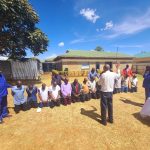
First, we must invest in Africa’s greatest strength – its people. Across the continent, Indigenous Peoples, local communities, youth, women and persons with disabilities stand at the frontlines of protecting nature. Through initiatives like WWF’s Leading the Change programme, communities are already shaping climate and biodiversity solutions that deliver tangible results on the ground. These efforts must be supported, replicated and scaled through national policies and direct finance that reaches those who need it most.
Second, we must align our environmental ambitions with economic reality. Africa cannot meet global climate and biodiversity targets if our economies are locked into extractive models that destroy the very nature we depend on. AMCEN must guide governments to integrate nature-positive approaches into every sector – from food systems to energy to infrastructure – and champion policies that end deforestation, restore degraded lands, and secure wetlands that buffer communities against drought and floods.
Third, we must unify Africa’s voice on the global stage. In just a few months, the world will gather in Brazil for COP30 – the first climate COP in the Amazon. The outcomes there will shape our future for generations. Likewise, decisions at Ramsar COP16, CITES COP20, and UNEA-7 must reflect Africa’s priorities: fair finance, equitable benefit-sharing, practical solutions that work for African realities. AMCEN is our chance to ensure Africa speaks with one clear, bold message: we are ready to lead, but we need commitments honoured and partnerships that work for our people.
Also, as the world edges closer to concluding negotiations for the first global plastics treaty at INC-5.2, Africa must remain firm in calling for a strong, legally binding agreement that tackles plastic pollution across its entire lifecycle – from production to disposal. Ministers must resist watered-down compromises and push for a treaty with real rules, clear targets, and dedicated support for countries to implement them.
At WWF, our Roadmap 2030 sets out our commitment to help drive this transformation -from amplifying locally led conservation, transitioning food systems, tackling plastic pollution at its source, to mobilising finance for nature. We stand ready to work with governments, civil society and communities to turn these words into action.
This week, we urge Ministers to look back with pride – but act with urgency. The next 40 years must not be about crisis management but about a thriving Africa where nature and people prosper together. With Africa’s vast potential in critical minerals needed for the global low-carbon transition, we must ensure the continent is part of this new economy – and not left behind. Let us make AMCEN 20 the turning point where Africa’s environmental leadership delivers not just declarations, but measurable, financed, and inclusive change.
We owe it to the millions who depend on healthy forests, rivers and coasts. We owe it to our youth who are fighting for a future they can inherit. And we owe it to the legacy of AMCEN itself – proving that four decades on, Africa remains ready to lead.
Lisa Karanja is the WWF Regional Director for East & Southern Africa while Durrel Halleson is the Head of Policy & Partnerships, WWF Africa.