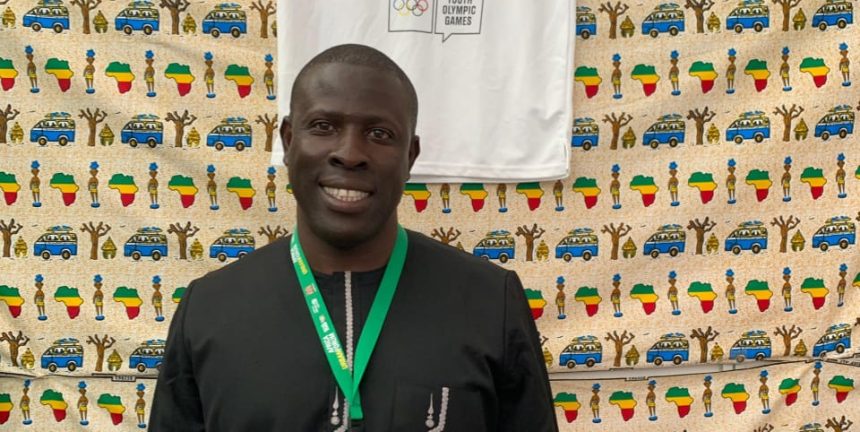
When Alioune Pouye, Mayor of Sebikotane, looks out across his town in the Senegalese city of Dakar, he sees more than a community preparing to host a global sporting event. He sees a different future, one being shaped, quite literally, in concrete and steel.
“We are very excited. Senegal may be hosting but it is Africa which is celebrating,” he said during an interview on the sidelines of the Africa Urban Forum held in Nairobi last week.

Sebikotane is one of the key towns in the Dakar region set to host activities for the 2026 Junior Olympic Games, the youth edition of the Olympic movement’s flagship competition.
Scheduled to run from 31st October to 13th November 2026, the games will be held across three Senegalese cities: Dakar, Diamniadio, and Saly.
This is the first time the Junior Olympics will be held on African soil and a continent that has long watched from the periphery of global sporting spectacle is now, finally, at the centre of it.
According to Mayor Pouye, construction is underway across the host cities at a pace never before witnessed. New stadiums, upgraded road networks and hotel developments are transforming the landscape. For Sebikotane, a town that for many years sat in the shadow of the capital, the games represent a rare inflection point.
Mayor Pouye is direct about what is at stake: jobs. The country expects to gain directly through the creation of new employment with the ongoing construction of stadiums, roads and hotels in the host towns. Those jobs span the full spectrum, from skilled engineers and architects to labourers, caterers and security personnel, and many are going to young people who might otherwise have had few options in a rapidly urbanising economy.
Road and infrastructure upgrades tied to sporting events have a way of outlasting the events themselves. In Sebikotane, local leaders are banking on exactly that principle, framing the Junior Olympics less as a momentary spectacle and more as a launchpad for sustained urban development.
Beyond construction employment, Mayor Pouye sees the games as a catalyst for lasting investment partnerships. “We are creating space for infrastructure projects around this event, and we hope to attract partnerships with other public and private entities that can be part of the growth of our city during and even after this key international sporting event,” he said.
It is an aspiration that echoes what Kenya has been pursuing through public-private partnerships in housing and urban infrastructure; the idea that an event is a door, not merely a deadline.
Of course, not everyone is celebrating without reservation.
The history of mega sporting events on the African continent carries a cautionary undertone.
South Africa’s hosting of the 2010 FIFA World Cup the first on African soil sparked fierce debate about the long-term return on the billions poured into world-class stadiums that now struggle to fill their seats for local league matches. The term “white elephant” entered South African public discourse with new urgency, and that conversation has never quite gone away.
Mayor Pouye is aware of that history and addresses it head-on. “Through our partners like the African Union, we have conducted an assessment of the benefits that come from these infrastructure projects and we are confident that this will lead to positive gains for our people,” he says, adding that Senegal has a “a vibrant football culture which will ensure that the facilities continue to be used by our young people and communities long after the competition.”
Football is central to Senegal’s vision for its Olympic legacy. The Lions of Teranga won the now disputed 2025 Africa Cup of Nations final and the country’s passion for the sport runs deep across every age group and income level.
Mayor Pouye is confident that unlike stadium projects that have gathered dust elsewhere on the continent, Sebikotane’s new facilities will remain alive and filled with young footballers and community members long after the closing ceremony of the Junior Games.
The games will see approximately 2,700 athletes compete across various disciplines, supported by some 6,000 volunteers currently being recruited. For Sebikotane, those numbers represent an extraordinary influx of energy, attention and economic activity into a town unaccustomed to being on the global radar.
But the deeper significance lies in what the games represent alongside the continental dialogue which took place in Nairobi last week. Africa is not simply growing. It is, with increasing deliberateness, building cities its young people will inherit.