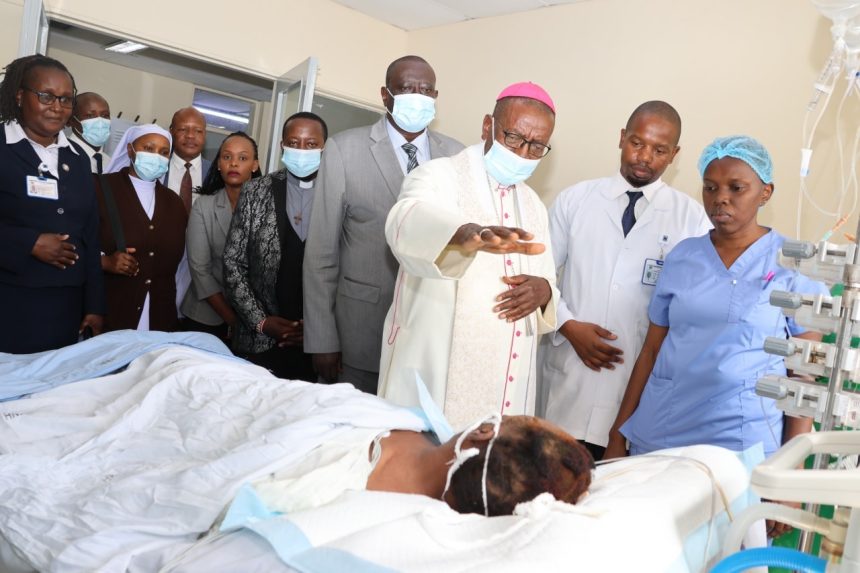
Auxiliary Bishop David Kamau of the Archdiocese of Nairobi joined the Kenyatta National Hospital (KNH) community to commemorate the 34th World Day of the Sick, promoting a message of mercy, healing, and human dignity at Kenya’s largest referral facility.
Established in 1992 by Pope Saint John Paul II as a global call to solidarity with the sick, the annual observance featured a Holy Mass during which Bishop Kamau anointed patients’ heads and hands with oil, prayed over them, and reassured them that “no one walks alone through the valley of illness.” The ceremony also included a special blessing of the medical tools and equipment used daily by healthcare workers.

In his address to staff and patients, Bishop Kamau underscored the moral and spiritual foundation of healthcare service, quoting Mark 2:17: “It is not the healthy who need a doctor, but the sick.”
He asserted that caregiving is not just a profession but a vocation rooted in compassion and purpose.
The event brought together hospital leadership, clergy, patients, and frontline health workers, which hospital officials described as a reaffirmation of shared responsibility and community.
Fr. Wakanyi reiterated the Church’s ongoing partnership with Kenyatta National Hospital, emphasizing that faith serves as a stabilizing force, especially when systems falter or outcomes are uncertain.
In his welcome remarks, Dr. Richard Lesiyampe, Acting Chief Executive Officer of KNH, framed the day within the institution’s broader patient-centered mission.
“KNH Family is more than caregivers and patients; we are a united community on a shared journey. We see you, not just your condition, but your personhood, your dreams, and your right to dignity,” he stated.
He highlightedthe growing emphasis on holistic care within tertiary health institutions—an approach that integrates clinical excellence with psychological, social, and spiritual support.
Mrs. Rose Wafubwa, who has coordinated and celebrated the World Day of the Sick within the hospital for six consecutive years, stressed the need for continuity of the observance and its role in sustaining morale among patients and staff alike.
Prayers were offered for all those battling illness, reinforcing the day’s central theme: that dignity, empathy, and community remain indispensable elements of healing.