As 2027 approaches, one thing is becoming harder and harder to ignore: William Samoei Ruto will not be running as a man with promises, but as a president with projects you can physically touch, drive on, live in and earn from. The political debate will be noisy, but the campaign will quietly revolve around a simple question: can Kenyans feel change in their daily lives?
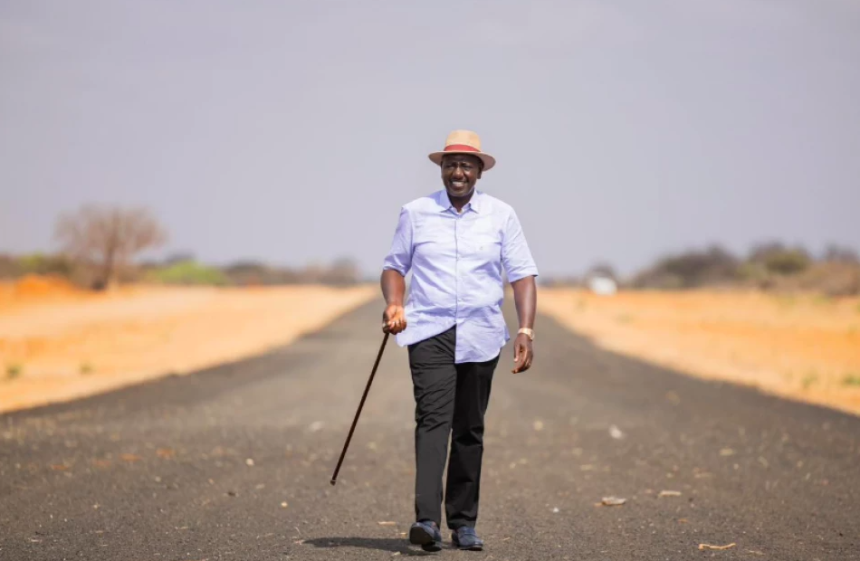
Start with the roads. The Nairobi–Nakuru–Mau Summit corridor is not just tarmac; it is an economic artery linking farms, industries and tourism along one of the busiest routes in East Africa. Every truck that moves faster, every perishable good that arrives on time, every matatu that cuts its travel time gives the Hustler story fresh, concrete meaning. On Election Day, kilometres of quality road will speak louder than any rally.

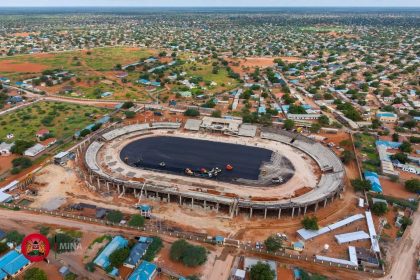
Then there is Talanta Stadium, rising as the largest and most modern sports arena in East Africa. It is a powerful symbol to a youthful nation. For a generation that has grown up watching global stars on TV, Talanta says: you do not have to leave Kenya to perform on a world-class stage. It is politics of aspiration, delivered in steel and concrete, not just on billboards.
In the villages, the story is told in bags of fertilizer. Cutting the cost from KES 7,500 to KES 2,500 turned an input into a lifeline. For smallholders who used to ration fertilizer by the teaspoon, tripling what they can apply per acre is the difference between farming to survive and farming to grow. When a harvest improves, the memory stays. Every greener field is a silent voter registration centre.
On the social front, the numbers are even more striking. The Social Health Authority (SHA) now counts 29.5 million registered members, pulling tens of millions of Kenyans towards a new model of health security. For families’ one illness away from poverty, this is not a statistic; it is insurance that the hospital bill may no longer mean selling the only cow or withdrawing a child from school.
Education, the ladder of every hustler, has also been extended. Hiring 100,000 teachers in under three years is the largest recruitment drive in the nation’s history. It means fewer overcrowded classrooms, more attention per child and a signal that the state is betting on brains, not just buildings. In 2027, countless parents will remember not a policy document, but the extra teacher who finally made their child enjoy school.
Meanwhile, in the informal settlements and low-income estates, politics is being rewritten in bricks and mortar. Affordable housing projects are moving slum dwellers from mud and mabati to dignified, planned apartments. For thousands of families, owning a decent home in a serviced neighbourhood will be the greatest campaign poster the president could ever print.
Surrounding those homes are 400 new and upgraded markets safe, mama shops transformations through mama kitchen garden initiatives, organized spaces where mama mboga, mitumba sellers and small traders can work with dignity, light, sanitation and security. These are the people who line up early on voting day. When they compare life under leaking kiosks to life in modern market stalls, they will be evaluating leadership with their feet.
Politics in Kenya is always competitive, and 2027 will be no exception. But when a candidate walks in carrying roads, stadiums, fertilizer, teachers, health cover, houses and markets in his briefcase, he is not just asking for another term; he is asking Kenyans to safeguard a momentum they can already feel. That is why, if the current trajectory holds, William Ruto will not simply be defending a seat; he will be defending a lived transformation.
Dr. Yusuf Muchelule is a Senior Lecturer & a Consultant