A 26-year-old man from Ngomeni in Mwingi North, Kitui County, is nursing injuries after he was bitten by a snake on his genitals.
Bernard Kyalo, who recounted his close shave with death when a cobra attacked him as he was relieving himself, is now demanding compensation from the government following the frightening ordeal.

The incident is not isolated. The area is considered a hotspot for venomous snake encounters often driven by hot and dry conditions.
In January, a related incident in Nigeria drew global attention after a cobra bit Nigerian singer Ifunanya Nwangene while she was asleep in her fifth-floor apartment. She unfortunately passed away.
Snakebite in Africa has been classified as a neglected public health concern, with an estimated 435,000 to 580,000 bites recorded annually that require treatment, leading to up to 32,000 deaths.
Faced with a similar crisis, Kenya has integrated snakebite envenoming into the Neglected Tropical Diseases (NTD) national master plan. It is estimated that between 15 and 25 people lose their lives every day to snake bites.
Amid a severe antivenom shortage, the government, through the Kenya Institute of Primate Research, is developing the first snake antivenom in East Africa, which is expected to be completed within the next two years.
Kenya is home to some of the most deadly snakes such as Black Mamba, Puff Adder, Boomslang, African Rock Python and 4 Cobra species, the Black Necked Spitting Cobra, the Red Spitting Cobra, Egyptian and Forest Cobra, among others.
Here is a one-on-one interview with Dr George Oluoch, Head of the Kenya Snakebite Research & Intervention Centre at the Institute of Primate Research.
He sheds light on the growing snakebite crisis, antivenom shortages, and ongoing efforts to strengthen response and local production capacity in Kenya.
What does the Kenya Institute of Primate Research do?
Dr Oluoch: KIPR focuses on clinical medicine and scientific research aimed at finding solutions to human diseases. With regard to snakebite, our work specifically seeks to establish the true burden of snakebite in the country. Historically, there has been limited data showing the magnitude of snakebite as a public health problem.
Beyond this, we are mapping snakes of medical importance to support the development of locally appropriate treatment solutions. Currently, the mainstay of snakebite treatment is antivenom. Within the next two years, we envision having antivenom vials specifically targeted to Kenyan snakes, which will also serve other countries in East Africa.
What is the prevalence?
Dr Oluoch: Our current estimates point to an average of at least 30,000 snakebite cases annually. This is based on preliminary data, and we expect the numbers to be significantly higher once data collection is completed in the remaining counties. We are estimating approximately 2,000 snakebite deaths each year, and 4,000 others suffering disability physical and psychological as well and post-traumatic stress disorders, which we are even yet to ascertain.
In terms of distribution and burden, our data shows that Turkana carries a very high burden of snakebite cases, with northeastern counties also significantly affected. Counties such as Kajiado, where we are currently, show a moderate to high burden of snakebite incidence.
So, how big is the problem of antivenom in the country?
Dr Oluoch: Currently, Kenya relies on imported antivenoms, which significantly increases costs. Local production would reduce these costs and make treatment more affordable for our population. There is also the issue of supply. Many antivenoms are produced in countries such as India or those in South America and are distributed across multiple regions. As a result, Kenya often struggles to procure sufficient quantities of antivenom vials to meet demand. Through mapping snakebite incidents and understanding regional patterns, we will be better positioned to produce adequate quantities tailored to our needs.
Can you shed light on efficacy?
Dr Oluoch: Yes, efficacy is another critical issue, largely driven by venom variation. By using venom extracted from locally occurring snake species, we can significantly improve the effectiveness of antivenoms in treating snakebites within our region. This approach also helps address safety concerns, including adverse reactions that have historically been associated with antivenoms produced using venoms from other regions.
What do you mean by geographic variation?
Dr Oluoch: For example, while cobras are found both in Kenya and in countries like South Africa, it is not entirely accurate to assume that venom from one region can effectively treat snakebite cases in another. From a technical perspective, we observe what is known as geographic variation in snake venoms. Different snake species produce different venoms, and these venoms cause varying clinical effects in humans.
Do these variations also affect different regions within the country?
Dr Oluoch: Our aim is to capture this geographic variation among snakes of medical importance in Kenya. Importantly, variation exists not only between species but even within the same species. For instance, the venom of a puff adder in Kilifi may present slightly different clinical effects compared to that of a puff adder in Baringo. We are applying scientific research to address these differences in the development of locally appropriate antivenoms.
Which snake species are found in Kenya?
Dr Oluoch: We have at least 13 snake species that are classified as being of medical importance. What people often refer to as “most venomous,” the correct term is simply venomous. Among these are the neurotoxic snakes, notably the black mamba and the green mamba. These species are widely distributed across the country, with most counties having at least one of these species present. They primarily affect the nervous system and can be rapidly fatal if not treated promptly.
We also have cytotoxic snakes, whose venom causes severe local tissue damage. In cases where you see limb amputations, this is often due to extensive tissue destruction caused by cytotoxic venom. Key examples include the puff adder and the spitting cobras.
Spitting cobras present an additional risk because they can cause envenomation by spraying venom into the eyes, leading to severe eye injury or blindness. They can also bite, resulting in the same kind of local tissue damage that may eventually require amputation.
In summary, these neurotoxic and cytotoxic species account for the most medically significant snakebites in Kenya.
What initiatives are in place to reduce snakebite incidents?
Dr Oluoch: We are focusing on raising awareness at the community level, strengthening the capacity of healthcare workers managing snakebite cases in health facilities, and working closely with community health promoters. This aligns well with the current government’s emphasis on community-based health systems, which play a critical role in educating communities on snakebite prevention and on how people can safely coexist with snakes at the village level.
How has climate change impacted snakebite incidences in Kenya?
Dr Oluoch: Two or three years ago, we experienced flooding in some parts of Kenya, and during that period, snakebite incidences increased significantly. Weather patterns—whether flooding, rising water levels, or, at the opposite extreme, drought force snakes to seek optimal environments away from these extremes and that means coming closer to human settlements, more interactions, and more snakebites
EXPLAINER: Kenya’s venomous snakes
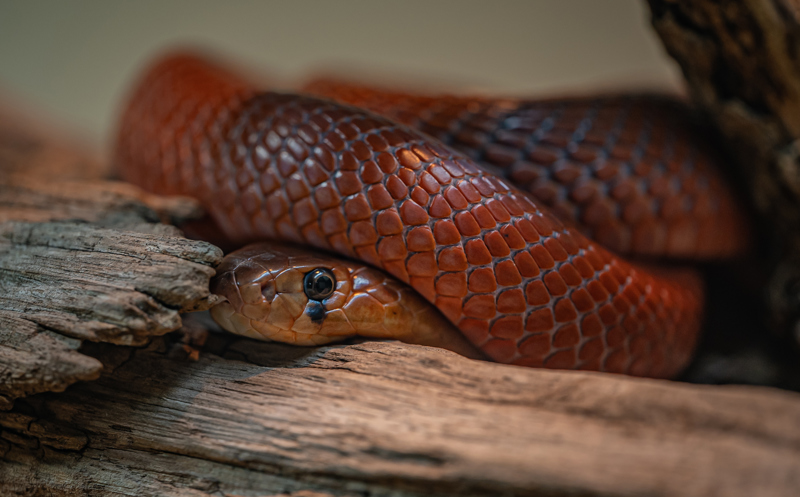
Name: Red Spitting Cobra
Description: Orange-red, with a black throat band
Bite Signs & Symptoms:
Local swelling and blistering
Local necrosis
Burning pain and redness in eye envenomation
Name: Large Brown Spitting Cobra
Description: Different shades of brown.
Bite Signs & Symptoms:
Severe, progressive swelling
Necrosis
Burning pain and redness in eye envenomation
Name: Black Mamba
Description: Grey with Black Mouth
Bite Signs & Symptoms:
Tingling of the tongue and lips with a metallic taste.
Drooping eye lids.
Descending paralysis envenomation
Name: Puff Adder
Description: Light brown, overlaid with a pattern of dark brown to black U-shaped bands
Bite Signs & Symptoms:
Immediate severe pain, swelling and blistering.
Necrosis with massive muscle and tissue damage.
Continuous bleeding from bite wound, mouth, nose and other orifices.
Name: Boomslang
Description: Females brown, males green.
Bite Signs & Symptoms:
Bleeding from bite wound, gums, nose and other orifices.
Headache, nausea and sleepiness.
Name: Echis (Carpet Viper)
Description: Light brown, with pale crossbars along the back
Bite Signs & Symptoms:
Local pain and severe swelling.
External and internal bleeding