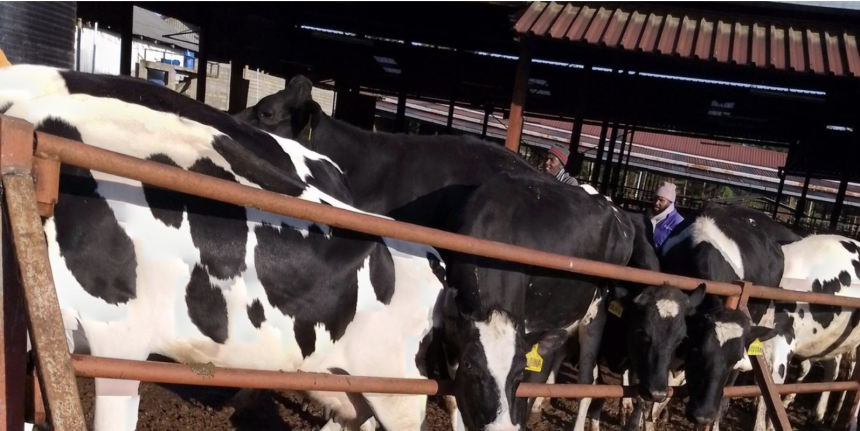
As Kenya prepares to mark World Press Freedom Day and International Women’s Day, new attention is turning to how freedom of expression and inclusive participation are reshaping the country’s dairy economy, particularly in Nyandarua County, one of the nation’s top milk-producing regions.
In this agricultural heartland, the ability of farmers and traders to speak, organise and influence market decisions is increasingly being recognised as a key driver of growth.

At the centre of the county’s dairy activity is Kinangop Dairy Limited, a processor whose business model prioritises farmer engagement and consumer choice.
Victor Thumbi, the company’s brand manager, says open markets and feedback from farmers and consumers directly influence the firm’s competitiveness.
“Freedom of expression is central to what we do. Consumers are free to choose the dairy products and brands that work for them. That freedom pushes us to innovate and to listen more carefully,” he said.
Industry players note that in an increasingly competitive dairy market challenged by high input costs, climate pressures and evolving consumer tastes, farmer voice has become essential.
Cooperatives that help producers negotiate prices, raise concerns and access training tend to record more stability and trust across the value chain.
Analysts add that a free and independent press plays an important role by highlighting policy gaps, infrastructure challenges and climate shocks that affect rural producers.
Visibility, they say, often translates into policy attention and bargaining power for smallholder farmers.
Women remain at the centre of this transformation.
Across Nyandarua County, women manage daily milking routines, coordinate household nutrition and handle most dairy sales roles that directly influence both family welfare and market supply.
Rose Wanjiru, who runs Blue M Shop near Engineer, says the dairy business has changed her family’s fortunes. “Selling dairy products helped me educate all four of my children,” she said. “Today they are responsible adults working in different parts of the country.”
Her experience mirrors that of thousands of women operating at the intersection of agriculture, education and household nutrition. Sector data shows that income managed by women is more likely to be reinvested in schooling, healthcare and improved farming practices, generating wider community benefits.
Kinangop Dairy has in recent years dedicated Mother’s Day campaigns to celebrating women farmers and consumers, a move observers say reflects a growing corporate shift toward community-centred growth strategies.
Stakeholders also emphasise the importance of structured platforms for farmer consultation. Transparent pricing discussions, regular training and cooperative forums are seen as crucial tools for maintaining supply consistency and quality, especially as the country navigates climate variability and global commodity pressures.
Periods of reflection such as Ramadhan and Lent, currently observed by many Kenyans, have further underscored the role of responsibility and reinvestment in community development. Many agribusinesses in rural regions continue to support local schools, conservation efforts and farmer capacity-building programmes.
Economists argue that strengthening inclusive food systems is essential for national stability. When farmers have a voice in policy and market decisions, markets operate more efficiently. When consumers exercise choice, product standards rise. And when women are economically empowered, household resilience improves.
As the country prepares to observe major global days dedicated to press freedom and gender inclusion, industry leaders say the dairy sector offers a clear illustration of how participation and accountability shape economic outcomes.
In Nyandarua County, and across Kenya’s dairy heartlands, stakeholders agree on one thing: when communities are heard, food systems grow stronger, and when inclusion is prioritised, economic growth becomes more sustainable.