The World Cancer Day 2026 theme “United by Unique” calls on us to place people, not diseases, at the centre of cancer care. In Sub-Saharan Africa (SSA), this call is especially urgent.
Cancer mortality remains unacceptably high, and behind every statistic is a life cut short by late diagnosis, limited access to treatment, and a lack of locally relevant evidence. Ethically conducted and locally led clinical trials offer one of the most powerful tools to change this reality.

Cancer is a present and growing crisis for Africa, requiring comprehensive, multi-sectoral efforts to prevent, detect, and manage its burden. As populations grow and age, cancer incidences are rising sharply and survival rates in Sub-Saharan Africa are lagging far behind those in high-income countries.
According to GLOBOCAN 2022 estimates, Sub-Saharan Africa recorded approximately 848,311 new cancer cases and 559,083 cancer-related deaths, with projections suggesting cancer deaths could reach one million annually by 2030. Among women, breast and cervical cancers account for the highest incidence, while prostate cancer is the most commonly diagnosed cancer among men.
The drivers of high mortality rates are well known: late diagnosis, high treatment costs, under-resourced healthcare systems and limited access to modern cancer therapies. Clinical trials help address these barriers, while also acknowledging the distinct biological, social, and health system contexts of African patients.
Firstly, for patients across Sub-Saharan Africa, groundbreaking treatments for cancer remain a distant hope, constrained by barriers of cost and access. Clinical trials help change this narrative. For a mother facing advanced breast cancer or a father battling prostate cancer, enrolment in a clinical trial may provide access to potentially life-saving therapy without the burden of cost.
Secondly, every cancer journey in Africa is shaped by our unique genetic heritage, environments, and health system realities. Yet for too long, medical guidance has relied largely on data generated in Europe, North America, or Asia. Conducting clinical trials here in Sub-Saharan Africa allows us to begin writing our own chapter in the story of cancer care. It generates evidence born from our communities, ensuring that life-saving treatments are not just imported, but proven and tailored to work for our people. This evidence is foundational to personalized and equitable cancer care.
Third, clinical trials build sustainable research capacity. The true impact of a trial is measured not only in the data generated, but in the skills and confidence it leaves behind. By training physicians, nurses, and researchers in high-quality trial conduct and ethics, we invest in our people. This creates a powerful ripple effect and shifts the paradigm, ensuring African institutions do not simply host studies, but design and lead them. In doing so, our research capacity can finally prioritize the cancers that most affect our communities.
Fourth, participation in clinical trials raises the standard of care for all cancer patients. When a hospital hosts a trial, it brings more than a new therapy, it brings a new level of excellence. To participate, institutions must strengthen diagnostic precision, patient monitoring, and data management practices to meet the highest international standards. This infrastructure of care does not remain confined within the trial. Instead, it becomes routine practice.
Nurses and physicians trained in meticulous trial protocols apply the same rigor to every patient. The improved systems for tracking a patient’s journey leads to better care for all. In this way, a single trial acts as a catalyst, creating waves of systemic improvement that benefit countless patients who may never enrol in a study, but whose care is nonetheless elevated.
Finally, and most profoundly, clinical trials are a necessary response to a crisis we can no longer escape. Behind the rising projections of cancer deaths are millions of individual stories. For example, according to the World Health Organization (WHO), in many low- and middle-income countries, including across Africa, less than about 30 per cent of children with cancer survive, compared with more than 80 per cent in high-income countries, meaning roughly four out of five children diagnosed with cancer in Africa do not survive long-term. In this context, trials are far more than studies, they are an essential pathway to discovering treatments that not only work but are also practical and affordable within our health systems and communities.
As we mark World Cancer Day 2026, we must move beyond symbolism to action. Governments must prioritise funding and policy frameworks that enable ethical, efficient clinical trials. Regulators must streamline approval processes without compromising patient safety.
Funding agencies and industry partners must invest in African-led research, not as an afterthought but as a global imperative. Academic institutions and hospitals must embed research into routine care, and communities must be engaged as partners, not subjects.
Cancer does not wait and neither should we. By committing now to inclusive, locally driven clinical trials, we can change the trajectory of cancer in Sub-Saharan Africa and ensure that innovation reaches those who need it most.
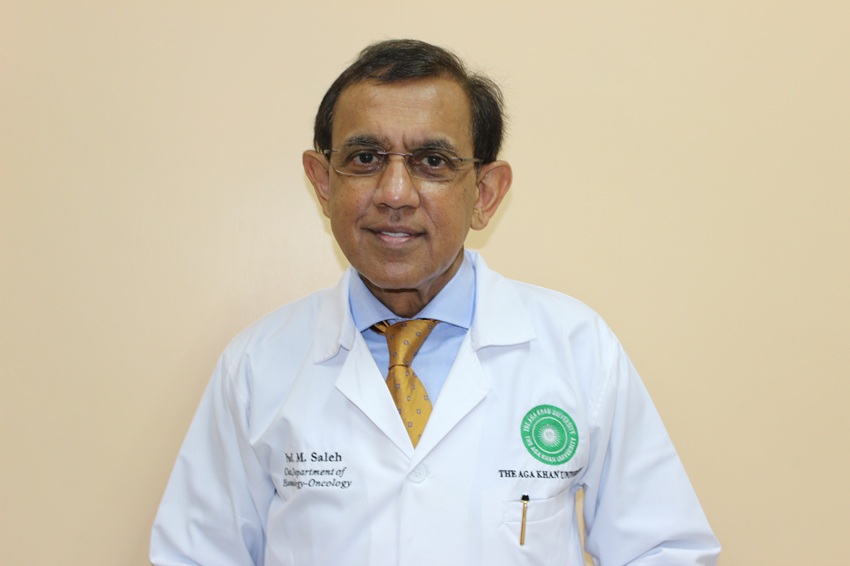
Prof Mansoor Saleh is the Chair, Department of Haematology-Oncology and Founding Director, Cancer Center, Aga Khan University Medical College, East Africa and Aga Khan University Hospital, Nairobi.