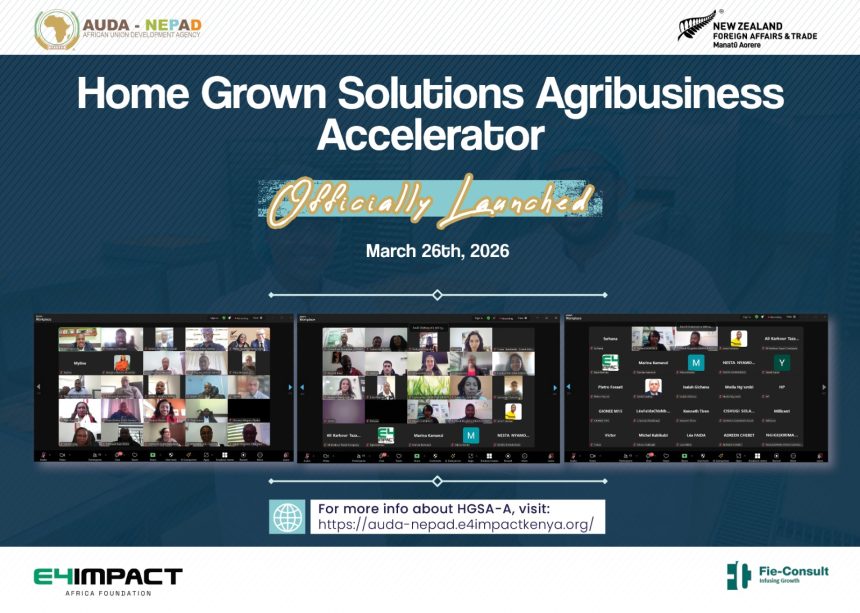
Twenty agribusinesses have been selected to join the Home-Grown Solutions Agribusiness Accelerator (HGSA-A) program.
The selected firms, drawn from nine COMESA countries, will receive tailored advisory services, investment-readiness support, fundraising guidance, and mentorship, alongside assistance to access cross-border markets under the African Continental Free Trade Area (AfCFTA).

The initiative, commissioned by the African Union Development Agency–New Partnership for Africa’s Development (AUDA-NEPAD) and supported by the New Zealand government, seeks to help companies scale their locally driven innovations while addressing Africa’s urgent agricultural challenges.
During their participation, the companies are expected to deliver measurable impact by creating jobs and expanding their reach among smallholder farmers.
“The HGSA-A pilot cohort brings together twenty growth-stage agribusinesses from nine COMESA countries, selected for their potential to improve productivity, reduce post-harvest losses, enhance value addition, and expand market access, while advancing climate-smart practices and the participation of women- and youth-led enterprises across African food systems,” reads a statement from AUDA-NEPAD.
In Kenya, four companies in agri-processing and clean energy have been selected.
They include Nyota Limited, which processes indigenous foods into frozen and shelf-stable products; BioAfriq Energy, which develops solar drying hubs for smallholder farmers; Kirima Fresh Dairies, which produces milk, cheese, and yogurt; and Wedgehut Foods, which sources and processes fresh potatoes for institutional markets.
Three Zambian companies, Stewards Globe Limited/Afriseed, Kagezi Seed Company, and Forest Africa Zambia Limited, are also among those selected, focusing on climate-resilient seeds and value-added processing of indigenous fruits.
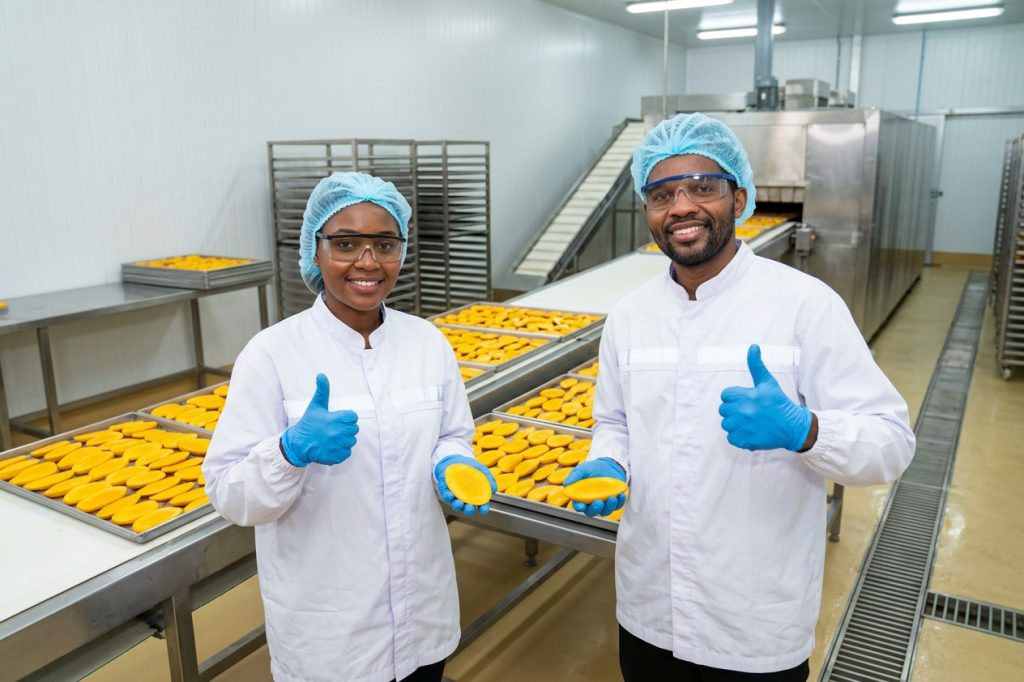
In the Democratic Republic of Congo, four firms are participating, including Berakah, which uses solar-powered processing, and Majirane Coffee, which exports organic Arabica coffee while promoting women’s economic empowerment.
In Uganda, Equator Seeds operates integrated seed-to-export coffee systems, while Drought Guard Africa delivers solar-powered irrigation solutions, impacting more than 120,000 smallholder farmers.
Other participants come from Somalia, Malawi, Zimbabwe, Tunisia, Burundi, and Madagascar.