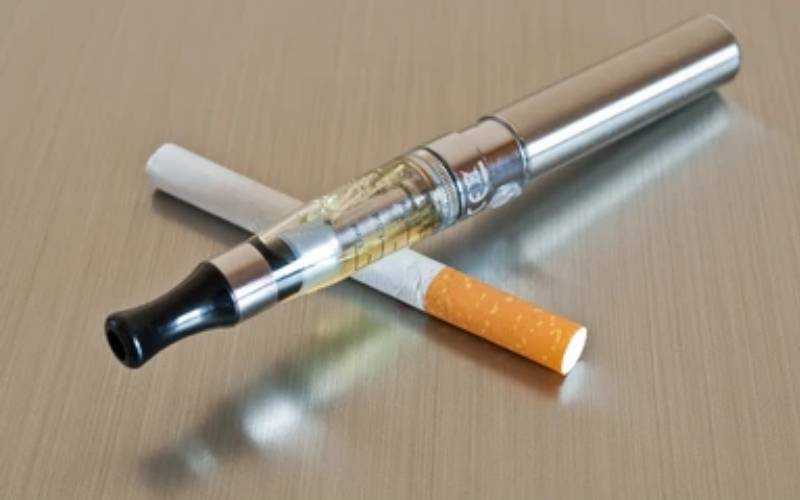
As the global community marks World No Tobacco Day, Sunday, 31 May 2026, the theme “Unmasking the Appeal: Countering Nicotine and Tobacco Addiction” provides a timely lens through which to examine a rapidly evolving tobacco landscape. For decades, the fight against tobacco was defined by the visible plume of cigarette smoke.

Today, that battle has shifted from the unmistakable smell and visibility of cigarettes to discreet, flavoured products that are easier to hide and easier to market to young people and university students.

The urgency of this issue is clear: local research shows that the average age of initiation for tobacco is now dropping to as low as six years old. Furthermore, for children and teens between the ages of 10 and 17, these products are increasingly being designed with attractive packaging and enticing flavours specifically to hook a younger generation, a trend currently being mirrored in our university halls.
This year’s focus is not merely on the health consequences of use, but on the deliberate, multi-layered strategies used to make addiction appear modern, harmless, and even fashionable.
The reality of this appeal recently played out in a high-profile case involving a Form Four student at Moi High School Kabarak. While the legal proceedings centred on the student’s right to education following a suspension for possessing an electronic cigarette, the incident underscored a much larger societal challenge. It was a clear example of how Emerging Tobacco and Nicotine Products have successfully infiltrated even the most disciplined educational environments.
The case illustrated that the mask is working. Vapes and pouches are designed to be used without detection, often carrying scents and designs that distance them from the traditional stigma of conventional cigarettes.
By mimicking common objects like highlighters, flash disks, or toys, and masking the harsh scent of nicotine with sweet aromas like mint or strawberry, these products effectively camouflage their true nature, lulling users and adults alike into a false sense of security that masks the dangerous reality of addiction.
Legislative crossroads
In response to this evolving crisis, Kenya is currently at a legislative crossroads. The Tobacco Control (Amendment) Bill (Senate Bill No. 35 of 2024), which proceeded to public hearing through written Memoranda on March 3, 2026, represents a significant effort to close regulatory loopholes that have allowed these new products to proliferate.
This Bill is a direct attempt to unmask the industry by bringing electronic nicotine delivery systems and nicotine pouches under the same strict regulatory umbrella as traditional tobacco products, such as cigarettes.
The proposed amendments are extensive and target the very core of what makes these products appealing to the youth. One of the most significant shifts is the move to ban characterising flavours. By prohibiting additives that create smells or tastes such as fruit, spice, herbs, candy, or menthol, the Bill aims to strip away the sensory mask that makes nicotine consumption palatable to non-smokers and children.
Furthermore, the Bill introduces strict requirements for electronic nicotine delivery systems, including mandates that they be child and tamper-proof and that nicotine-containing liquids not exceed a concentration of twenty milligrams per millilitre. Another key provision is the proposed ban on disposable e-cigarettes.
This move is crucial for protecting young people by reducing access to these products, which are often the most affordable option on the market. Beyond public health, this ban further supports vital environmental conservation efforts by addressing the waste caused by these single-use items.
The regulatory push also addresses how these products are presented to the public. While current legislation already mandates health warnings on cigarettes, the proposed amendments seek to significantly strengthen these requirements. Specifically, the Bill aims to increase the size of these warnings from the current 30% to 40% coverage to a much more prominent 75% of the principal display area.
Furthermore, the Bill expands this mandate, ensuring that health warnings and pictorial labelling are applied to all tobacco products, rather than being limited to cigarettes alone.
Warnings and emerging tobacco, nicotine products
These warnings must be printed in high-contrast black text on a white background, a crucial step in countering the sleek, vibrant packaging that the industry currently uses to attract new users. The progress of this legislation has now entered a critical phase of public participation, with aggressive opposition from the industry.
The need for these changes is driven by the realisation that current laws have been outpaced by innovation. For example, the Bill proposes to redefine smoking to explicitly include inhaling or exhaling vapour from electronic devices. It also seeks to prohibit the sale of tobacco products within a one-hundred-meter radius of any place primarily serving persons under the age of eighteen. These are not just administrative adjustments; they are necessary defences against a market that has become increasingly adept at finding new ways to hook the next generation.
As we mark World No Tobacco Day, the message is clear. The era of allowing emerging tobacco and nicotine products to masquerade as harmless lifestyle accessories must end, not next year, but today.
The alarming reality, evidenced by children as young as six and students in our high schools and universities already being ensnared by these products, serves as a stark warning that we cannot afford to wait for the next calendar milestone to act. Every day of delay allows these products to further infiltrate our schools and homes, hooking a new generation on nicotine before they are old enough to grasp the risks.
If policymakers do not move with immediate urgency to pass the Tobacco Control (Amendment) Bill, they are effectively choosing to let this cycle of addiction deepen. The cost of inaction is far too high.
It is a future where the health and potential of our youth are sacrificed to a crisis that could have been contained. We must unmask the true nature of these products now, or face the mounting, irreversible damage to the next generation.
The writer is a Programme Officer, Policy Development at the International Institute for Legislative Affairs (IILA)