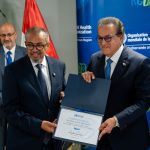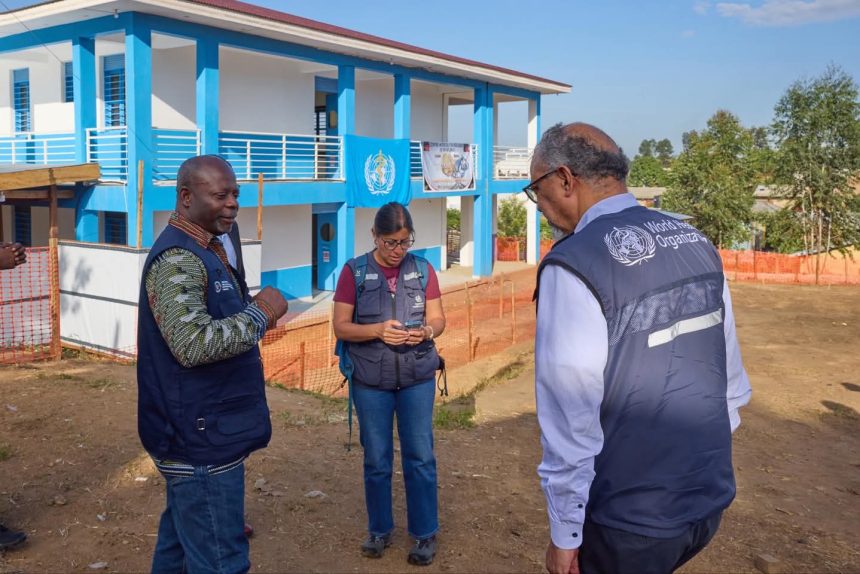
The World Health Organization (WHO) has handed over a refurbished Ebola Treatment Centre in Bunia to the health authorities strengthening efforts to contain the ongoing Ebola outbreak.
According to a statement, the facility has an initial capacity of 24 beds but can be expanded to 60 beds. The Organisation is also setting up an annex to the facility with up to 42 beds to be ready in two weeks.

As of 31 May, there were 210 confirmed cases reported in the country, with 17 confirmed deaths. 349 suspected cases are under investigations. In total, 16 health workers have been reported sick with Ebola during this outbreak.
The WHO Director-General, Dr Tedros Adhanom Ghebreyesus noted that once fully operational, the centre will be capable of caring for 65 to 80 patients confirmed or suspected of suffering from Ebola.
“The centre represents not just a centre for acute and critical care. It also serves as a testament to the fact people can survive Ebola when symptoms are detected early and optimized supportive and holistic care is provided immediately,” the DG said.
Speaking during a visit to Bunia on Saturday, Dr. Tedros pointed out that although there were currently no licensed vaccine or treatment for Bundibugyo virus “it is not without hope. Ebola caused by the Bundibugyo virus can be survived with good medical care, and some people here in Ituri have already recovered. Seeking care early makes a real difference.”
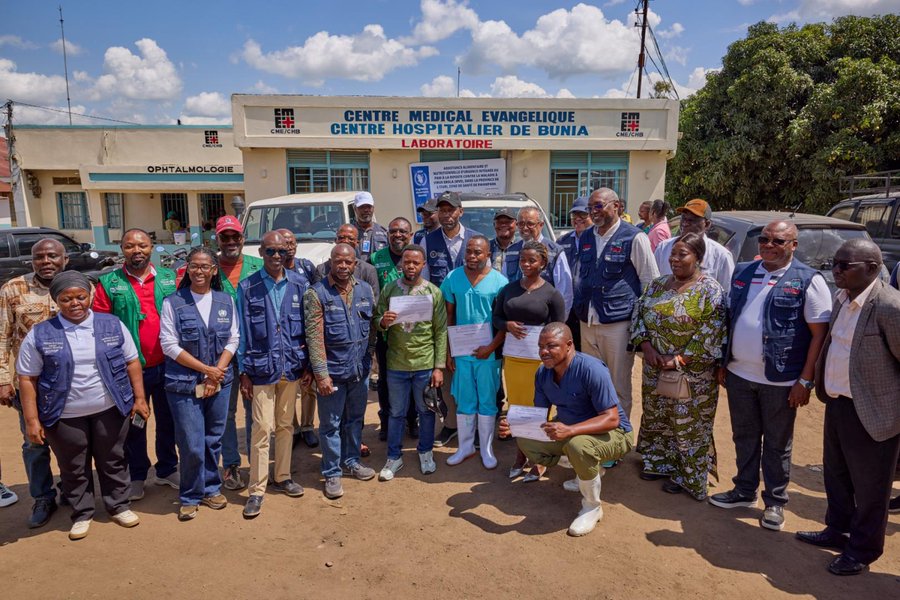
WHO reported that four nurses were discharged Saturday in Bunia, after recovering from Ebola. “In total, five people have now recovered in this outbreak,” WHO said.
Adding that: “As efforts intensify to halt the spread of the virus, further recoveries are expected, especially when people are diagnosed early and able to access care.”
In a statement, the Government of the DRC said that it was firmly leading a comprehensive national response, working closely with provincial authorities in Ituri and neighbouring provinces.
WHO, alongside the broader United Nations system and health and humanitarian partners, is fully committed to supporting these efforts. The partners are working to strengthen coordination, mobilize additional resources, and ensure that life-saving interventions reach affected communities quickly and equitably.